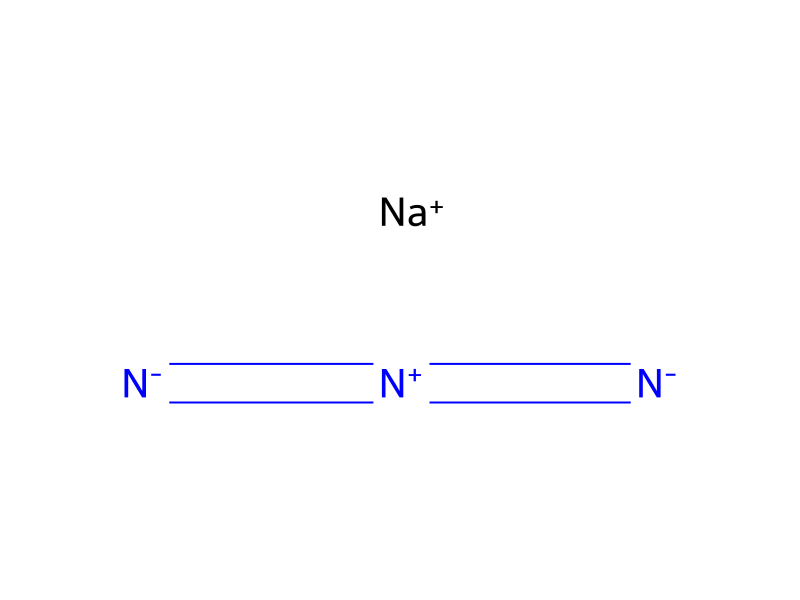
In this example, 6.70 grams (0.036 mol) of 2-amino-5-chloropyridine N-oxide hydrochloride was added to and dissolved in 100 ml. of water and 10 ml. of concentrated hydrochloric acid under vigorous stirring and was thus cooled to 0° C. to 5° C. in a salt-ice bath. To the above cold solution, a solution of 2.50 grams (0.036 mol) in 30 ml. of water was added dropwise at such a rate that the temperature of the reaction mixture did not rise above 5° C. Immediately after the above addition was complete a solution of 2.30 grams (0.036 mol) of sodium azide in 30 ml. of water was added to the cold vigorously stirred above solution at such a rate that the temperature did not rise above 5° C. When the above addition was complete the cooling bath was removed and the solution slowly warmed to about 25° C. The reaction mixture was continuously extracted with methylene chloride. From the methylene chloride extract, after evaporation in vacuo was obtained 2-azido-5-chloropyridine N-oxide in a yield of 3.75 grams or 62% of theory having a melting point of 80° C. to 82° C. with decomposition.