Reaction equation

[OH:1][C:2]([CH2:4][CH2:5][CH2:6][CH2:7][CH2:8][CH2:9][CH2:10][CH2:11][CH3:12])=[O:3].[BrH:13].[Ag:14].[N+]([O-])([O-])=O.[Ag+]>C(OCCCC)(=O)C>[O-:3][C:2]([CH2:4][CH2:5][CH2:6][CH2:7][CH2:8][CH2:9][CH2:10][CH2:11][CH3:12])=[O:1].[Ag+:14].[Ag:14][Br:13]Participants
Reactant 4


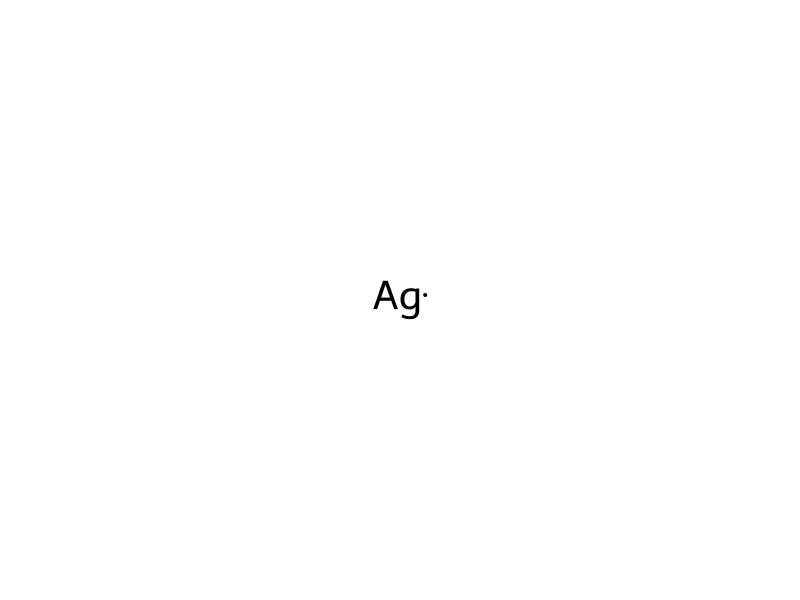

Product 2


Reagents, catalysts & solvents 1

Conditions
- Temperature
- 5 °C
Procedure
Into a solution of 8.6 g of capric acid in 100 ml of butyl acetate was emulsified 20 ml of a 2.5%, by weight, aqueous solution of hydrogen bromide while stirring with a stirrer at 5° C. To this emulsion was added 50 ml of an aqueous silver ammine complex solution containing 8.5 g of silver nitrate (which solution had been previously cooled to 5° C) over a period of 30 seconds to allow the capric acid, the hydrogen bromide and the silver ion to react simultaneously to form silver caprate and silver bromide simultaneously. After being allowed to stand, the mixture separated into a water phase and butyl acetate phase containing silver bromide and silver caprate. The water phase was removed and the butyl acetate phase was dispersed into 120 g of a 15%, by weight, solution of polyvinyl butyral in isopropanol. To the resulting silver salt-polymer dispersion, the following components were added in succession at 40° C at intervals of 5 minutes.
Sources & evidence
- ORD record
- ord-dc9fb8b6aef54ceb8431b22ba0b14c3f
- Source dataset
- uspto-grants-1977_02
- Patent number
- US04009039
Linked notes
Loading…