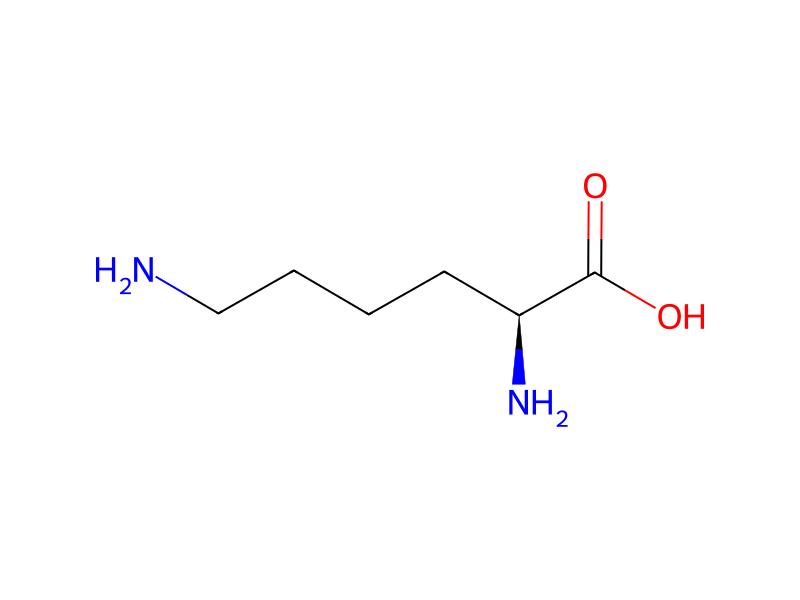
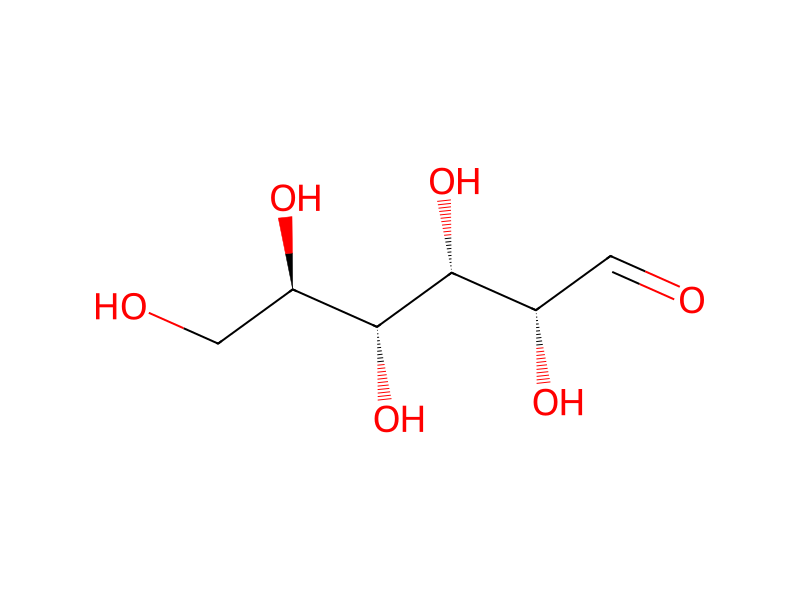
L-Lysine → N,N'-di-(2,3,4,5,6-pentahydroxy-hexyl)-L-(+)-lysine
HRID 438008
Reaction equation

O=[CH:2][C@@H:3]([C@H:5]([C@@H:7]([C@@H:9]([CH2:11][OH:12])[OH:10])[OH:8])[OH:6])[OH:4].[NH2:13][C@H:14]([C:20]([OH:22])=[O:21])[CH2:15][CH2:16][CH2:17][CH2:18][NH2:19]>[Ni].[Pd]>[OH:4][CH:3]([CH:5]([OH:6])[CH:7]([OH:8])[CH:9]([OH:10])[CH2:11][OH:12])[CH2:2][NH:13][C@H:14]([C:20]([OH:22])=[O:21])[CH2:15][CH2:16][CH2:17][CH2:18][NH:19][CH2:2][CH:3]([OH:4])[CH:5]([OH:6])[CH:7]([OH:8])[CH:9]([OH:10])[CH2:11][OH:12]Participants
5