Reaction equation

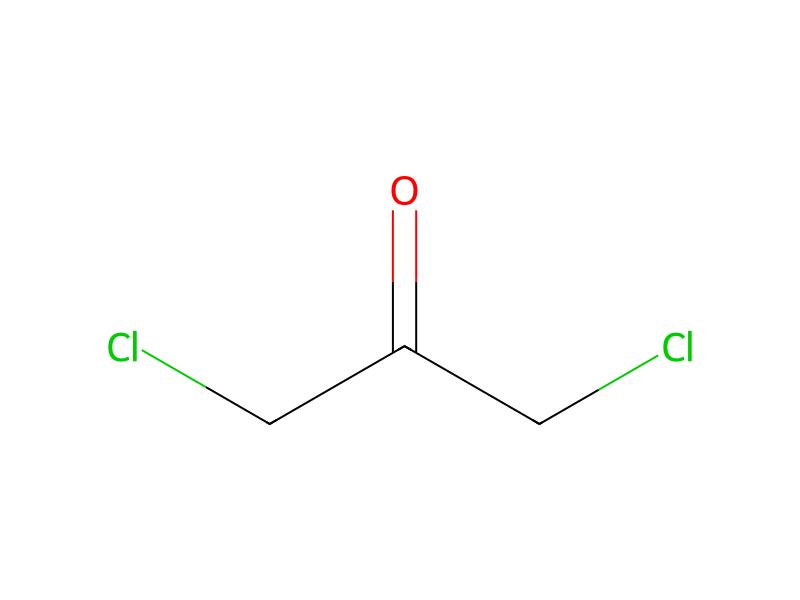
[C:1]([NH2:6])(=[O:5])[CH2:2][CH2:3][CH3:4].[Cl:7][CH2:8][C:9]([CH2:11]Cl)=O.C(=O)(O)[O-].[Na+]>O>[Cl:7][CH2:8][C:9]1[N:6]=[C:1]([CH2:2][CH2:3][CH3:4])[O:5][CH:11]=1Participants
5
Reactant 3


Product 1

Reagents, catalysts & solvents 1

Conditions
- Temperature
- 130 °C
Procedure
A mixture of butyramide (19.88 g) and 1.3-dichloroacetone (24.14 g) was heated at 130° C. for 1.5 hours. After cooling, the mixture was diluted with water, neutralized with aqueous sodium bicarbonate solution and extracted with ethyl ether. The extract was washed with water, dried (MgSO4) and concentrated. The residue was purified by chromatography on silica gel with acetone-hexane (1:9) to yield 4-chloromethyl-2-propyloxazole as an oil (10.70 g 35.3%). NMR (CDCl3)δ: 0.97 (3H, t, J=7.5 Hz), 1.79 (2H, sext, J=7.5 Hz), 2.72 (2H, t, J=7.5 Hz), 4.47 (2H, s), 7.53 (1H, s).
Workup
- temperatureAfter cooling
- extractionextracted with ethyl ether
- washThe extract was washed with water
- dry with materialdried (MgSO4)
- concentrationconcentrated
- customThe residue was purified by chromatography on silica gel with acetone-hexane (1:9)
Sources & evidence
- ORD record
- ord-7d658abe348645fab4f8f7ddde1e6c72
- Source dataset
- uspto-grants-1988_02
- Patent number
- US04725610
Linked notes
Loading…