Reaction equation

Br[C:2]1[CH:3]=[C:4]([CH2:8][OH:9])[CH:5]=[CH:6][CH:7]=1.[C:10]1(B(O)O)[CH:15]=[CH:14][CH:13]=[CH:12][CH:11]=1.C(=O)([O-])[O-].[Na+].[Na+]>C1(C)C=CC=CC=1.C1C=CC([P]([Pd]([P](C2C=CC=CC=2)(C2C=CC=CC=2)C2C=CC=CC=2)([P](C2C=CC=CC=2)(C2C=CC=CC=2)C2C=CC=CC=2)[P](C2C=CC=CC=2)(C2C=CC=CC=2)C2C=CC=CC=2)(C2C=CC=CC=2)C2C=CC=CC=2)=CC=1>[C:10]1([C:2]2[CH:3]=[C:4]([CH2:8][OH:9])[CH:5]=[CH:6][CH:7]=2)[CH:15]=[CH:14][CH:13]=[CH:12][CH:11]=1Participants
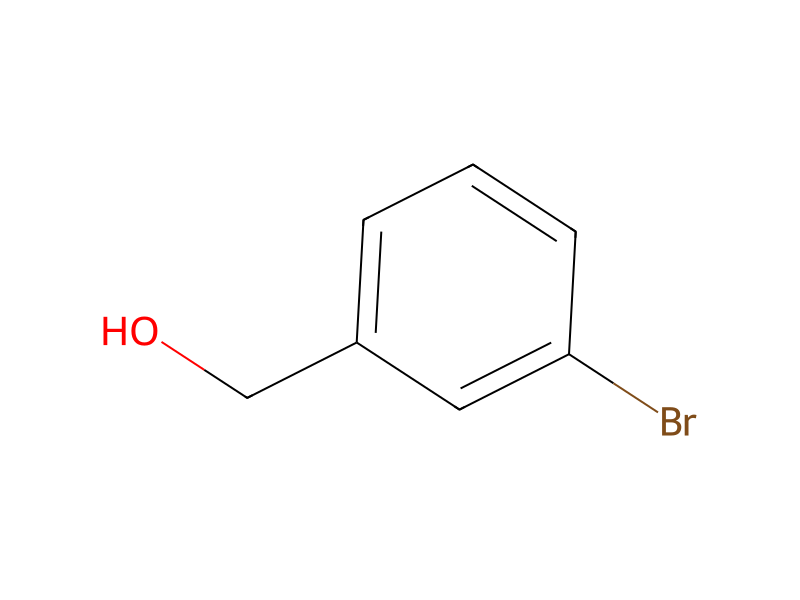
Reactant 3


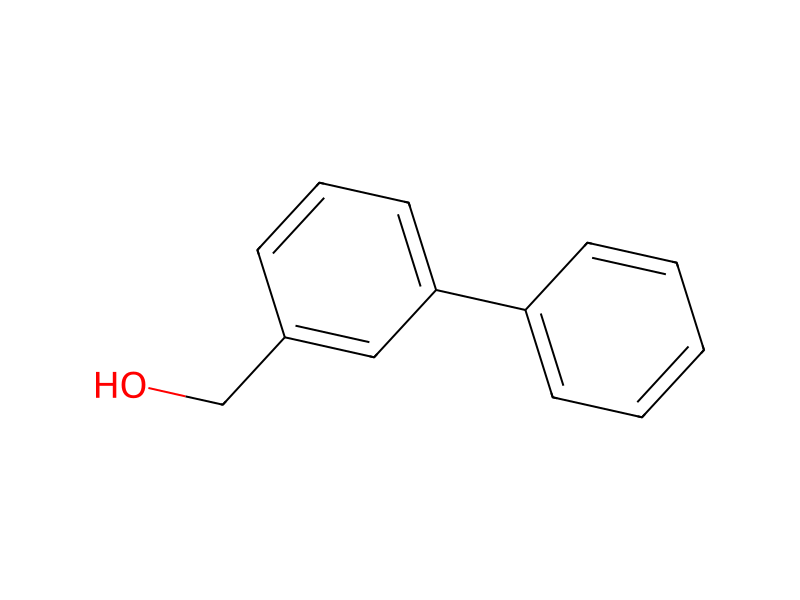
Product 1
Reagents, catalysts & solvents 2


Procedure
This compound was prepared in a manner analogous to that of Example 4, Step B, using 10.0 grams (0.054 mole) of 3-bromophenyl-methanol, 7.2 grams (0.059 mole) of phenylboronic acid, 0.25 gram (catalyst) of tetrakis(triphenylphosphine)palladium(0), and 66 mL (0.135 mole) of aqueous 2M sodium carbonate in 50 mL of toluene. The crude product from this reaction was combined with a previous smaller run conducted on 4.6 grams (0.020 mole) of 3-bromophenylmethanol. The combination was subjected to column chromatography on silica gel. Elution was accomplished using 20:1 methylene chloride and ethyl acetate. The appropriate fractions were combined and concentrated under reduced pressure, yielding 12.9 grams of 3-phenylphenylmethanol. The NMR spectrum was consistent with the proposed structure.
Workup
- customThis compound was prepared in a manner analogous to that of Example 4, Step B
- washElution
- concentrationconcentrated under reduced pressure
Sources & evidence
- ORD record
- ord-b012974f31cf4627bfc0e05e0e25d673
- Source dataset
- uspto-grants-1996_05
- Patent number
- US05521192
Linked notes
Loading…