
Basic information
- Standard SMILES
OB(O)c1ccccc1- InChIKey
HXITXNWTGFUOAU-UHFFFAOYSA-N- Molecular formula
- C6H7BO2
- Average molar mass
- 121.93 g/mol
- Monoisotopic mass
- 122.0539096
Names & identifiers
- Preferred name
- Phenylboronic Acid
- IUPAC
- phenylboronic acid
- English name
- Phenylboronic acid
- Molecular formula
- C6H7BO2
- Molecular weight
- 121.93
Names & synonyms
Phenylboronic acid98-80-6Benzeneboronic acidBoronic acid, phenyl-DihydroxyphenylboranePhenyldihydroxyboraneBorophenylic acidPHENYL BORONIC ACIDDihydroxy(phenyl)boraneAcide phenylboriqueKyselina fenylboritaPhenylboron dihydroxide
Show more names
PhB(OH)2PHENYLBORIC ACIDphenyboronicCAS:98-80-6phenyl-boronicaciPhenylboranic acidPhenylboronic Acid (contains varying amounts of Anhydride)
L12H7B02G5NSC-66487DTXSID9059179CHEBI:44923RefChem:562986DTXCID6049062202-701-9phenylboronate
Database identifiers
- CAS
98-80-6- PubChem CID
- 66827
- DTXSID
DTXSID9059179- ChEMBL
CHEMBL21485- ChEBI
CHEBI:44923- UNII
- L12H7B02G5
- EC Number
- 202-701-9
- Nikkaji
- J119.652I
Properties
Computed structural properties
- Topological polar surface area
- 40.5 Ų
- Hydrogen bond donors
- 2
- Hydrogen bond acceptors
- 2
- Rotatable bonds
- 1
- Heavy atoms
- 9
- Formal charge
- 0
- Complexity
- 79
Experimental & physicochemical properties
Boiling Point219 °C @760 [mm Hg]
Vapor Pressure0.00000856 [mmHg]
Physical DescriptionSolid; [Merck Index] White to off-white hygroscopic solid; [Acros Organics MSDS]
Physicochemical properties
- Melting point
- 216 · 216-219 °C(lit.)
- Boiling point
- 265.9 · 265.9±23.0 °C(Predicted)
- Density
- 1.13 · 1.13±0.1 g/cm3(Predicted)
- storage temp.
- Keep in dark place,Sealed in dry,Room Temperature
- solubility
- Chloroform (Slightly), DMSO (Slightly), Methanol (Slightly)
- form
- Crystalline Powder
- pka
- 8.83 · 8.83(at 25℃)
- color
- White to off-white
- Water Solubility
- 10 g/L · 10 g/L (20 ºC)
- Sensitive
- Hygroscopic
- Merck
- 14 · 14,1068
- BRN
- 970972 · 970972
- Stability
- Hygroscopic
- InChI
- 1S/C6H7BO2/c8-7(9)6-4-2-1-3-5-6/h1-5,8-9H
- InChIKey
- HXITXNWTGFUOAU-UHFFFAOYSA-N
- SMILES
- OB(O)c1ccccc1
- CAS DataBase Reference
- 98 · 98-80-6(CAS DataBase Reference)
- EWG's Food Scores
- 1 · 1
- FDA UNII
- 12 H7B02G5 · L12H7B02G5
- EPA Substance Registry System
- Boronic acid, phenyl- (98-80-6)
- UNSPSC Code
- 12352103 · 12352103
- NACRES
- 22 · NA.22
- Symbol(GHS)
- 7 · GHS07
- Signal word
- Warning
- Hazard statements
- 302 · H302
- Precautionary statements
- 264 · P264-P270-P301+P312-P501
- PPE
- 95 · dust mask type N95 (US), Eyeshields, Gloves
- Hazard Codes
- Xn,Xi,N
- Risk Statements
- 22 · 22-36/37/38-20/21/22
- Safety Statements
- 22 · 22-24/25-36/37/39-26-36
- WGK Germany
- 3 · 3
- RTECS
- 8575000 · CY8575000
- Hazard Note
- Harmful
- TSCA
- TSCA listed
- HazardClass
- IRRITANT, MOISTURE SENSITIVE
- HS Code
- 29310095 · 29310095
- Storage Class
- 11 · 11 - Combustible Solids
- Hazard Classifications
- 4 Oral · Acute Tox. 4 Oral
- Toxicity
- 50 orl-rat: · LD50 orl-rat: 740 mg/kg 14KTAK -,693,64
Safety & regulation
GHS classification
GHS Classification
Warning
H302 (96.6%): Harmful if swallowed [Warning Acute toxicity, oral]
P264, P270, P301+P317, P330, and P501 (click each P-code to see the statement)
Aggregated GHS information provided per 208 reports by companies from 17 notifications to the ECHA C&L Inventory.;Information may vary between notifications depending on impurities, additives, and other factors. The percentage value in parenthesis indicates the notified classification ratio from companies that provide hazard codes. Only hazard codes with percentage values above 10% are shown. For more detailed information, please visit ECHA C&L website.
Hazard information
Regulatory Information
Chemical: Boronic acid, phenyl-
Benzeneboronic acid: Does not have an individual approval but may be used under an appropriate group standard
Hazards SummarySpontaneously converts to benzene boronic anhydride (C6-H5-B-O) in dry air; [Merck Index] An irritant; Harmful by ingestion; [Acros Organics MSDS] See Boron.
Hazard Classes and CategoriesAcute Tox. 4 (96.6%)
Safety & protection
Protective Action Criteria (PAC)
2.2 [mg/m3]
24 [mg/m3]
150 [mg/m3]
Regulatory information
Regulatory Information
Chemical: Boronic acid, phenyl-
Benzeneboronic acid: Does not have an individual approval but may be used under an appropriate group standard
Safety data
- PPE
- dust mask type N95 (US), Eyeshields, Gloves
- wgk
- 3
- tsca
- TSCA listed
- rtecs
- CY8575000
- hs_code
- 29310095
- Toxicity
- LD50 orl-rat: 740 mg/kg 14KTAK -,693,64
- risk_code
- 22-36/37/38-20/21/22
- Signal word
- Warning
- Symbol(GHS)
- GHS07
- hazard_code
- Xn,Xi,N
- hazard_note
- Harmful
- safety_code
- 22-24/25-36/37/39-26-36
- hazard_class
- IRRITANT, MOISTURE SENSITIVE
- Storage Class
- 11 - Combustible Solids
- Hazard statements
- H302
- Hazard Classifications
- Acute Tox. 4 Oral
- Precautionary statements
- P264-P270-P301+P312-P501
Chemistry & industry
Uses & manufacturing
General Manufacturing InformationBoronic acid, B-phenyl-: ACTIVE
Applications
UsesPhenylboronic Acid is a compound used in organic synthesis of various pharmaceutical goods. Phenylboronic acid (PBA) and its derivatives can bind sugars and other diol compounds to form cyclic boronate esters. These esters bear negative charges. Due to this reaction, sugars can be detected by means of electrochemical and optical techniques. PBA modified electrodes have been constructed as reagentless electrochemical sensors. There, PBA is absorbed on the electrode surface either as a self- assembled monolayer film ore a polymer thin film. Basically, for optical detection techniques for the detection of sugars, PBA is modified with a chromophore that should change its properties on reaction with a sugar. Reaction of Phenylboronic acid with a sugar
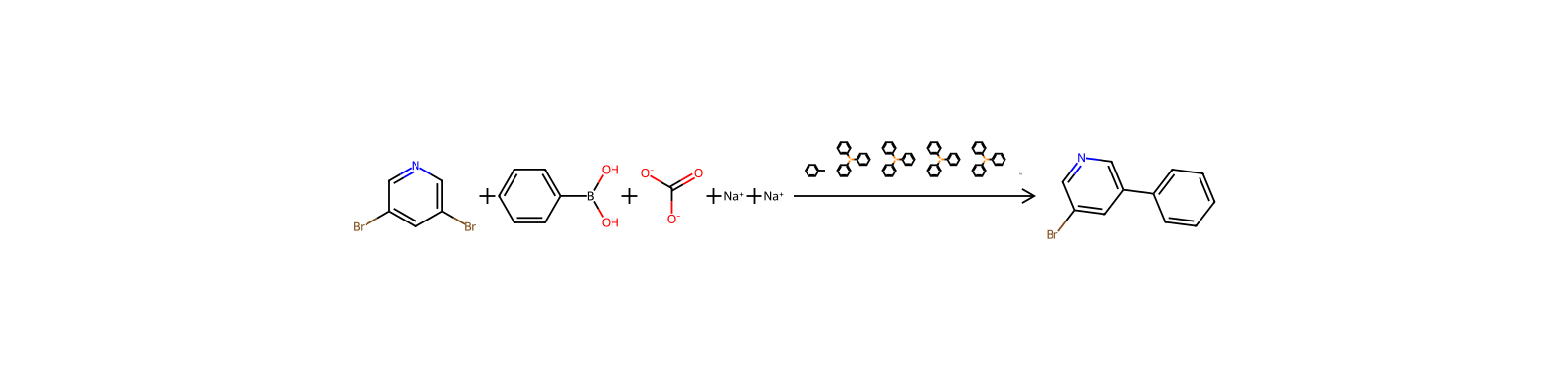
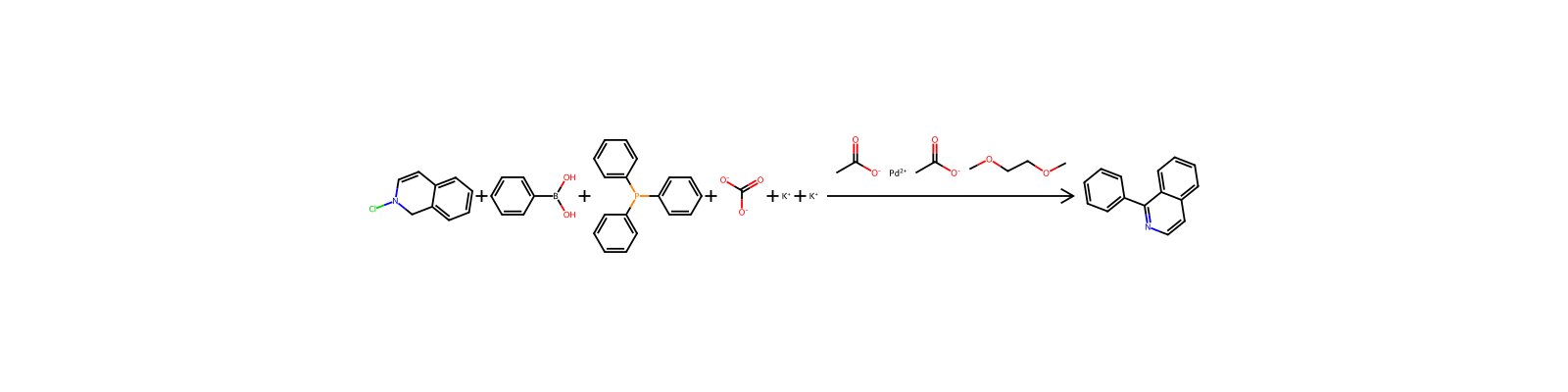
General DescriptionPhenylboronic acid (PBA) is an organoboronic acid. It behaves as a molecular receptor that can attach to compounds containing cis-diol group. Microwave-assisted Suzuki coupling of aryl chlorides with phenylboronic acid in the presence of Pd/C (catalyst) and water (solvent) has been described. Palladium-catalyzed cross-coupling reaction of phenylboronicacid with haloarenes to afford biaryls has been reported.
Upstream & downstream products
Downstream products
Suppliers50 total
国药集团化学试剂有限公司86-21-63210123 · [email protected]
北京华美互利生物化工010-56205725 · [email protected]
梯希爱(上海)化成工业发展有限公司021-67121386 · [email protected]
上海阿拉丁生化科技股份有限公司400-6206333 13167063860 · [email protected]
上海炎泽化工有限公司15345144255 19975051755 · [email protected]
INTATRADE GmbH+49 3493/605464 · [email protected]
江苏敬平新材料科技有限公司18852320356
T&W GROUP021-61551611 13296011611 · [email protected]
上海赫文斯化工有限公司15721252604 17321035817 · [email protected]
韶远科技(上海)有限公司021-50795510 4000665055 · [email protected]
科瑞迪化学400-821-5857 021-64326257 · [email protected]
常州沃研化工有限公司0510-83782303 13771177691 · [email protected]
安徽秀朗新材料科技有限公司0550-5261666 19901505185
Syntechem Co.,Ltd[email protected]
上海迈瑞尔生化科技有限公司4006356688 18621169109 · [email protected]
宇瑞(上海)化学有限公司02150456736 18602143071 · [email protected]
Wuhan EnTai Technology Development Co,.Ltd86-27-82330560 · [email protected]
阿法埃莎(中国)化学有限公司400-6106006 · [email protected]
太原市瑞和丰科贸有限公司+86 351 7031519 · [email protected]
安耐吉化学&3A(安徽泽升科技股份有限公司)400-0056266 · [email protected]
石家庄斯迪亚诺精细化工有限公司0311-89250318 13582355795 · [email protected]
武汉凯威斯科技有限公司86-027-67849912 · [email protected]
上海柏卡化学技术有限公司400-026-1533/(021) 6478-0600 · [email protected]
上海瀚鸿科技股份有限公司021-54306202 13764082696 · [email protected]
上海柯维化学技术有限公司021-64609169 18901607656 · [email protected]
四川伟博科技发展有限公司028-87578473 · [email protected]
上海景颜化工科技有限公司13817811078 · [email protected]
嘉兴市艾森化工有限公司0573-85285100 18627885956 · [email protected]
Pure Chemistry Scientific Inc.001-857-928-2050 or 1-888-588-9418 · [email protected]
西安瑞康医药技术有限公司(0)18629586220 +86-029-88499520 · [email protected]
上海隆盛化工有限公司58099637 13585536065 · [email protected]
成都福尔斯特医药技术有限公司028-87078428 028-87074958 · [email protected]
武汉丰泰威远科技有限公司027-87465837 19945049750 · [email protected]
孝感深远化工有限公司15527621225; 15527621225 · [email protected]
山东西亚化学有限公司13355009207 13355009207 · [email protected]
玛雅试剂+86 (573) 82222445 (0)18006601000 452520369 · [email protected]
瀚商化工科技有限公司021-50521775 15800962688
四川库利南科技有限公司400-1166-196 18981987031 · [email protected]
许昌豪丰化学科技有限公司0374-5695198 · [email protected]
天津希恩思生化科技有限公司400 638 7771 · [email protected]
南京维奥化工有限公司Please Send Email 18652950785 · [email protected]
上海乔木化学科技有限公司021-60451683 15021268886 · [email protected]
常州创视电子科技有限公司+86 (519) 8829-2061 · [email protected]
河南多贝化工有限公司0370-2785118 17550508557 · [email protected]
北京泰亚杰科技有限公司021-33690831-8001 13552411790;18616022633 · [email protected]
泰州志诚化工科技有限公司0523-82837785 13914525028 · [email protected]
上海源叶生物科技有限公司13636370518 · [email protected]
艾科试剂4008-755-333 18080918076 · [email protected]
上海思域化工科技有限公司86-21-34053660 · [email protected]
赛默飞世尔科技(中国)有限公司800-810-5118 · [email protected]
Additional notes
DefinitionChEBI: Phenylboronic acid is a member of boronic acids. It is functionally related to a boronic acid.
Related reactions
4,669 records






Linked notes
Loading…