HomeMCPSkillsWorkbenchOpenChem
HomeWorkbenchNotificationsMe
llms.txt · skill.md · MCP GuidePrivacy Policy · Terms of Service · Supportv1.8.5
  1. Home
  2. /Reaction

Hydrochloric Acid → 5,5-Dimethyl-10-[4-(morpholino)butyryloxy]-8-(3-methyl-2-octyl)-2-(2-propynyl)-1,2,3,4-tetrahydro-5H-[1]benzopyrano[3,4-d] pyridine dihydrochloride

HRID 441880
Print

Reaction equation

[CH3:1][C:2]1([CH3:29])[C:21]2[CH2:22][CH2:23][N:24]([CH2:26][C:27]#[CH:28])[CH2:25][C:20]=2[C:5]2[C:6]([OH:19])=[CH:7][C:8]([CH:10]([CH:12]([CH3:18])[CH2:13][CH2:14][CH2:15][CH2:16][CH3:17])[CH3:11])=[CH:9][C:4]=2[O:3]1.[ClH:30].[O:31]1[CH2:36][CH2:35][N:34]([CH2:37][CH2:38][CH2:39][C:40](O)=[O:41])[CH2:33][CH2:32]1.C1(N=C=NC2CCCCC2)CCCCC1.C(NC1CCCCC1)(NC1CCCCC1)=O.C1(N)C(F)=C(F)C(F)=C(N)C=1F.Cl.Cl.Cl>CO.C(Cl)(Cl)Cl.CCOCC.C(Cl)Cl>[ClH:30].[ClH:30].[CH3:29][C:2]1([CH3:1])[C:21]2[CH2:22][CH2:23][N:24]([CH2:26][C:27]#[CH:28])[CH2:25][C:20]=2[C:5]2[C:6]([O:19][C:40](=[O:41])[CH2:39][CH2:38][CH2:37][N:34]3[CH2:33][CH2:32][O:31][CH2:36][CH2:35]3)=[CH:7][C:8]([CH:10]([CH:12]([CH3:18])[CH2:13][CH2:14][CH2:15][CH2:16][CH3:17])[CH3:11])=[CH:9][C:4]=2[O:3]1
ParticipantsProcedureWorkupSources & evidenceReaction notes

Participants

10

Reactant 6

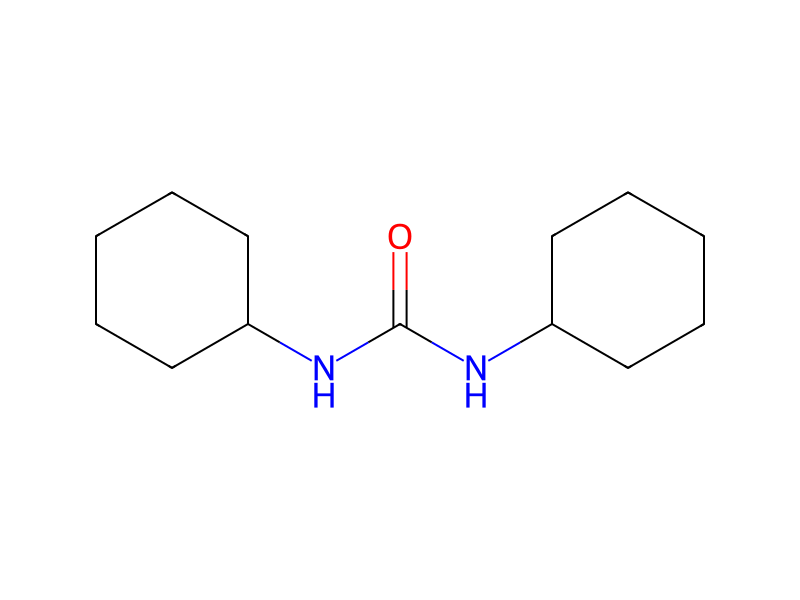
HCID 313Hydrochloric AcidHCID 4277N,N'-DicyclohexylureaHCID 10868DicyclohexylcarbodiimideHCID 990408-(1,2-Dimethylheptyl)-1,3,4,5-tetrahydro-5,5-dimethyl-2-(2-propyn-1-yl)-2H-(1)benzopyrano(4,3-c)pyridin-10-olHCID 149026Tetrafluoro-m-phenylenediamine dihydrochlorideHCID 12733746
4-Morpholin-4-Yl-Butyric Acid Hydrochloride

Product 1

HCID 214339055,5-Dimethyl-10-[4-(morpholino)butyryloxy]-8-(3-methyl-2-octyl)-2-(2-propynyl)-1,2,3,4-tetrahydro-5H-[1]benzopyrano[3,4-d] pyridine dihydrochloride

Reagents, catalysts & solvents 3

HCID 3283Diethyl EtherSolventHCID 6344DichloromethaneSolventHCID 21584188Chloroform methanolSolvent

Procedure

4.0 g. (10.1 mm.) of 5,5-dimethyl-10-hydroxy-8-(3-methyl-2-octyl)-2-(2-propynyl)-1,2,3,4-tetrahydro-5H-[1]benzopyrano[3,4-d]pyridine, 2.10 g. (10.1 mm.) of γ-morpholinobutyric acid hydrochloride and 2.18 g. (10.6 mm.) of dicyclohexylcarbodiimide were added to 200 ml. of methylene chloride. The reaction mixture was stirred at room temperature for 16 hours and after cooling the by-product of dicyclohexylurea was removed by suction filtration. The mother liquor was evaporated to give a residue which after the usual work-up was converted to a dihydrochloride by the addition of an ether solution of hydrogen chloride. Recrystallization from methylene chloride/diethyl ether gave a total of 3.23 g. (52%), m.p. 154°-160° C. The nuclear magnetic resonance and infrared spectra were in agreement with the proposed structure; the material was pure by thin layer chromatography (10% MeOH/CHCl3).

Workup

  1. customwas removed by suction filtration
  2. customThe mother liquor was evaporated
  3. customto give a residue which after the usual work-up
  4. customRecrystallization from methylene chloride/diethyl ether
  5. customgave a total of 3.23 g

Sources & evidence

ORD record
ord-ffec0653f03e40a9aa289242c9eec6fd
Source dataset
uspto-grants-1977_08
DOI
10.6084/m9.figshare.5104873.v1
Patent number
US04042694

Reaction notes

On this pageParticipantsProcedureWorkupSources & evidenceReaction notes