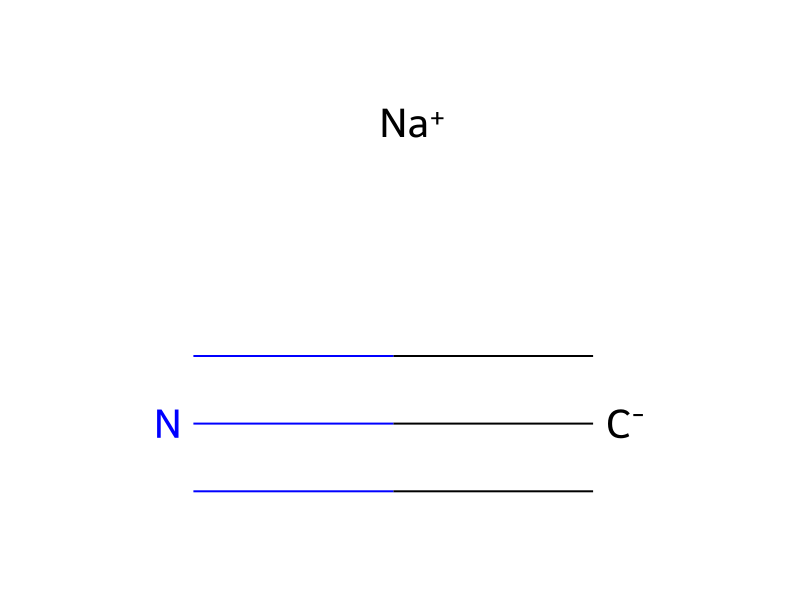
A suspension of ethyl 6-amino-4-hydroxycinnolin-3-yl carboxylate (1.164 g.) in water (10 ml.) and concentrated hydrochloric acid (1.0 ml.) was stirred at 0° C. in an ice-salt bath, and a solution of sodium nitrite (0.5 g.) in water (3 ml.) was added during 5 minutes, maintaining the temperature at 0°-5° C. The mixture was stirred at 0° C. for 10 minutes, and this mixture was then added dropwise to a stirred solution of cuprous cyanide (0.54 g.) and sodium cyanide (0.6 g.) in water (4 ml.), heated at 60°-70° C. on a steam bath. The mixture was heated under reflux for 30 minutes. The brown solid which was precipitated was filtered off, washed thoroughly with water and dried as much as possible on the filter. The crude product was extracted with boiling ethanol (2 × 100 ml.), and the combined extracts were filtered and the filtrate evaporated under reduced pressure. The residue was applied to a column of silica (30 g., Kieselgel 60). Elution with a mixture containing 15% v/v of ethanol and 85% v/v of chloroform yielded ethyl 6-cyano-4-hydroxycinnolin-3-yl carboxylate, m.p. 259°-261° C.