Reaction equation

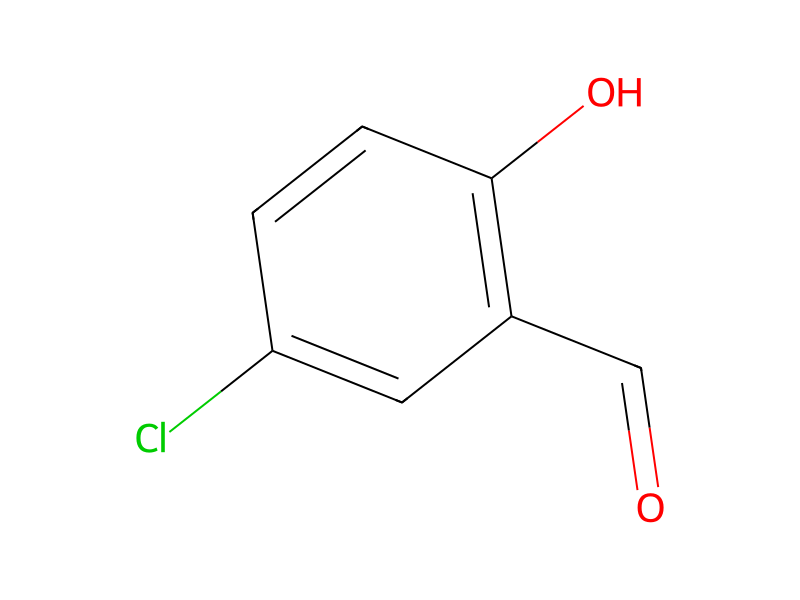
[OH-].C([N+](CCCC)(CCCC)CCCC)CCC.[Cl:19][C:20]1[CH:27]=[C:24]([CH:25]=[O:26])[C:23]([OH:28])=[CH:22][CH:21]=1.[Cl:29][CH2:30]/[CH:31]=[CH:32]/[CH2:33]Cl.[OH-].[Na+]>O>[Cl:19][C:20]1[CH:21]=[CH:22][C:23]([O:28][CH2:33]/[CH:32]=[CH:31]/[CH2:30][Cl:29])=[C:24]([CH:27]=1)[CH:25]=[O:26]Participants




Procedure
To 1.2 lt of refluxing water, 1 ml of 40% aqueous tetrabutylammonium hydroxide, 160 g of 5-chloro-salicylaldehyde and 140 ml of trans-1,4-dichloro-2-butene are added while vigorously stirring, followed by the dropwise addition of the solution of 42 g of sodium hydroxide in 200 ml of water at such a rate that the pH of the mixture is kept between 7 and 8. Thereafter the mixture is refluxed until the pH is about 7, cooled and extracted with methylene chloride. The extract is washed with 5% aqueous sodium hydroxide, dried, evaporated and the residue heated to 30°/0.1 mmHg in order to remove the excess of 1,4-dichloro-2-butene. The residue is taken up in 1 lt of diethyl ether, the solution filtered, the filtrate evaporated and the residue recrystallized from ethyl acetate, to yield the 5-chloro-2-(4-chloro-trans-2-butenyloxy)-benzaldehyde melting at 62°-63°.
Workup
- temperatureThereafter the mixture is refluxed until the pH is about 7
- temperaturecooled
- extractionextracted with methylene chloride
- washThe extract is washed with 5% aqueous sodium hydroxide
- customdried
- customevaporated
- temperaturethe residue heated to 30°/0.1 mmHg in order
- customto remove the excess of 1,4-dichloro-2-butene
- filtrationthe solution filtered
- customthe filtrate evaporated
- customthe residue recrystallized from ethyl acetate
Sources & evidence
- ORD record
- ord-90bd1998b87d471981ccc0612f614506
- Source dataset
- uspto-grants-1981_04
- Patent number
- US04261907
Linked notes
Loading…