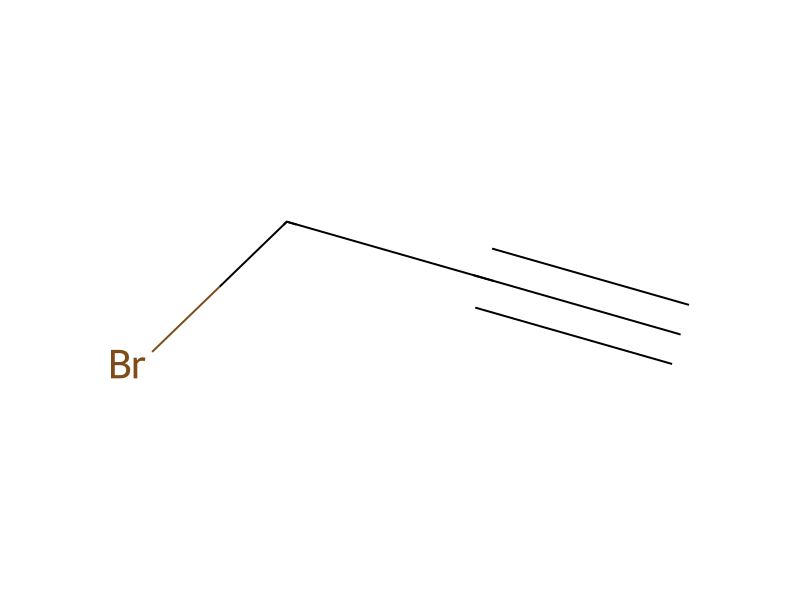
[Cl:1][C:2]1[C:3]([N:9]2[C:13]([C:14]([O:16][CH2:17][CH3:18])=[O:15])=[CH:12][C:11]([OH:19])=[N:10]2)=[N:4][CH:5]=[C:6]([Cl:8])[CH:7]=1.C(#N)C.C(=O)([O-])[O-].[K+].[K+].Br[CH2:30][C:31]#[CH:32]>O>[Cl:1][C:2]1[C:3]([N:9]2[C:13]([C:14]([O:16][CH2:17][CH3:18])=[O:15])=[CH:12][C:11]([O:19][CH2:32][C:31]#[CH:30])=[N:10]2)=[N:4][CH:5]=[C:6]([Cl:8])[CH:7]=1To a 100 mL flask, ethyl 1-(3,5-dichloropyridin-2-yl)-3-hydroxy-1H-pyrazole-5-carboxylate (0.7 g, 2.32 mmol), acetonitrile (10 mL), potassium carbonate (0.32 g, 2.32 mmol) and 3-bromoprop-1-yne (0.27 g, 2.32 mmol) were added sequentially. The reaction mixture was heated to 60° C. for 2 hours. Then the reaction mixture was poured into water (100 mL), extracted with ethyl acetate (2×100 mL). The organic layer was washed with saturated sodium carbonate solution (80 mL) and saturated brine (80 mL), dried over anhydrous magnesium sulfate and concentrated. The residue was purified by silica gel column chromatography to give the compound (0.30 g) as yellow oil in 38% yield.