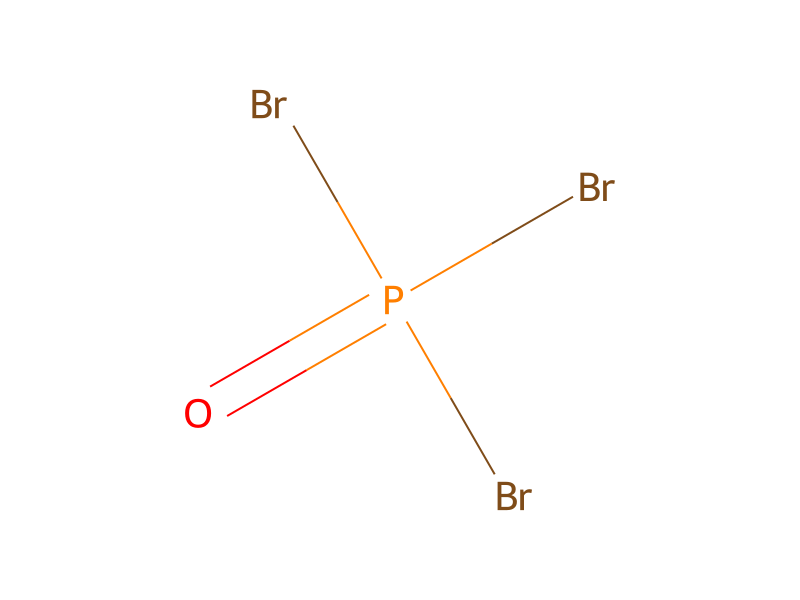
C(#N)C.[Cl:4][C:5]1[C:6]([N:12]2[CH:16]([C:17]([O:19][CH2:20][CH3:21])=[O:18])[CH2:15][C:14](=O)[NH:13]2)=[N:7][CH:8]=[C:9]([Cl:11])[CH:10]=1.P(Br)(Br)([Br:25])=O.C(=O)([O-])[O-].[Na+].[Na+]>ClCCl.O>[Br:25][C:14]1[CH2:15][CH:16]([C:17]([O:19][CH2:20][CH3:21])=[O:18])[N:12]([C:6]2[C:5]([Cl:4])=[CH:10][C:9]([Cl:11])=[CH:8][N:7]=2)[N:13]=1To a 250 mL flask, acetonitrile (65 mL), ethyl 2-(3,5-dichloropyridin-2-yl)-5-oxopyrazolidine-3-carboxylate (3.0 g, 9.8 mmol, the product of Step (3), Example 3) and phosphoryl bromide (2.8 g, 9.8 mmol) were added. The reaction mixture was heated to reflux for 2 hours. The reaction mixture was distilled to remove 30 mL solvent and added to the mixture of sodium carbonate (10 g, 120 mmol) and water (40 mL). The mixture was stirred for 20 minutes until no gas released. The reaction mixture was diluted with dichloromethane (100 mL), stirred for 50 minutes and extracted with dichloromethane (3×100 mL). The organic layer was washed with water, dried over anhydrous magnesium sulfate, and concentrated under vacuum to give the product (2.4 g) as amber oil in 67% yield. 1H NMR (300 MHz, CDCl3): 8.027 (d, 1H), 7.673 (d, 1H), 5.201 (dd, 1H), 4.202 (q, 2H), 3.464 (dd, 1H), 3.248 (dd, 1H), 1.223 (t, 3H).