Reaction equation

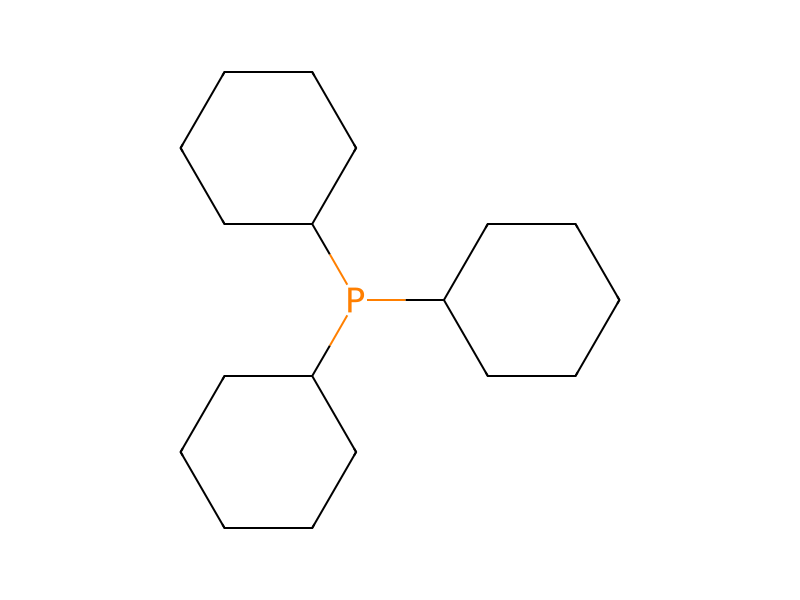
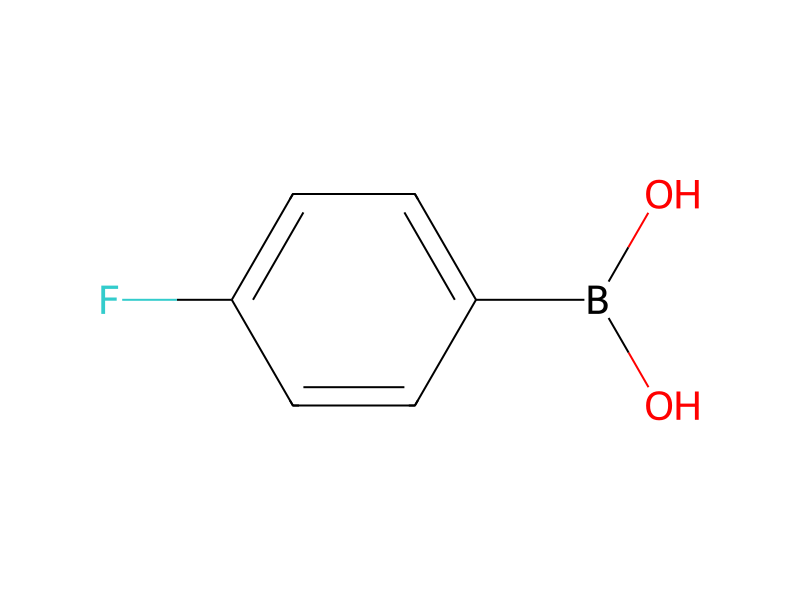
Cl[C:2]1[C:7]([Cl:8])=[N:6][CH:5]=[CH:4][N:3]=1.[F:9][C:10]1[CH:15]=[CH:14][C:13](B(O)O)=[CH:12][CH:11]=1.C(=O)([O-])[O-].[Cs+].[Cs+].C1(P(C2CCCCC2)C2CCCCC2)CCCCC1>C1C=CC(/C=C/C(/C=C/C2C=CC=CC=2)=O)=CC=1.C1C=CC(/C=C/C(/C=C/C2C=CC=CC=2)=O)=CC=1.C1C=CC(/C=C/C(/C=C/C2C=CC=CC=2)=O)=CC=1.[Pd].[Pd].O1CCOCC1>[Cl:8][C:7]1[C:2]([C:13]2[CH:14]=[CH:15][C:10]([F:9])=[CH:11][CH:12]=2)=[N:3][CH:4]=[CH:5][N:6]=1Participants
Reactant 4


Product 1

Reagents, catalysts & solvents 2


Procedure
First, 5.06 g of 2,3-dichloropyrazine, 5.23 g of 4-fluorophenyl boronic acid, 22.16 g of cesium carbonate, and 200 mL of dioxane were put in a three-neck flask equipped with a reflux pipe, and 0.467 g of tris(dibenzylideneacetone)dipalladium(0) (abbreviation: Pd2(dba)3) and 2.5 mL of tricyclohexylphosphine (abbreviation: Cy3P) were added thereto while the mixture was stirred under a nitrogen atmosphere, and they were reacted at 85° C. for 11 hours. After the reaction, the reaction solution was cooled down to room temperature and filtrated. A solvent of the obtained filtrate was distilled off, and the obtained residue was refined with a column chromatography using dichloromethane as a development solvent, so that 2-chloro-3-(4-fluorophenyl)pyrazine was obtained (light yellow powder, yield: 55%). A synthesis scheme of Step 1 is shown by the following (a1-1).
Workup
- additionwere added
- customthey were reacted at 85° C. for 11 hours
- customAfter the reaction
- filtrationfiltrated
- distillationA solvent of the obtained filtrate was distilled off
Sources & evidence
- ORD record
- ord-a6954906923247e688a5b7085299de23
- Source dataset
- uspto-grants-2013_09
- Patent number
- US08541574B2
Linked notes
Loading…