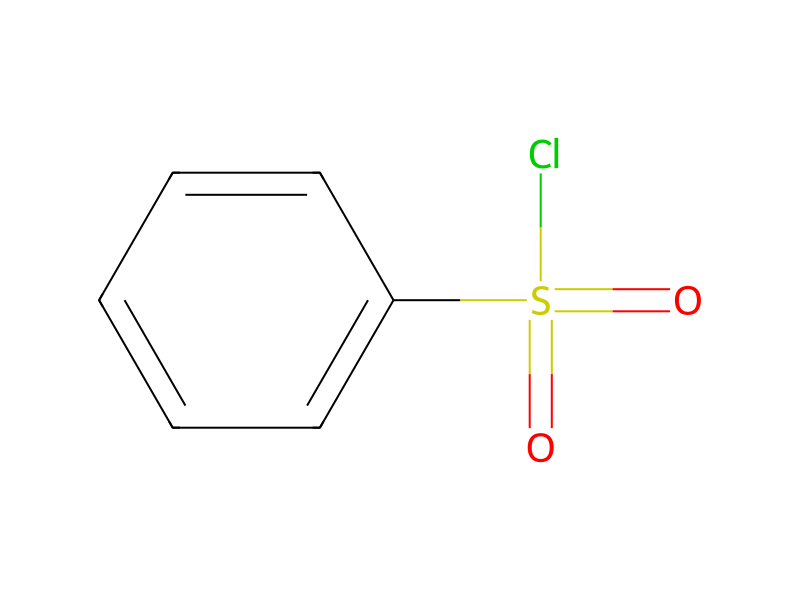
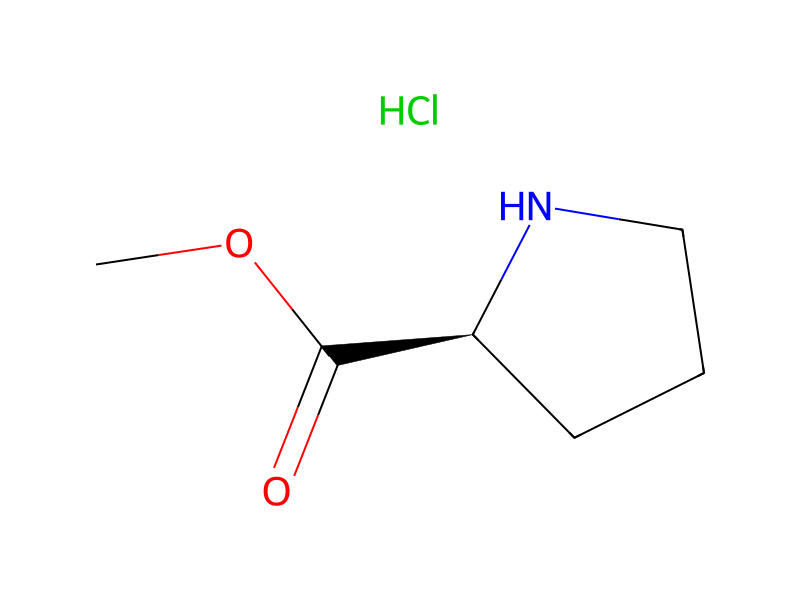
To a solution of 25 g (0.15 mol) of L-Proline methyl ester hydrochloride in 500 mL of CH2Cl2 was added 70 mL (0.5 mol) of triethylamine with stirring to give copious white precipitate. The mixture was filtered and the filtrate cooled to 0° C. (ice bath) with stirring. To the cooled solution was added a solution of 20 mL (0.15 mol) of benzenesulfonyl chloride in 50 mL of CH2Cl2 dropwise over fifteen minutes. The addition funnel was rinsed with an additional 25 mL of CH2Cl2, and the cloudy, colorless mixture was allowed to warm to room temperature with stirring overnight. The solution was washed twice with 400 mL of 1 N HCl, twice with 400 mL of 1 N NaOH, once with brine, then dried (MgSO4), filtered, and concentrated to a pale yellow solid. This material was recrystallized three times from ethyl acetate/hexanes to give 38.2 g (0.142 mol, 95%) of N-(benzenesulfonyl)-Proline methyl ester 7 (MW=269) as broad white needles (TLC vs. 2:1 hexanes/ethyl acetate, Rf=0.35). M/z=270.2 (M+H+).