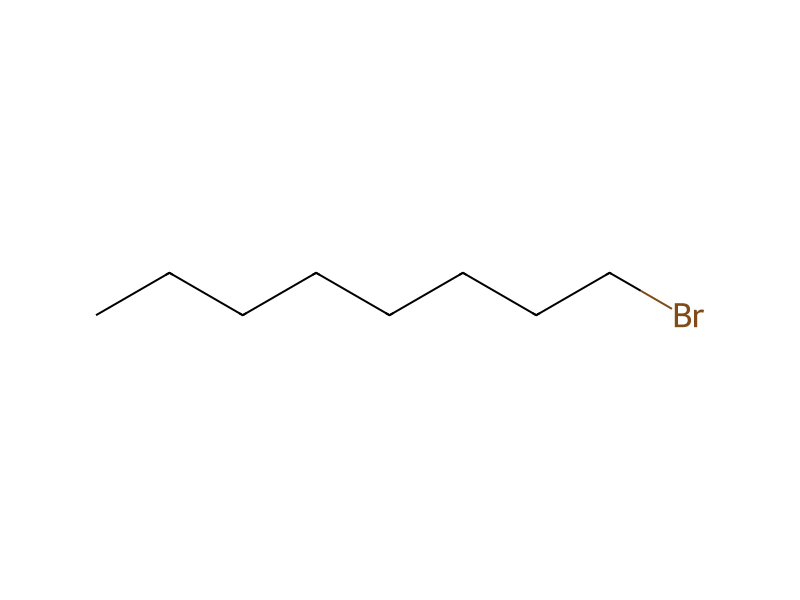
1-Bromooctane → Dicaprylyl Ether
HRID 460940
Reaction equation

Br[CH2:2][CH2:3][CH2:4][CH2:5][CH2:6][CH2:7][CH2:8][CH3:9].[OH-:10].[Na+]>>[CH2:2]([O:10][CH2:2][CH2:3][CH2:4][CH2:5][CH2:6][CH2:7][CH2:8][CH3:9])[CH2:3][CH2:4][CH2:5][CH2:6][CH2:7][CH2:8][CH3:9]Participants
3


Procedure
The use of quaternary salt catalysts in the production of symmetrical ethers is also known. A. W. Herriott and D. Picker (Tet. Lett. 44, p. 4,521 (1972)) teach that the reaction of 1-bromooctane with 2N sodium hydroxide in the presence of a quaternary ammonium salt catalyst produces di-n-octyl ether in 75% yield. R. D. Gordon (U.S. Pat. No. 3,824,295) also teaches that the reaction of an alkyl halide, sulfate or sulfonate with aqueous caustic in the presence of a quaternary salt catalyst produces a symmetrical ether.
Sources & evidence
- ORD record
- ord-bd214f3f2c2a4a1f8944cb2efc7d68fd
- Source dataset
- uspto-grants-1977_12