Reaction equation

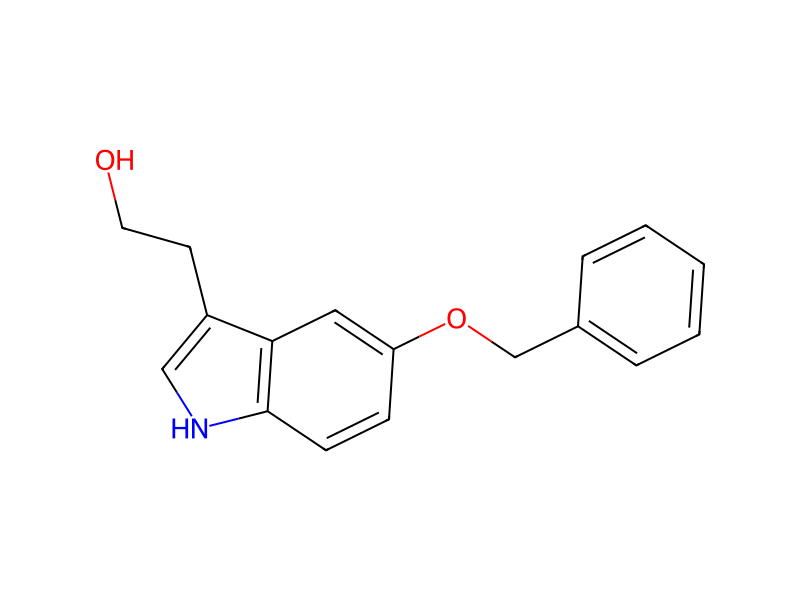
[CH2:1]([O:8][C:9]1[CH:10]=[C:11]2[C:15](=[CH:16][CH:17]=1)[NH:14][CH:13]=[C:12]2[C:18](=O)[C:19](OC)=[O:20])[C:2]1[CH:7]=[CH:6][CH:5]=[CH:4][CH:3]=1.[BH4-].[Na+]>C(O)(C)C.O>[CH2:1]([O:8][C:9]1[CH:10]=[C:11]2[C:15](=[CH:16][CH:17]=1)[NH:14][CH:13]=[C:12]2[CH2:18][CH2:19][OH:20])[C:2]1[CH:3]=[CH:4][CH:5]=[CH:6][CH:7]=1Participants
5
Reactant 2


Product 1
Reagents, catalysts & solvents 2


Procedure
A suspension of methyl 5-benzyloxyindol-3-ylglyoxylate (10 g.) and sodium borohydride (3.7 g.) in isopropanol (100 ml.) was stirred and refluxed for 5 hours. The cooled mixture was diluted with water and extracted with dichloromethane. Evaporation of the extract gave a pale yellow oil which crystallised from a mixture of toluene and petroleum ether to give 5-benzyloxy-3-(2-hydroxyethyl)indole as a white crystalline powder m.p. 97°-98°.
Workup
- temperaturerefluxed for 5 hours
- extractionextracted with dichloromethane
- customEvaporation of the extract
- customgave a pale yellow oil which
- customcrystallised from a mixture of toluene and petroleum ether
Sources & evidence
- ORD record
- ord-23ec6525c4244b4f9f7f173e7a825fb9
- Source dataset
- uspto-grants-1977_12
- Patent number
- US04062869
Linked notes
Loading…