Reaction equation

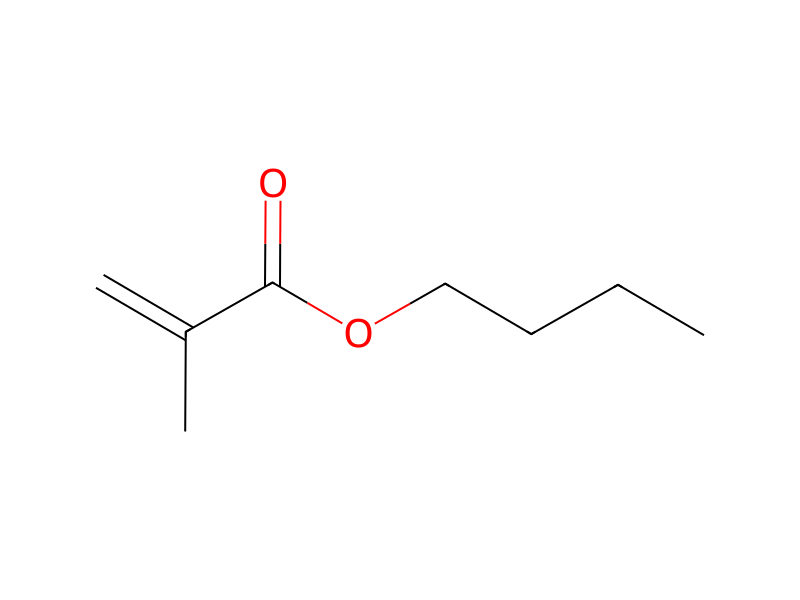
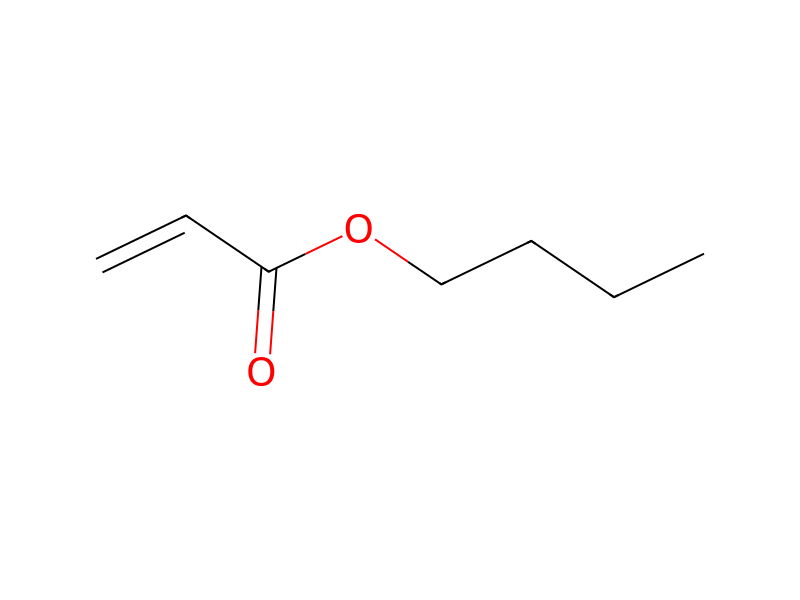
[C:1](OCC(C)C)(=O)[C:2](C)=[CH2:3].[C:11]([O:16][CH2:17][CH2:18][CH2:19][CH3:20])(=[O:15])[C:12]([CH3:14])=[CH2:13].C(OCCCC)(=O)C=C.[C:30](O)(=O)[CH:31]=[CH2:32].C1C(C(OOC(C)(C)C)=O)=CC=CC=1>CCCCOCCO.C(O)(C)C>[CH3:13][C:12]([C:11]([O:16][CH:17]1[C@@:31]2([CH3:32])[C:2]([CH3:3])([CH3:1])[C@H:19]([CH2:20][CH2:30]2)[CH2:18]1)=[O:15])=[CH2:14]Participants




Conditions
- Temperature
- 100 °C
Procedure
One hundred twenty-five parts of butyl Cellosolve is heated to 150° C. and a monomer mix consisting of 200 parts of isobutyl methacrylate, 137.5 parts of n-butyl methacrylate, 50 parts of n-butyl acrylate, 62.5 parts of acrylic acid and 50 parts of methacryloxyethyl esters of linseed oil fatty acids and an initiator solution consisting of 1.5 parts of t-butyl perbenzoate dissolved in 10 parts of butyl Cellosolve are added to the 150° C. solvent over three hours at a constant rate. Reaction temperature is held at 150±2° C. throughout the gradual additions and for 15 minutes after the addition of an initiator chaser solution consisting of 3 parts of t-butyl perbenzoate dissolved in 10 parts of butyl Cellosolve. The polymer solution is then cooled to 100° C. and diluted with 174 parts of isopropanol.
Workup
- additiona monomer mix
- additionare added to the 150° C. solvent over three hours at a constant rate
- customReaction temperature
- additionafter the addition of an initiator chaser solution
Sources & evidence
- ORD record
- ord-41730fe9ee214c4fb80466baa1fae14c
- Source dataset
- uspto-grants-1985_10
- Patent number
- US04547556
Linked notes
Loading…