Reaction equation

[N+:1]([C:4]1[C:17]2[C:16](=[O:18])[C:15]3[C:10](=[CH:11][CH:12]=[CH:13][CH:14]=3)[C:9](=[O:19])[C:8]=2[CH:7]=[CH:6][C:5]=1[CH3:20])([O-])=O.ClC1C(=O)C2C(C(=O)C=1Cl)=CC=CC=2.[OH-].[Na+].C=O>C(O)C>[NH2:1][C:4]1[C:17]2[C:16](=[O:18])[C:15]3[C:10](=[CH:11][CH:12]=[CH:13][CH:14]=3)[C:9](=[O:19])[C:8]=2[CH:7]=[CH:6][C:5]=1[CH3:20]Participants
Reactant 4

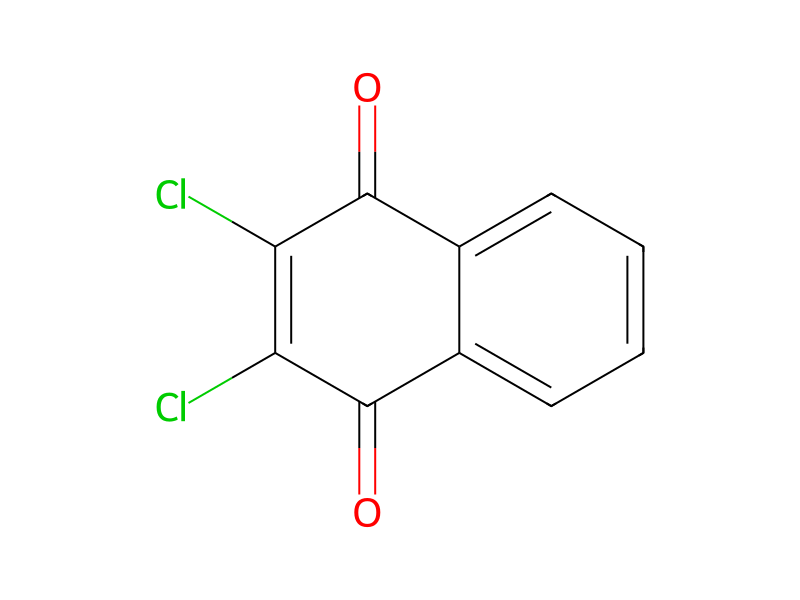


Product 1

Reagents, catalysts & solvents 1

Procedure
53 parts of 1-nitro-2-methylanthraquinone and 0.6 part of 2,3-dichloro-1,4-naphthoquinone in 300 parts by volume of ethanol and 150 parts by volume of 50% aqueous sodium hydroxide solution are heated to 78°-80° C. At this temperature, 37% aqueous formaldehyde solution is added dropwise to the solution in accordance with the consumption. The consumption of formaldehyde can be checked and the addition controlled by measuring the changes in the redox potential. The time taken for the addition is 11/2 to 2 hours. The 1-amino-2-methylanthraquinone so obtained is then completely precipitated by addition of water, and the precipitate is isolated by filtration, washed with water and dried in vacuo at 80° C. Yield: about 43 g (~90% of theory) of 1-amino-2-methylanthraquinone.
Workup
- customThe consumption of formaldehyde
- additionthe addition
- additionThe time taken for the addition
- custom2 to 2 hours
Sources & evidence
- ORD record
- ord-2651892294d0474baa1b50f75fd8a23b
- Source dataset
- uspto-grants-1985_10
- Patent number
- US04549989
Linked notes
Loading…