1-Bromohexadecane → 1-Dimethoxyphosphorylhexadecane
Reaction equation

[CH2:1](Br)[CH2:2][CH2:3][CH2:4][CH2:5][CH2:6][CH2:7][CH2:8][CH2:9][CH2:10][CH2:11][CH2:12][CH2:13][CH2:14][CH2:15][CH3:16].[P:18]([O:23]C)([O:21][CH3:22])[O:19][CH3:20]>>[CH2:1]([P:18](=[O:23])([O:21][CH3:22])[O:19][CH3:20])[CH2:2][CH2:3][CH2:4][CH2:5][CH2:6][CH2:7][CH2:8][CH2:9][CH2:10][CH2:11][CH2:12][CH2:13][CH2:14][CH2:15][CH3:16]Participants

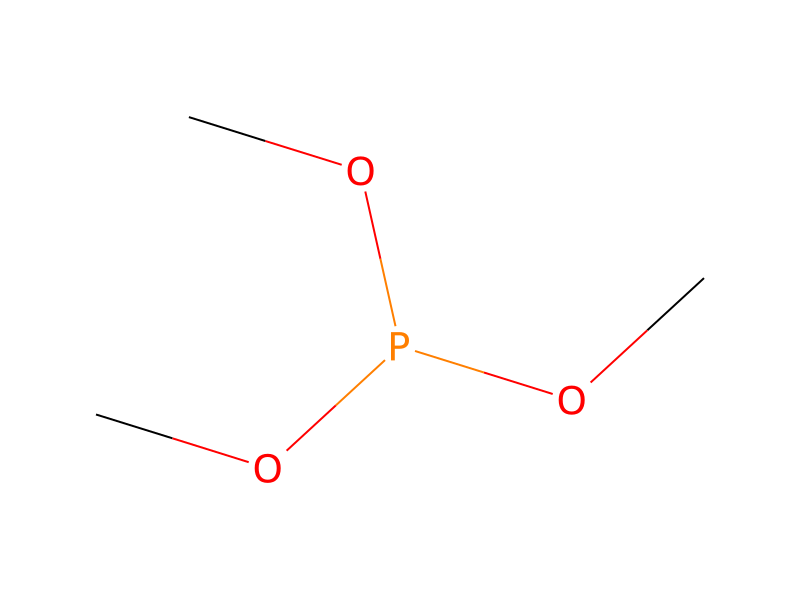

Conditions
- Temperature
- 116 °C
Procedure
A mixture of n-hexadecyl bromide (4.89 g, 16 mmol) and freshly distilled trimethyl phosphite (2.48 g, 20 mmol) is stirred at 116° C. for 24 hours. The excess trimethyl phosphite is then removed by distillation in vacuo and the residue is stored over phosphorus pentoxide in vacuo for 24 hours. The corresponding dimethyl n-hexadecylphosphonate is isolated from the residue by extracting twice with 10 ml of methanol each time. The two methanol extracts are combined and concentrated in vacuo. The oily colorless residue thus obtained, which still contains n-hexadecyl bromide in addition to the methyl n-hexadecylphosphonate, is further reacted with trimethylsilyl chloride (1.02 g, 9.4 mmol) and sodium iodide (1.4 g, 9.4 mmol) in 4.7 ml of anhydrous acetonitrile. The reaction is carried out with stirring at room temperature and lasts 15 minutes.
Workup
- customThe excess trimethyl phosphite is then removed by distillation in vacuo
- waitthe residue is stored over phosphorus pentoxide in vacuo for 24 hours
Sources & evidence
- ORD record
- ord-7e0e6e40c4d54412882ff852794fd237
- Source dataset
- uspto-grants-1992_10
- Patent number
- US05155099
Reaction notes
Loading…