Reaction equation
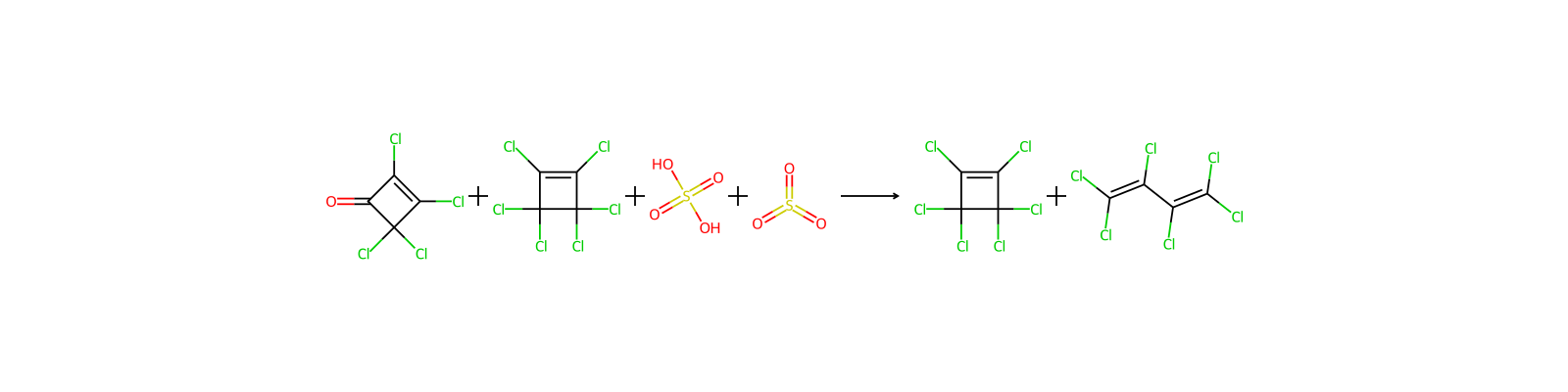
ClC1(Cl)C(=O)C(Cl)=C1Cl.[Cl:10][C:11]1([Cl:19])[C:14]([Cl:15])=[C:13]([Cl:16])[C:12]1([Cl:18])[Cl:17].S(=O)(=O)(O)O.S(=O)(=O)=O>>[Cl:10][C:11]1([Cl:19])[C:14]([Cl:15])=[C:13]([Cl:16])[C:12]1([Cl:18])[Cl:17].[Cl:10][C:11]([Cl:19])=[C:14]([Cl:15])[C:13]([Cl:16])=[C:12]([Cl:18])[Cl:17]Participants




Procedure
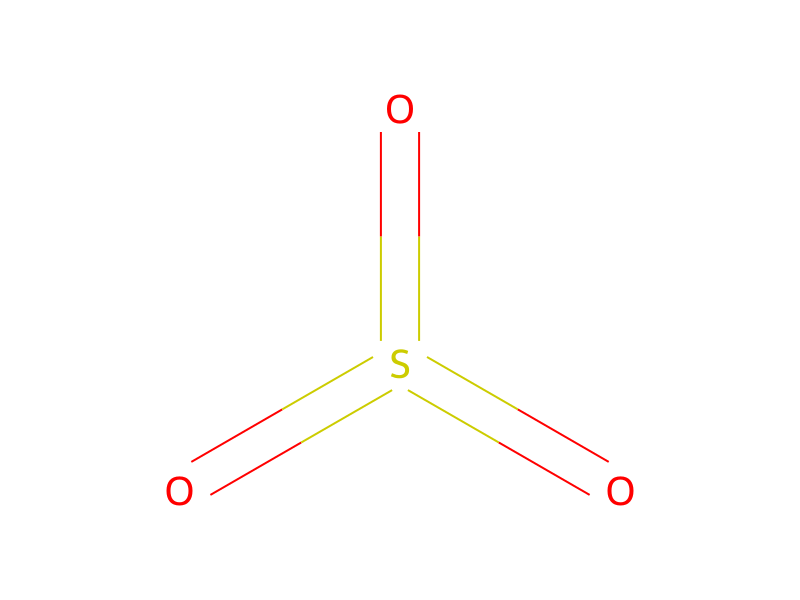
Tetrachlorocyclobutenone, required as a starting material, is obtained with high yields and conversions by a not yet published process from hexachlorocyclobutene and a mixture of sulphuric acid and sulphur trioxide at elevated temperatures, e.g., by reaction of 1 mol hexachlorocyclobutene with approximately 1 mol each of sulphuric acid and sulphur trioxide at a temperature of 80° C. within 5 hours. Hexachlorocyclobutene can be obtained from hexachloro-1,3-butadiene in yields of near 100% of theory (DE-OS No. 26 18 557), corresponding to U.S. Pat. No. 4,115,460), for example by rectifying commercial hexachlorobutadiene at a pressure of from 2 to 100 mm Hg with a reflux ratio of from 300:1 to 600:1, subjecting hexachlorobutadiene remaining in the bottoms to a heat treatment at from 150° to 200° C. and then returning it to the rectifying column together with fresh commercial hexachlorobutadiene while withdrawing the product rich in hexachlorocyclobutene over the top. A suitable starting material is not only pure tetrachlorocyclobutenone but also crude tetrachlorocyclobutenone which may, for example, contain hexachlorobutadiene and hexachlorocyclobutene originating from its process of manufacture.
Workup
- customis obtained
- customwith high yields
Sources & evidence
- ORD record
- ord-836302dff01f4cb2b1919c94896ee549
- Source dataset
- uspto-grants-1979_11
- Patent number
- US04175095
Linked notes
Loading…