Reaction equation

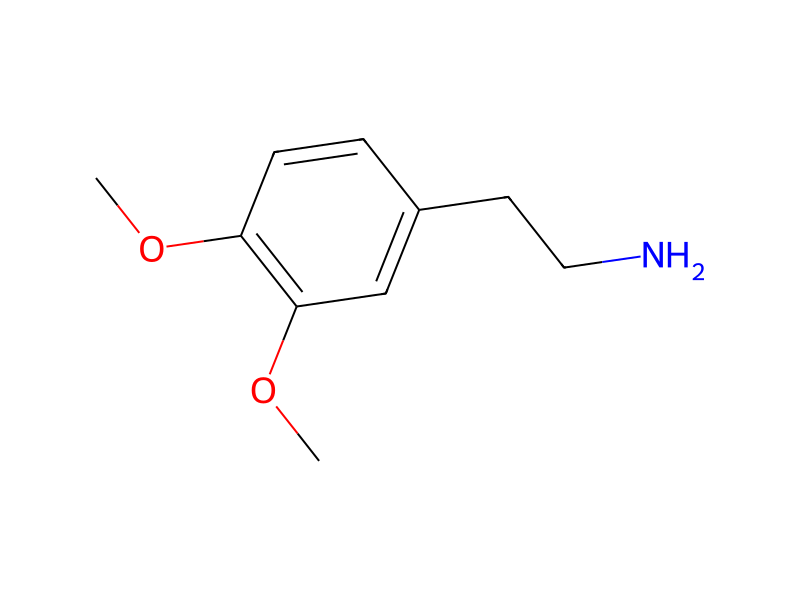
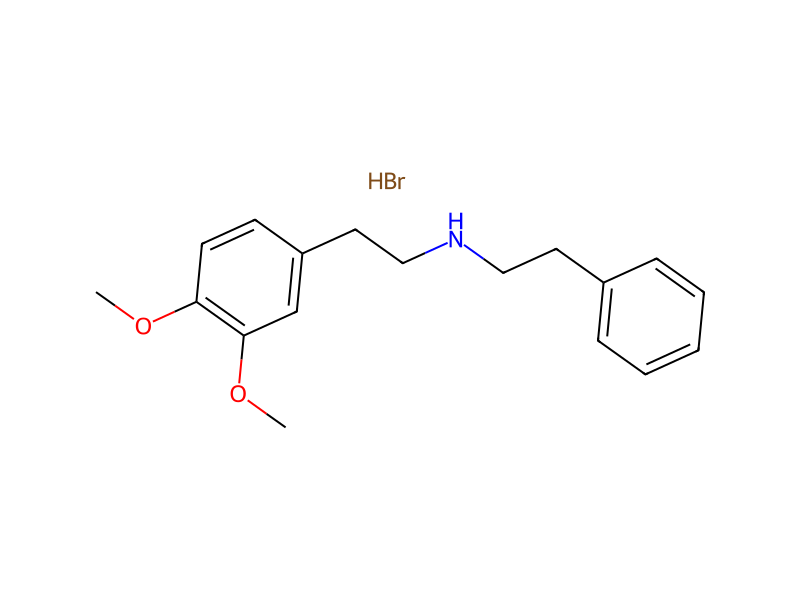
[CH2:1]([NH2:13])[CH2:2][C:3]1[CH:12]=[CH:11][C:8]([O:9][CH3:10])=[C:5]([O:6][CH3:7])[CH:4]=1.[CH:14]1[CH:19]=[CH:18][C:17]([CH2:20][CH2:21][Br:22])=[CH:16][CH:15]=1>CC(C)=O>[BrH:22].[CH2:21]([NH:13][CH2:1][CH2:2][C:3]1[CH:12]=[CH:11][C:8]([O:9][CH3:10])=[C:5]([O:6][CH3:7])[CH:4]=1)[CH2:20][C:17]1[CH:18]=[CH:19][CH:14]=[CH:15][CH:16]=1Participants
4
Reactant 2

Product 1
Reagents, catalysts & solvents 1

Conditions
- Temperature
- 125 °C
Procedure
A mixture of 10 g of homoveratrylamine and 12 g of β-phenethyl bromide was stirred for 15 minutes at 125° C. in a bath and after cooling the mixture to 60° C., 30 ml of acetone were added. The mixture was iced and vacuum filtered and the recovered precipitate was dissolved in 250 ml of methanol. The solution was concentrated to 50 ml and 400 ml of ethyl acetate were added thereto. The mixture was concentrated to 200 ml, was iced and vacuum filtered to obtain 12.5 g of raw product. The latter was crystallized from isopropanol to obtain 9 g of N-phenethyl-3,4-dimethoxyphenethylamine hydrobromide in the form of colorless crystals melting at 180° C.
Workup
- temperatureafter cooling the mixture to 60° C.
- filtrationvacuum filtered
- dissolutionthe recovered precipitate was dissolved in 250 ml of methanol
- concentrationThe solution was concentrated to 50 ml and 400 ml of ethyl acetate
- additionwere added
- concentrationThe mixture was concentrated to 200 ml
- filtrationvacuum filtered
- customto obtain 12.5 g of raw product
- customThe latter was crystallized from isopropanol
Sources & evidence
- ORD record
- ord-8fad7de4d05543a687b763c106462129
- Source dataset
- uspto-grants-1979_11
- Patent number
- US04175136
Linked notes
Loading…