HomeMCPWorkbenchSkills
HomeWorkbenchNotificationsMe
llms.txt · MCP GuidePrivacy Policy · Terms of Service · Supportv1.8.0
  1. Home
  2. /Reaction

Borane → (-)-Pinene

HRID 4697
Notes
Print preview

Reaction equation

HRID 4697 reaction equation
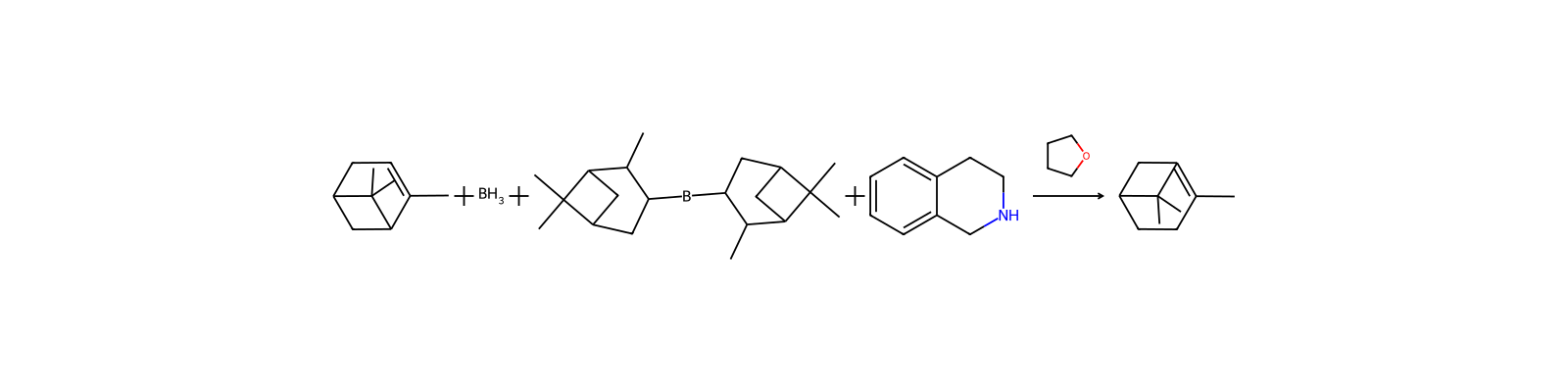
[CH3:1][C:2]1[CH:7]2[C:8]([CH3:10])([CH3:9])[CH:5]([CH2:6]2)[CH2:4][CH:3]=1.B.[B](C1C(C)C2C(C)(C)C(C2)C1)C1C(C)C2C(C)(C)C(C2)C1.C1C2C(=CC=CC=2)CCN1>O1CCCC1>[C:7]12[CH2:6][CH:5]([C:8]1([CH3:10])[CH3:9])[CH2:4][CH2:3][C:2]=2[CH3:1]
ParticipantsProcedureWorkupSources & evidenceReaction notes

Participants

6

Reactant 4

HCID 6331BoraneHCID 6654(+-)-alpha-PineneHCID 70461,2,3,4-TetrahydroisoquinolineHCID 12482041(-)-Diisopinocampheyl borane

Product 1

HCID 15837102(-)-Pinene

Reagents, catalysts & solvents 1

HCID 8028TetrahydrofuranSolvent3×

Procedure

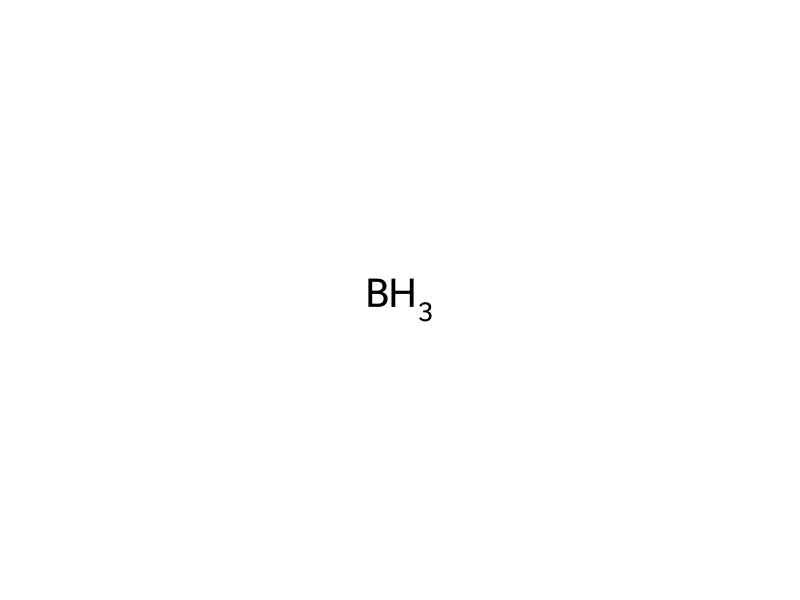
Another way to accomplish this assymetric reduction of compound 4' to optically active tetrahydroisoquinolines is to reduce the compound in tetrahydrofuran with the reagent which is obtained by reacting 2 moles of optically active alpha pinene with borane in tetrahydrofuran. The solution of the diisopinocampheylborane functions as the reducing agent in the reduction of the intermediate 4' to chiral tetrahydroisoquinoline. Basically, the compound 4' is treated with a slight excess of this reagent produced from optically active pinene and BH3 in tetrahydrofuran followed by evaporation and treatment with HCl which decomposes a complex and gives the hydrochloride of the tetrahydroisoquinoline in the aqueous phase. The base can then be recovered from the aqueous phase by treatment with ammonia and methanol as above.
Workup

  1. customis obtained

Sources & evidence

ORD record
ord-bc81acde98bc4b1fabc531c70cdf4325
Source dataset
uspto-grants-1988_02
DOI
10.6084/m9.figshare.5104873.v1
Patent number
US04727146

Reaction notes

Loading…

On this pageParticipantsProcedureWorkupSources & evidenceReaction notes
