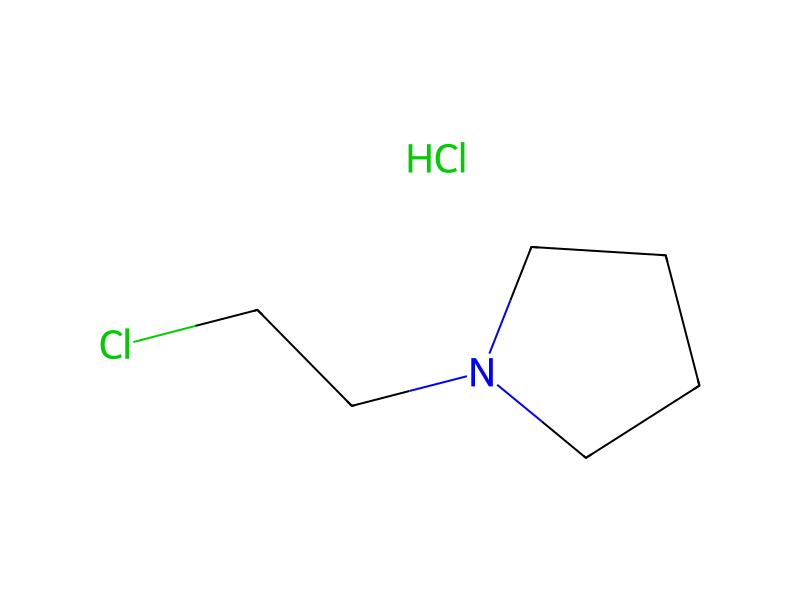
A mixture of 4-nitro-1H-pyrazole (5.00 g, 44.22 mmol), 1-(2-chloro-ethyl)-pyrrolidine hydrochloride (8.86 g, 52.42 mmol), acetonitrile (50 mL) and potassium carbonate (19.00 g, 137.50 mmol) was heated at 80° C. under an argon atmosphere for 16 hours. The reaction mixture was evaporated in vacuo and partitioned between water and dichloromethane. The aqueous phase was extracted twice with dichloromethane and the combined organic layers were washed with brine, dried over sodium sulfate, filtered and concentrated. 4-Nitro-1-(2-pyrrolidin-1-yl-ethyl)-1H-pyrazole was isolated as an orange solid (8.50 g, 91%). MP=39-41° C. 1H NMR (400 MHz, CDCl3, δ, ppm): 8.29 (s, 1H), 8.06 (s, 1H), 4.27 (t, J=6.22 Hz, 2H), 2.95 (t, J=6.17 Hz, 2H), 2.55 (s, 4H), 1.80 (s, 4H). MS=211 (MH)+.