HomeMCPSkillsWorkbenchOpenChem
HomeWorkbenchNotificationsMe
llms.txt · skill.md · MCP GuidePrivacy Policy · Terms of Service · Supportv1.8.4
  1. Home
  2. /Reaction

(Dimethyl sulfide)trihydroboron → 7-bromo-2-methyl-3,4-dihydro-2H-benzo[b][1,4]oxazine

HRID 473950
Print

Reaction equation

CSC.B.[Br:5][C:6]1[CH:7]=[CH:8][C:9]2[NH:14][C:13](=O)[CH:12]([CH3:16])[O:11][C:10]=2[CH:17]=1>C1COCC1>[Br:5][C:6]1[CH:7]=[CH:8][C:9]2[NH:14][CH2:13][CH:12]([CH3:16])[O:11][C:10]=2[CH:17]=1
ParticipantsProcedureWorkupSources & evidenceReaction notes

Participants

4

Reactant 2

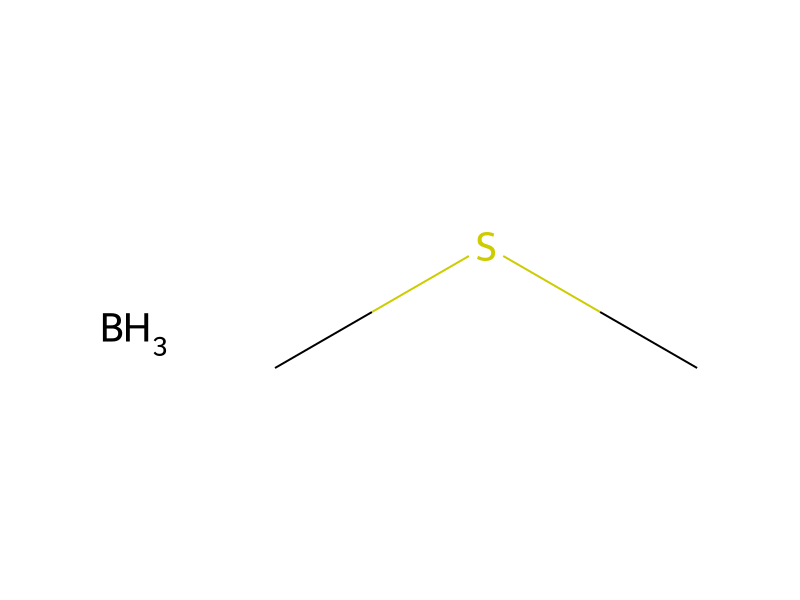
HCID 12423031(Dimethyl sulfide)trihydroboronHCID 226231297-bromo-2-methyl-2H-benzo[b][1,4]oxazin-3(4H)-one

Product 1

HCID 580646527-bromo-2-methyl-3,4-dihydro-2H-benzo[b][1,4]oxazineYield 98%

Reagents, catalysts & solvents 1

HCID 8028TetrahydrofuranSolvent

Procedure

Borane dimethyl sulfide complex (2 M solution in THF, 0.414 mL, 0.828 mmol) was added at room temperature to a solution of 7-bromo-2-methyl-2H-benzo[b][1,4]oxazin-3(4H)-one A-2 (100.0 mg, 0.414 mmol) in anhydrous THF (4.10 mL) under an atmosphere of argon. The reaction mixture was heated to reflux for 2 h, cooled to room temperature, quenched with methanol (1.0 mL), stirred for 30 mins and concentrated to dryness under reduced pressure. The crude residue was purified by flash column chromatography on silica gel (hexanes:ethyl acetate gradient) to give 7-bromo-2-methyl-3,4-dihydro-2H-benzo[b][1,4]oxazine A-3 (92.9 mg, Yield=98%). MS (ESI) [M+1]+ 228, 230.

Workup

  1. temperatureThe reaction mixture was heated
  2. temperatureto reflux for 2 h
  3. customquenched with methanol (1.0 mL)
  4. concentrationconcentrated to dryness under reduced pressure
  5. customThe crude residue was purified by flash column chromatography on silica gel (hexanes:ethyl acetate gradient)

Sources & evidence

ORD record
ord-4bd088a2df78400c96fb6b17f6be98a5
Source dataset
uspto-grants-2014_01
DOI
10.6084/m9.figshare.5104873.v1
Patent number
US08637507B2

Reaction notes

On this pageParticipantsProcedureWorkupSources & evidenceReaction notes