HomeMCPSkillsWorkbenchOpenChem
HomeWorkbenchNotificationsMe
llms.txt · skill.md · MCP GuidePrivacy Policy · Terms of Service · Supportv1.8.5
  1. Home
  2. /Reaction

Hydrochloric Acid → Aluminum octaoxide

HRID 479912
Print

Reaction equation

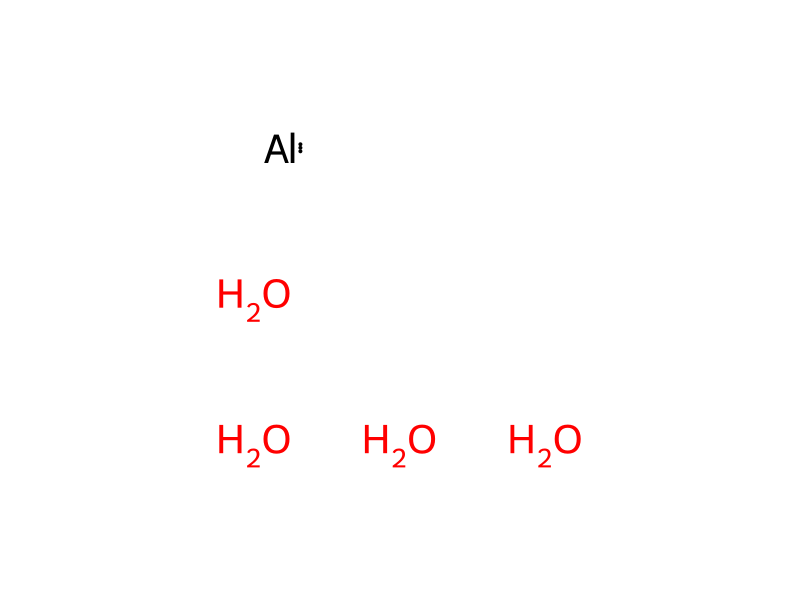
[OH2:1].O.O.O.O.[Al:6].Cl>C(O)(=O)C>[O-2:1].[O-2:1].[O-2:1].[O-2:1].[O-2:1].[O-2:1].[O-2:1].[O-2:1].[Al+3:6]
ParticipantsConditionsProcedureWorkupSources & evidenceReaction notes

Participants

5

Reactant 3

HCID 313Hydrochloric AcidHCID 962Water2×HCID 6328660Pepsamar3×

Product 1

HCID 131723049Aluminum octaoxide

Reagents, catalysts & solvents 1

HCID 176Acetic AcidSolvent

Conditions

Temperature
80 °C

Procedure

Aluminum octaoxide was synthesized by the method disclosed by U.S. Pat. Nos. 4,242,271 and 4,202,870, and then hydrolyzed to prepare an alumina slurry. Water was added to the alumina slurry until it had 5% by weight of solid contents of an alumina hydrate. The alumina slurry was heated to 80° C. and reacted for 10 hours for aging, and a colloidal sol thus obtained was dried with a sprayer, thereby preparing Alumina Hydrate No. 1. The Alumina Hydrate No. 1 was mixed with water for dispersion therein, adjusted to pH 4 with hydrochloric acid and then stirred for some time. Subsequently, small components were eliminated by the ultrafiltration method (using ACV-3050 Module, trade name, manufactured by Asahi Chemical Corp.), thereby obtaining a colloidal sol. The colloidal sol was desalted and deflocculated by adding acetic acid. Alumina Hydrate No. 2 was prepared by drying the colloidal sol after the deflocculation, and X-ray diffractometry of the Alumina Hydrate No. 2 indicated the pseudo-boehmite structure. Furthermore, a measurement of a pore radius distribution by the nitrogen adsorption·desorption method indicated that a volume of pores having radii not exceeding 50 Å was not more than 6.0% of a volume of all pores as shown in Table 1.


Workup

  1. custom4,242,271 and 4,202,870, and then hydrolyzed to prepare an alumina slurry
  2. customreacted for 10 hours
  3. customa colloidal sol thus obtained
  4. customwas dried with a sprayer
  5. custompreparing Alumina Hydrate No
  6. customobtaining a colloidal sol. The colloidal sol
  7. custom2 was prepared
  8. dry with materialby drying the colloidal sol after the deflocculation, and X-ray diffractometry of the Alumina Hydrate No

Sources & evidence

ORD record
ord-8c33d495a20d494daa856c952fa7e519
Source dataset
uspto-grants-2003_11
DOI
10.6084/m9.figshare.5104873.v1
Patent number
US06649234B1

Reaction notes

On this pageParticipantsConditionsProcedureWorkupSources & evidenceReaction notes