Reaction equation
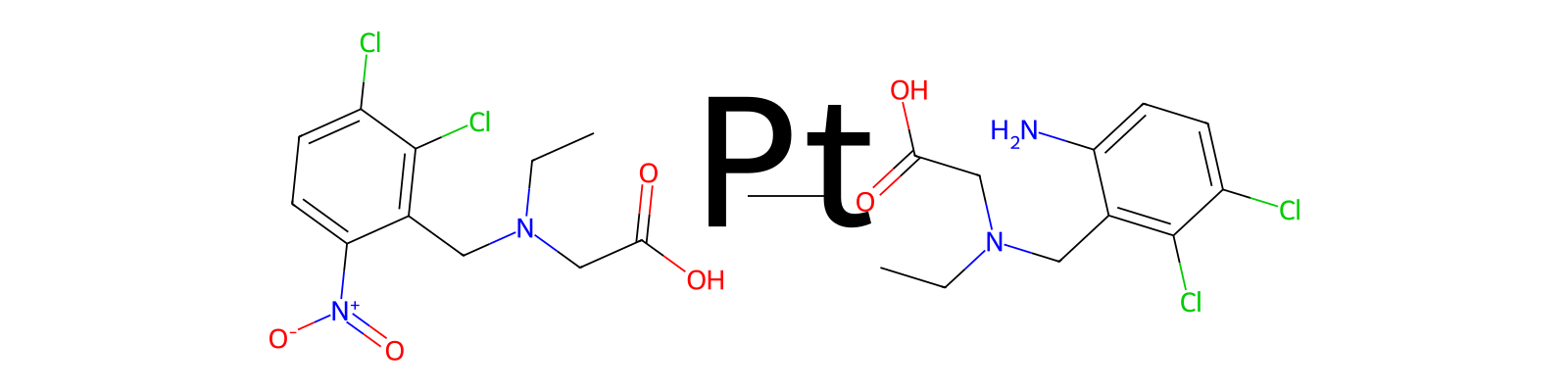
[CH2:1]([N:3]([CH2:8][C:9]1[C:14]([N+:15]([O-])=O)=[CH:13][CH:12]=[C:11]([Cl:18])[C:10]=1[Cl:19])[CH2:4][C:5]([OH:7])=[O:6])[CH3:2]>[Pt]>[CH2:1]([N:3]([CH2:8][C:9]1[C:14]([NH2:15])=[CH:13][CH:12]=[C:11]([Cl:18])[C:10]=1[Cl:19])[CH2:4][C:5]([OH:7])=[O:6])[CH3:2]Participants
Reactant 1

Product 1
Reagents, catalysts & solvents 1

Procedure
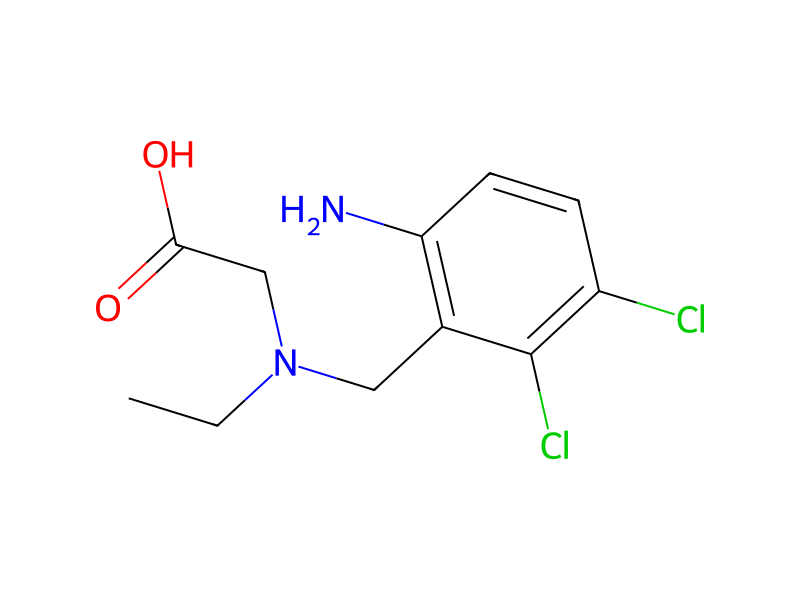
Ethyl N-(2,3-dichloro-6-nitrobenzyl)glycine (compound VI) may also be catalytically hydrogenated using a sulfided platinum on carbon catalyst under hydrogen pressure. The catalyst is then removed by filtration and the filtrate concentrated, diluted with water and an organic solvent and basified using an alkali to a pH of about 9-10. The organic phase is separated and concentrated and the crude material purified by low temperature recrystallization to give ethyl-(6-amino-2,3-dichlorobenzyl)glycine (compound I). 6,7-dichloro-1,5-dihydroimidazo[2,1-b]quinazoline-2(3H)one (compound III) may be prepared from compound II by suspending 5,6-dichloro-3,4-dihydro-2(1H)iminoquinazoline-3-acetate HBR (compound II) in water and adding an organic base such as TEA. After filtering the solution the filtered cake is washed in water and the solids suspended in alcohol. After filtering, the solids are rinsed in an alcohol and dried to give compound III.
Workup
- customThe catalyst is then removed by filtration
- concentrationthe filtrate concentrated
- additiondiluted with water
- customThe organic phase is separated
- concentrationconcentrated
- customthe crude material purified by low temperature recrystallization
Sources & evidence
- ORD record
- ord-13078e11f0c1437fae99de3ec5765b6e
- Source dataset
- uspto-grants-2003_11
- Patent number
- US06653500B2
Linked notes
Loading…