Reaction equation

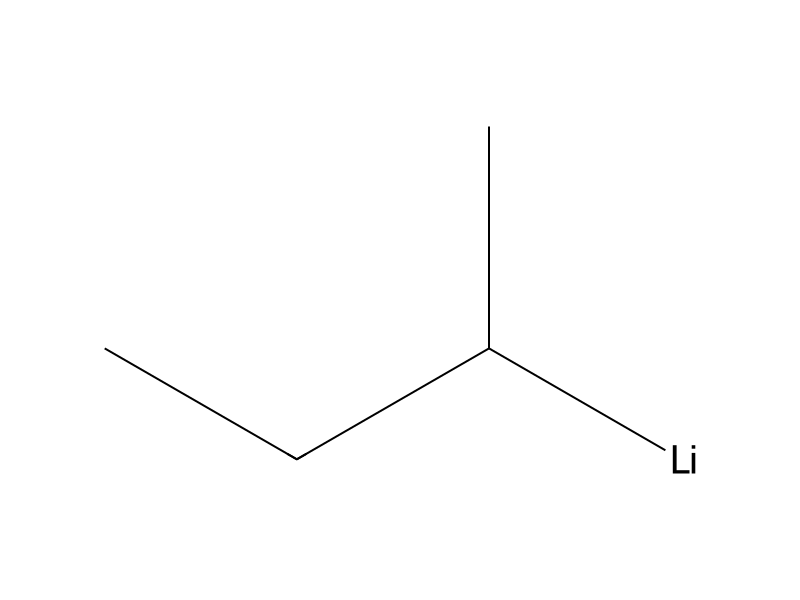
Br[C:2]1[C:3]2[CH2:19][N:18]([CH3:20])[CH2:17][CH2:16][C:4]=2[C:5]2[N:6]=[C:7]([O:14][CH3:15])[C:8]([O:12][CH3:13])=[N:9][C:10]=2[CH:11]=1.[Li][CH:22](CC)C.CI>O1CCCC1>[CH3:15][O:14][C:7]1[C:8]([O:12][CH3:13])=[N:9][C:10]2[CH:11]=[C:2]([CH3:22])[C:3]3[CH2:19][N:18]([CH3:20])[CH2:17][CH2:16][C:4]=3[C:5]=2[N:6]=1Participants
Reactant 3


Product 1

Reagents, catalysts & solvents 1

Conditions
- Temperature
- -78 °C
Procedure
A solution of the product from Example 100 (0.50 g, 1.48 mol) in 20 mL of tetrahydrofuran was cooled to −78° C. and treated dropwise with sec-BuLi (1.7 mL, 1.17 M in cyclohexane). The resulting green-black solution was stirred at −78° C. for 30 minutes. The reaction mixture was treated with MeI (123 μL, 2.00 mmol) and the resulting solution stirred at −78° C. for 30 minutes. The reaction mixture was warmed to room temperature and quenched with saturated aqueous NH4Cl solution (2.0 mL). The reaction mixture was extracted with CHCl3 (4×20 mL) and the combined organic extracts were dried and concentrated. The residue was broken up in heptane and collected by suction filtration to give the title compound as a orange solid (0.196 g, 48% yield).
Workup
- stirringthe resulting solution stirred at −78° C. for 30 minutes
- temperatureThe reaction mixture was warmed to room temperature
- customquenched with saturated aqueous NH4Cl solution (2.0 mL)
- extractionThe reaction mixture was extracted with CHCl3 (4×20 mL)
- customthe combined organic extracts were dried
- concentrationconcentrated
- filtrationcollected by suction filtration
Sources & evidence
- ORD record
- ord-02eb257edce74edda79b5c69318ebc6e
- Source dataset
- uspto-grants-2004_03
- Patent number
- US06703391B2
Linked notes
Loading…