HomeMCPWorkbenchSkills
HomeWorkbenchNotificationsMe
llms.txt · MCP GuidePrivacy Policy · Terms of Service · Supportv1.8.3
  1. Home
  2. /Reaction

Anthranilic Acid → 1,3-Dithiaindane, 2-(3-methylbutyl)oxy-

HRID 483959
Print

Reaction equation

HRID 483959 reaction equation
[CH2:1]([OH:6])[CH2:2][CH:3]([CH3:5])[CH3:4].[C:7](=[S:9])=[S:8].C(O)(=O)[C:11]1[C:12](=[CH:14][CH:15]=[CH:16][CH:17]=1)N>ClCCCl.O1CCOCC1>[CH2:1]([O:6][CH:7]1[S:9][C:17]2[CH:16]=[CH:15][CH:14]=[CH:12][C:11]=2[S:8]1)[CH2:2][CH:3]([CH3:5])[CH3:4]
ParticipantsConditionsProcedureWorkupSources & evidenceReaction notes

Participants

6

Reactant 3

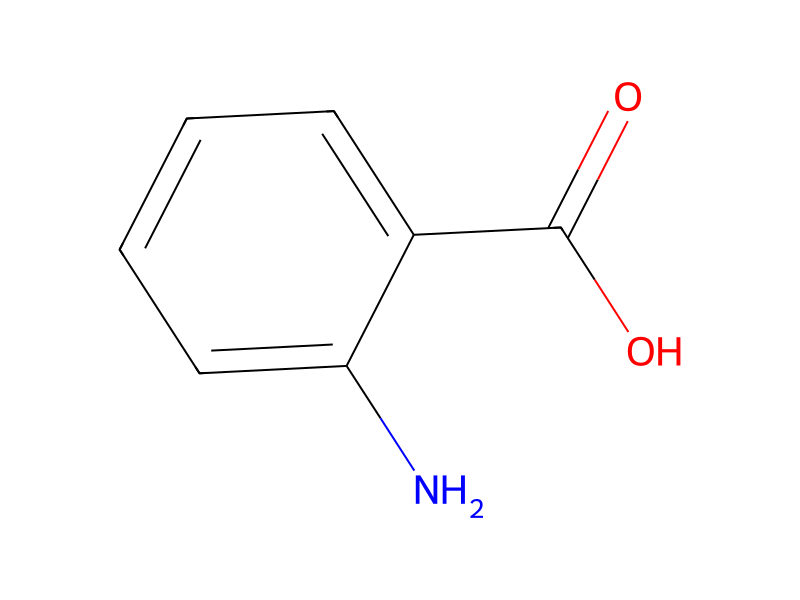
HCID 227Anthranilic AcidHCID 6348Carbon DisulfideHCID 31260Isoamyl Alcohol

Product 1

HCID 5926411,3-Dithiaindane, 2-(3-methylbutyl)oxy-Yield 40%

Reagents, catalysts & solvents 2

HCID 111,2-DichloroethaneSolventHCID 31275
1,4-Dioxane
Solvent

Conditions

Temperature
80 °C

Procedure

42.1 g (0.36 mole) of isoamyl nitrile, 52.8 g (0.60 mole) of isoamyl alcohol and 150 ml of carbon disulfide were dissolved in 800 ml of 1,2-dichloroethane. The reaction solution was mildly heated under reflux at a temperature of about 80° C. A solution of 41.1 g (0.30 mole) of anthranilic acid in 100 ml of dioxane was added dropwise to the reaction solution over 1.5 hours. The reaction solution was further heated under reflux for an additional 30 minutes. The resulting mixture was washed successively with water, a saturated aqueous solution of sodium carbonate and water, and then dried over magnesium sulfate. The resulting organic solution was concentrated under reduced pressure. The residue was then purified through silica gel column chromatography (75 to 230 mesh; eluent: benzene) to obtain 28.8 g (yield: 40%) of the desired compound (V) as a pale yellow oil. The physical properties of the compound were as follows:

Workup

  1. temperatureThe reaction solution was mildly heated
  2. temperatureThe reaction solution was further heated
  3. temperatureunder reflux for an additional 30 minutes
  4. washThe resulting mixture was washed successively with water
  5. dry with materiala saturated aqueous solution of sodium carbonate and water, and then dried over magnesium sulfate
  6. concentrationThe resulting organic solution was concentrated under reduced pressure
  7. customThe residue was then purified through silica gel column chromatography (75 to 230 mesh; eluent: benzene)

Sources & evidence

ORD record
ord-b04ebeed25cb4373ae090a505820565d
Source dataset
uspto-grants-1993_07
DOI
10.6084/m9.figshare.5104873.v1
Patent number
US05229238

Reaction notes

On this pageParticipantsConditionsProcedureWorkupSources & evidenceReaction notes

