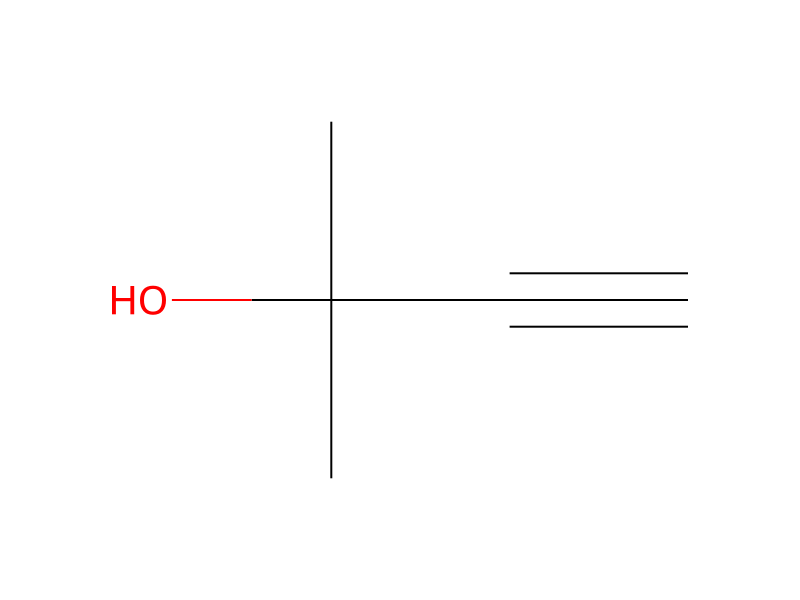
The coupling reaction was conducted in the manner described in the procedure of Example VI using the following reagents: 1.00 mL (10.3 mmoles) of 2-methyl-3-butyn-2-ol, 1.00 mL (11.6 mmoles) of allyl bromide (3-bromopropene), 2.21 g (16.0 mmoles) of anhydrous potassium carbonate, 93 mg (0.94 mmoles) of cuprous chloride, and 207 mg (0.91 mmole) of benzyltriethylammonium chloride in 3.00 mL of acetonitrile (HPLC-grade). Isolation of the product in the manner described in the procedure of Example III afforded, after removal of the volatile organic solvents at reduced pressure, 765 mg (60% yield) of the named alcohol, the identity and purity of which were ascertained by IR and proton NMR analysis.