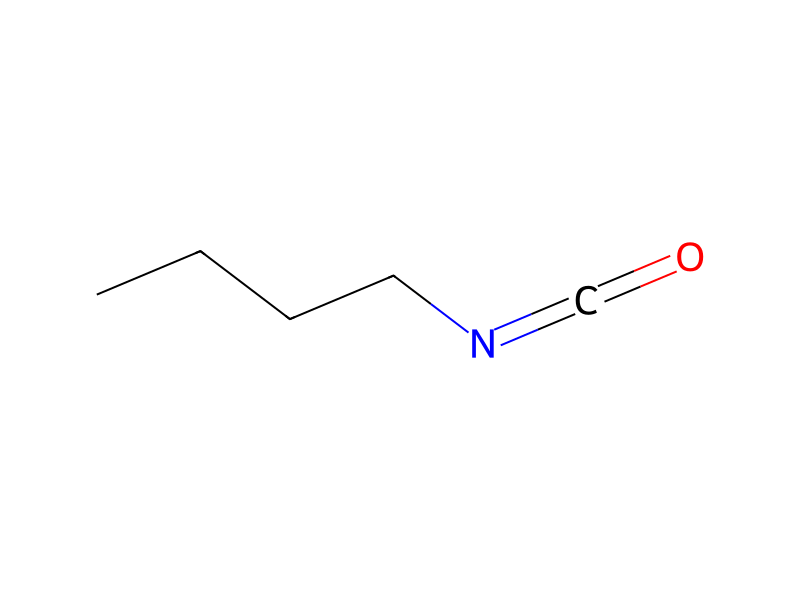
A four necked flask equipped with a thermometer, stirrer and drip funnel was charged with 2.58 g of octylamine and 200 g of ethyl acetate. To this was added dropwise a solution of 1.98 g of n-butylisocyanate in 30 g of ethyl acetate with stirring over 30 minutes while maintaining the inner temperature at 10° C. and allowed to react until the absorption of isocyanato group (2240 cm-1) disappeared IR spectrometrically. After dissolving the solidified reaction product in 50 g of methanol, a mixture of 2.086 g of 35% hydrochlonic acid and 50 g of methanol was added dropwise to the solution over 30 minutes and allowed to react at room temperature for 20 hours. Then a solution of 3.44 g of sodium triflate in 50 g of methanol was added dropwise over 30 minutes and allowed to react at room temperature for 20 hours. The reaction mixture was then filtered to remove NaCl by-product and evaporated to remove methano. 8.9 g of the title compound was obtained as a pale yellow liquid. This product is hereinafter referred to as "curing catalyst B". This product is soluble in aromatic hydrocarbon solvents such as toluene and xylene as well as esters such as butyl acetate and ethyl acetate.