Cyclohexane → 3-(3-bromopropyl)-1H-indole
HRID 488763
Reaction equation

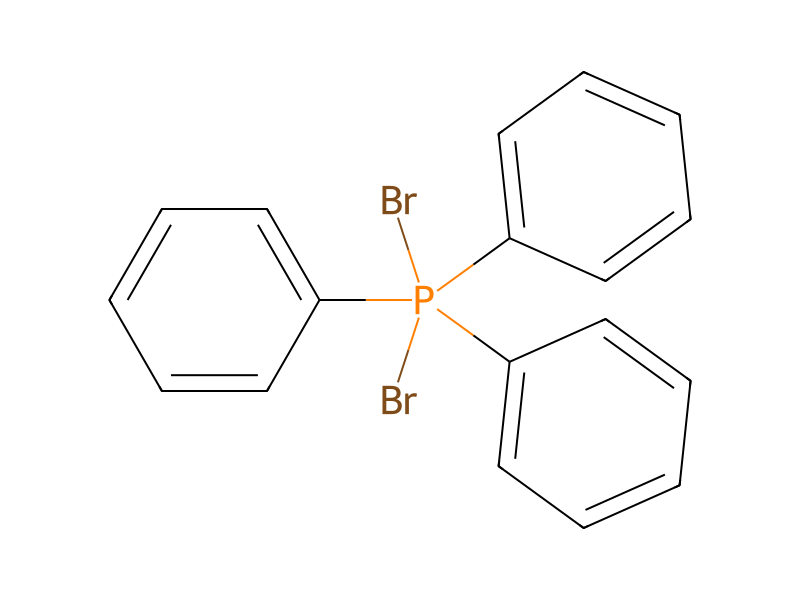
[NH:1]1[C:9]2[C:4](=[CH:5][CH:6]=[CH:7][CH:8]=2)[C:3]([CH2:10][CH2:11][CH2:12]O)=[CH:2]1.[Br:14]P(Br)(C1C=CC=CC=1)(C1C=CC=CC=1)C1C=CC=CC=1.C1CCCCC1>O1CCOCC1>[NH:1]1[C:9]2[C:4](=[CH:5][CH:6]=[CH:7][CH:8]=2)[C:3]([CH2:10][CH2:11][CH2:12][Br:14])=[CH:2]1Participants
5
Reactant 3


Product 1

Reagents, catalysts & solvents 1

Procedure
To a solution of 2 g (11.41 mmol) of 3-(1H-indol-3-yl)propanol in 40 ml of dioxane was added at room temperature 5.3 g (12.55 mmol) of dibromotriphenylphosphorane and the resulting solution was stirred during 18 h. An excess of cyclohexane was added and the resulting precipitate was filtered and discarded. The solvent was evaporated to dryness to give 2.7 g (99%) of product as an oil which was used in the subsequent step without further purification.