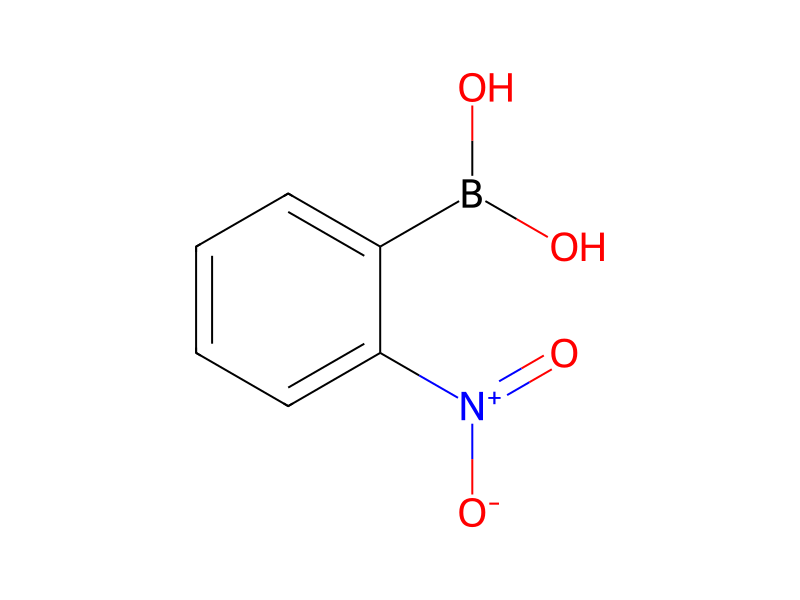
To a 1 L round-bottomed flask equipped with a reflux condenser was added 2-nitrobenzeneboronic acid (Lancaster) (10 g, 60 mmol), 4-bromopyridine hydrochloride (Fluka) (12 g, 60 mmol), Na2CO3 (25 g, 240 mmol), DME (300 in L) and H2O (100 mL). The mixture was stirred magnetically, degassed in vacuo and purged with N2. The process was repeated five times then tetrakis(triphenylphosphine)-palladium (0) (Strem Chemicals) (3.5 g, 3.0 mmol) was added and the reaction mixture was stirred at reflux under a slight positive pressure of N2 for 15 h. The reaction mixture was concentrated in vacuo and the residue partitioned between EtOAc (100 mL) and satd NaCl (50 mL) diluted with H2O (50 mL). The aqueous phase was further extracted with EtOAc (2×100 mL). The combined organic fractions were extracted with 1 N HCl (3×100 mL). The combined acidic extract was washed with EtOAc (100 mL), cooled in an ice bath and adjusted to pH 10 with 5 N NaOH. The aqueous solution was saturated with NaCl and extracted with EtOAc (3×100 mL). The combined EtOAc extracts were washed with satd NaCl (100 mL), dried over Na2SO4, filtered and concentrated to afford a brown oil. Purification by silica gel chromatography (5:30-65, 1 M NH3/MeOH-EtOAc-hexane) provided the title compound as a viscous, dark orange oil (6.0 g). MS (ESI, pos. ion) m/z: 201 (M+1). Calc'd for C11H8N2O2: 200.19.