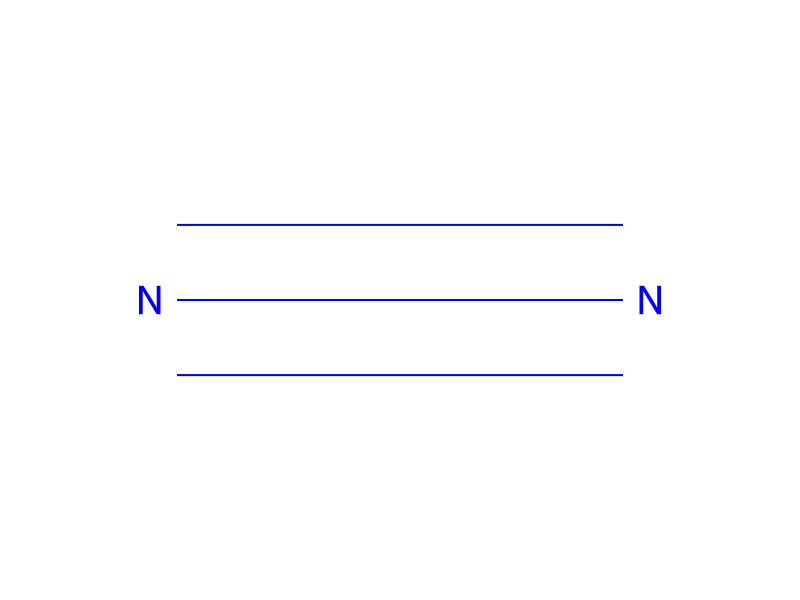
Basic information
- Standard SMILES
N#N- InChIKey
IJGRMHOSHXDMSA-UHFFFAOYSA-N- Molecular formula
- N2
- Average molar mass
- 28.014 g/mol
- Monoisotopic mass
- 28.006148
Overview
Nitrogen appears as a colorless odorless gas. Noncombustible and nontoxic. Makes up the major portion of the atmosphere, but will not support life by itself. Used in food processing, in purging air conditioning and refrigeration systems, and in pressurizing aircraft tires. May cause asphyxiation by displacement of air. Under prolonged exposure to fire or heat containers may rupture violently and rocket.
Names & identifiers
- Preferred name
- Nitrogen
- IUPAC
- molecular nitrogen
- English name
- Nitrogen
- Molecular formula
- N2
- Molecular weight
- 28.0134
Names & synonyms
NitrogenNitrogen gasMolecular nitrogenDinitrogen7727-37-9MOL NitrogenNitrogenoNitrogen (n2)INS NO.941DTXSID4036304INS-941E-941
Show more names
N762921K75CHEBI:17997DiazyneNitrogen NfNitrogen, NFNitrogen CompressedNitrogen, RefrigeratedRefChem:6472
Database identifiers
- CAS
13966-04-6、154680-01-0、7727-37-9- PubChem CID
- 947
- DTXSID
DTXSID4036304- ChEMBL
CHEMBL142438- ChEBI
CHEBI:17997- UNII
- N762921K75
- EC Number
- 231-783-9
Properties
Computed structural properties
- XLogP
- 0.1
- Topological polar surface area
- 47.6 Ų
- Hydrogen bond donors
- 0
- Hydrogen bond acceptors
- 2
- Rotatable bonds
- 0
- Heavy atoms
- 2
- Formal charge
- 0
- Complexity
- 8
Experimental & physicochemical properties
Chemical Classes
Toxic Gases & Vapors -> Simple Asphyxiants
Nutrient
CosmeticsPropellant
SpringerMaterials Properties
15N nuclear magnetic resonance spectrum
thermal expansion coefficient
Pesticides
Insecticides
Active substance -> EU Pesticides database: Not approved
LogP
log Kow = 0.67
0.67
OdorOdorless gas
TasteTasteless
Food AdditivesANTIOXIDANT, FORMULATION AID, PROPELLANT -> FDA Substance added to food
Density
0.807 at -319.9 °F (USCG, 1999) - Less dense than water; will float
0.807 at -319.9 °F (USCG, 1999) - Less dense than water; will float
1.251 g/L at 0 °C and 1 atm; ... 0.804 (liquid), and 1.0265 (solid)
Critical density: 0.311 g/cu cm; heat of dissociation of nitrogen molecule (N2): 225.1 kcal/mole
VAPOR DENSITY @ NORMAL TEMP APPROX SAME AS AIR; COLD GAS AS IT COMES FROM LIQ IS HEAVIER THAN AIR /GAS/
Density (at the boiling point of the liquid): 0.808 kg/l
Viscosity7.0 at 100 K; 12.0 at 200 K; 17.9 at 300 K; 22.2 at 400 K; 26.1 at 500 K; 29.6 at 600 K (all in uPa.s; N2)
Color/Form
Colorless gas
Colorless liquid at -196 °C
Solubility
In water, 1.81X10+4 mg/L at 21 °C
Insoluble in ethanol
Sparingly soluble in water: 100 vol water absorbs 2.4 vol nitrogen at 0 °C; 100 vol water absorbs 1.6 vol nitrogen at 20 °C /gas/
Slightly soluble in water and alcohol
For more Solubility (Complete) data for Nitrogen, Elemental (7 total), please visit the HSDB record page.
18.1 mg/mL at 21 °C
Physicochemical properties
- Melting point
- -210.01 °C · -210.01 °C
- Boiling point
- -195.79 °C · -195.79 °C
- Density
- 3.421 g/cm3 · 3.421 g/cm3
Safety & regulation
GHS classification
GHS Classification
This chemical does not meet GHS hazard criteria for 4.7% (47 of 1001) of reports.
Warning
H280 (70.2%): Contains gas under pressure; may explode if heated [Warning Gases under pressure]
P282, P336+P317, P403, and P410+P403 (click each P-code to see the statement)
Aggregated GHS information provided per 1001 reports by companies from 11 notifications to the ECHA C&L Inventory. Each notification may be associated with multiple companies.
Warning
Hazard information
Regulatory Information
Chemical: Nitrogen
Nitrogen is listed on the EPA's Chemical Data Reporting (CDR) system. Manufacturers and importers of Nitrogen are required to report information about their production and use of this chemical to the EPA under the Toxic Substances Control Act (TSCA). (40 eCFR Part 711)
2004/129/EC
Nitrogen gas: Non hazardous
The New Jersey Worker and Community Right to Know Act requires public and private employers to provide information about hazardous substances at their workplaces. (N.J.S.A. 34:5A-1 et. seq.)
Other Safety InformationIMAP assessments - Nitrogen: Human health tier I assessment
DOT Label
Non-Flammable Gas
Non-Flammable Gas
Fire Hazards
Excerpt from ERG Guide 120 [Gases - Inert (Including Refrigerated Liquids)]:
Behavior in Fire: Containers may explode when heated. (USCG, 1999)
· Non-flammable gases.
· Non-flammable gases.
Not combustible. Heating will cause rise in pressure with risk of bursting.
Not combustible. Heating will cause rise in pressure with risk of bursting.
Fire PotentialNonflammable gas.
Health Hazards
Excerpt from ERG Guide 120 [Gases - Inert (Including Refrigerated Liquids)]:
Inhalation can cause asphyxiation, if atmosphere does not contain oxygen; dizziness, unconsciousness, or even death can result. Contact of liquid with skin or eyes causes frostbite burns. (USCG, 1999)
· Vapors may cause dizziness or asphyxiation without warning, especially when in closed or confined areas.
· Vapors may cause dizziness or asphyxiation without warning, especially when in closed or confined areas.
Hazards SummaryA simple asphyxiant; liquid nitrogen can cause frostbite; [ACGIH]
DOT ID and Guide
1066 120
1977 120
FDA Requirements
Substance added directly to human food affirmed as generally recognized as safe (GRAS).
Nitrogen used as a general purpose food additive in animal drugs, feeds, and related products is generally recognized as safe when used in accordance with good manufacturing or feeding practice.
Reactive Group
Not Chemically Reactive
Not Chemically Reactive
UN Classification
UN Hazard Class: 2.2
UN Hazard Class: 2.2
Special ReportsWagner SC; Biological Nitrogen Fixation. Nature Education Knowledge 3 (10): 15 (2011)[Wagner SC; Nature Education Knowledge 3 (10): 15 (2011) http://www.nature.com/scitable/knowledge/library/biological-nitrogen-fixation-23570419]
Safety & protection
Fire Fighting
Excerpt from ERG Guide 120 [Gases - Inert (Including Refrigerated Liquids)]:
Excerpt from ERG Guide 120 [Gases - Inert (Including Refrigerated Liquids)]:
In case of fire in the surroundings, use appropriate extinguishing media. In case of fire: keep cylinder cool by spraying with water.
In case of fire in the surroundings, use appropriate extinguishing media.
First Aid Measures
Fresh air, rest. Artificial respiration may be needed. Refer for medical attention.
Fresh air, rest. Artificial respiration may be needed. Refer for medical attention.
ON FROSTBITE: rinse with plenty of water, do NOT remove clothes. Refer for medical attention .
First rinse with plenty of water for several minutes (remove contact lenses if easily possible), then refer for medical attention.
Accidental Release Measures
· CALL 911. Then call emergency response telephone number on shipping paper. If shipping paper not available or no answer, refer to appropriate telephone number listed on the inside back cover.
· Do not touch or walk through spilled material.
· CALL 911. Then call emergency response telephone number on shipping paper. If shipping paper not available or no answer, refer to appropriate telephone number listed on the inside back cover.
· Do not touch or walk through spilled material.
First Aid
Excerpt from ERG Guide 120 [Gases - Inert (Including Refrigerated Liquids)]:
INHALATION: remove to fresh air; apply artificial respiration if breathing has stopped; call physician.
General First Aid:
General First Aid:
Safe Storage
Fireproof if in building. Cool. Keep in a well-ventilated room.
Fireproof if in building. Keep in a well-ventilated room.
Firefighting HazardsUnder prolonged exposure to fire or heat the containers may rupture violently and rocket. /Nitrogen, compressed/
Exposure Control and Personal Protection
· Wear positive pressure self-contained breathing apparatus (SCBA).
· Wear positive pressure self-contained breathing apparatus (SCBA).
Fire Fighting Procedures
If material involved in fire: Extinguish fire using agent suitable for type of surrounding fire. (Material itself does not burn or burns with difficulty.) Cool all affected containers with flooding quantiites of water. Apply water from as far a distance as possible. /Nitrogen, compressed/
Use water spray, alcohol-resistant foam, dry chemical or carbon dioxide.
Wear self contained breathing apparatus for fire fighting if necessary.
Extinguish fire using agent suitable for surrounding fire. Use water spray to keep fire-exposed containers cool. /Nitrogen, refrigerated liquid/
Storage Conditions
Keep container tightly closed in a dry and well-ventilated place. Containers which are opened must be carefully resealed and kept upright to prevent leakage.
Since liquid nitrogen tends to cause localized oxygen enrichment due to a fractional distillation of air, containers such as formed plastics should not be used even for temporary storage of liquid nitrogen due to the resultant increase combustibility.
Storage temperature for liquid nitrogen: -320 °F.
Store in a cool, dry, well-ventilated location. Outside or detached storage is preferred. /Nitrogen, refrigerated liquid/
Cleanup Methods
Soak up with inert absorbent material and dispose of as hazardous waste. Keep in suitable, closed containers for disposal.
Prevent further leakage or spillage if safe to do so. Do not let product enter drains. Discharge into the environment must be avoided.
Use personal protective equipment. Avoid breathign vapors, mist or gas. Ensure adequate ventilation. Evacuate personnel to safe areas.
If liquid nitrogen is spilled or leaked, take the following steps: restrict persons not wearing protective equipment from area of spill or leak until clean-up is complete. Ventilate the area of spill or leak. Stop the leak or move the container to a safe area and allow the liquid to evaporate. If nitrogen gas is leaked, take the following steps: restrict persons not wearing protective equipment from area of leak until clean-up is complete. Stop flow of gas. If source of leak is a cylinder and the leak cannot be stopped in place, remove the leaking cylinder to a safe place in the open air and repair leak or allow cylinder to empty. Absorb liquids in vermiculite, dry sand, earth, peat, carbon, or a simlar material and deposit in sealed containers. It may be necessary to contain and dispose of this chemical as a hazardous waste. If material or contaminated runoff enters waterways, notify downstream users of potentially contaminated waters. Contact your Department of Environmental Protection or your regional office of the federal EPA for specific recommendations.
For more Cleanup Methods (Complete) data for Nitrogen, Elemental (6 total), please visit the HSDB record page.
Nonfire Spill Response
Excerpt from ERG Guide 120 [Gases - Inert (Including Refrigerated Liquids)]:
Excerpt from ERG Guide 120 [Gases - Inert (Including Refrigerated Liquids)]:
Disposal Methods
SRP: Recycle any unused portion of the material for its approved use or return it to the manufacturer or supplier. Ultimate disposal of the chemical must consider: the material's impact on air quality; potential migration in air, soil or water; effects on animal, aquatic and plant life; and conformance with environmental and public health regulations. If it is possible or reasonable use an alternative chemical product with less inherent propensity for occupational harm/injury/toxicity or environmental contamination.
Toxicology
Interactions
Central nervous system (CNS) oxygen toxicity of mixtures of oxygen with inert gas was studied in rats. Male Charles-River-rats with surgically implanted electroencephalograph (EEG) electrodes were exposed to binary mixtures of oxygen with nitrogen or helium having total pressures of 5 to 10 atmospheres absolute (ATA) in a hyperbaric chamber. The oxygen partial pressure in each mixture was 5ATA. CNS toxicity was evaluated by measuring the length of time between obtaining the desired pressure in the chamber until the appearance of electrical discharges in the EEG (latency period). The animals were observed for signs of intoxication. The results for both nitrogen and helium mixtures were the same. The duration of the latency period decreased with increasing inert gas partial pressure, the minimum latency occurring with mixtures containing 3ATA nitrogen or helium. Several rats exposed to mixtures containing 4 or 5ATA nitrogen appeared drowsy, although when the electrical discharges began these rats showed the characteristic signs of epileptic seizures. Duration of the latent period was not correlated with severity of the epileptic seizures. The authors suggest that the risk of CNS oxygen toxicity does not depend just on the partial pressure of oxygen, and that when calculating the oxygen partial pressure in breathing gas mixtures for divers, the partial pressures of the other (inert) gases should be considered.
The contribution of inert gases to the risk of central nervous system (CNS) oxygen toxicity is a matter of controversy. Therefore, diving regulations apply strict rules regarding permissible oxygen pressures (Po(2)). We studied the effects of nitrogen and helium (0, 15, 25, 40, 50, and 60%) and different levels of Po(2) (507, 557, 608, and 658 kPa) on the latency to the first electrical discharge (FED) in the EEG in rats, with repeated measurements in each animal. Latency as a function of the nitrogen pressure was not homogeneous for each rat. The prolongation of latency observed in some rats at certain nitrogen pressures, mostly in the range 100 to 500 kPa, was superimposed on the general trend for a reduction in latency as nitrogen pressure increased. This pattern was an individual trait. In contrast with nitrogen, no prolongation of latency to CNS oxygen toxicity was observed with helium, where an increase in helium pressure caused a reduction in latency. This bimodal response and the variation in the response between rats, together with a possible effect of ambient temperature on metabolic rate, may explain the conflicting findings reported in the literature. The difference between the two inert gases may be related to the difference in the narcotic effect of nitrogen. Proof through further research of a correlation between individual sensitivity to nitrogen narcosis and protection by N(2) against CNS oxygen toxicity in rat may lead to a personal O(2) limit in mixed-gas diving based on the diver sensitivity to N(2) narcosis.
The effects of adenosine-5'-diphosphate (ADP), epinephrine, nd 5-hydroxytryptamine (5HT) on nitrogen microbubble induced platelet aggregation were studied in-vitro. Platelet rich plasma (PRP) obtained from healthy human blood donors was stirred for 30 minutes in the presence of nitrogen microbubbles, 0.5 to 5 micromolar (microM) ADP, 0.1 to 1microM epinephrine, or 0.5 to 10microM 5HT, alone or in combination. The experiments with epinephrine were also performed in the presence or absence of 25microM indomethacin, 10microM acetylsalicylic-acid (ASA), or 1microM (146485). Some of the experiments with 5HT had 12.5microM ketanserin present. The extent of platelet aggregation was determined by measuring changes in platelet density in a cellcounter. A similar experiment was performed in which the PRP was pretreated with nitrogen microbubbles for 5 minutes before the ADP, epinephrine, or 5HT was added. Nitrogen microbubbles alone caused a progressive, irreversible aggregation of platelets. ADP alone caused an immediate platelet aggregation. Microbubbles plus ADP showed an additive, irreversible effect. Epinephrine alone caused a progressive, irreversible decrease in platelet density. Nitrogen microbubbles plus epinephrine showed a strong synergistic effect on platelet aggregation. Indomethacin and ASA partially countered the synergistic effect. 5HT caused a slight decrease in platelet density. 5HT plus nitrogen microbubbles inhibited platelet aggregation. The effect of 5HT was abolished by ketanserin. Microbubble stimulation of PRP before adding ADP, 5HT, and epinephrine made the platelets more responsive to epinephrine only. The authors conclude that epinephrine has a clear synergistic effect on nitrogen microbubble induced platelet aggregation. ...
The effect of oxygen on nitrogen elimination was studied for six healthy nonsmoking males, 22 to 35 years old. Subjects breathed oxygen/argon mixtures having oxygen partial pressures (PO2s) of 0.12, 0.2, 1.0, 2.0, or 2.5 atmospheres (atm) for 125 minutes in a closed circuit system. Respiratory elimination of nitrogen by the subjects was measured using a gas tight rebreathing apparatus. Heart rate, cardiac output, calf blood flow, skin perfusion, blood pressure, and mean arterial pressure were monitored. Breathing 0.12atm oxygen caused a 9.4% increase in nitrogen elimination compared to the normoxic condition, PO2 0.2atm. Breathing pure oxygen, PO2 1.0atm, caused a 3.5% decrease in nitrogen elimination. Breathing mixtures containing 2.0 and 2.5atm oxygen caused 8.9 and 16.9% decreases in nitrogen elimination, respectively. Increasing the PO2 in the breathing mixture caused decreases in heart rate, cardiac output, skin perfusion, and calf blood flow. Systolic blood pressure was not affected. Diastolic blood pressure was decreased by the hypoxic gas mixture, but increased with increasing PO2 in the other mixtures. Mean arterial pressure increased with increasing PO2. The authors conclude that increasing PO2 in breathing mixtures causes a decrease in perfusion dependent nitrogen elimination that is secondary to a vasoconstrictive effect. These results suggest that oxygen breathing during post dive decompression treatment should be done at the lowest possible PO2 that does not induce decompression sickness.
The physiological consequences of anoxia caused by exposure to carbon-monoxide and nitrogen were studied in isolated hearts of rats. Male Sprague-Dawley-rats were anesthetized, and hearts were removed, suspended in saline, cannulated, and perfused in a mixture of 95 percent oxygen/5 percent carbon-dioxide, 95 percent carbon-monoxide/5 percent carbon-dioxide, or 95 percent nitrogen/5 percent carbon-dioxide. All hearts were perfused with oxygen for 30 minutes before switching to test perfusate. Heart function was constantly monitored under the different conditions. The lactic-acid content of perfusate was measured. The glycogen contents of the hearts were determined by a spectrophotometric method. The water content was determined by measuring the difference in wet and dry weights of the heart. Data was analyzed for statistical significance. Heart rate declined rapidly when hearts were subjected to stress in the presence of nitrogen or carbon-monoxide; the decline in heart rate was 64 and 44 percent of control values in the presence of carbon-monoxide and nitrogen, respectively. Lactic-acid concentrations increased significantly after nitrogen and carbon-monoxide exposure. Heart tissue water content did not differ between carbon-monoxide and nitrogen exposed hearts. Heart tissue glycogen content decreased significantly in nitrogen or carbon-monoxide exposed hearts. The authors conclude that nitrogen and carbon-monoxide exert differential effects in physiological and biochemical events in the myocardia.
Adverse EffectsOther Poison - Simple Asphyxiant
Exposure Routes
The substance can be absorbed into the body by inhalation.
The substance can be absorbed into the body by inhalation.
Toxicity Summary
IDENTIFICATION AND USE: Nitrogen is an odorless, colorless, and tasteless gas that can be condensed into a white liquid. Nitrogen is not registered for current pesticide use in the U.S., but approved pesticide uses may change periodically and so federal, state and local authorities must be consulted for currently approved uses. It is used in manufacturing of ammonia, nitric acid, nitrates, cyanides, etc; in manufacturing explosives; in filling high-temperature thermometers, incandescent bulbs; to form an inert atmosphere for preservation of materials; as a pharmaceutic aid (air displacement); and for use in dry boxes or glove bags. Liquid nitrogen is used in food-freezing processes; and in the laboratory as a coolant. Nitrogen is used by oil industry to build up great pressures in wells to force crube oil upward, and in hydraulic fracturing. HUMAN EXPOSURE AND TOXICITY: Nitrogen gas is an inert substance and is present in the atmosphere at a level of 78.1%. It does not exhibit a direct toxicological effect and has no toxicological profile. It acts by simple asphyxia. If the level of nitrogen increases, this will lead to a reduction in the level of oxygen to below normal atmospheric levels of 20.8%. Nitrogen has a direct toxic action of its own, affecting brain functions and inducing a stupor or euphoria. Nitrogen induced CNS depression ("rapture of the deep" or "the martini effect") results from a direct toxic effect of high nitrogen pressure on nerve conduction and produces effects similar to alcohol intoxication. Complex reasoning, decision-making ability, motor function, and manual dexterity decrease. Individuals vary in this response widely, but it typically can be noticed among divers at depths exceeding 100 ft (30 m). For example, certain individuals experience no effect at depths of < or = 130 ft, whereas others feel some effect at around 80 ft. Nonetheless, the CNS depressant effect increases with increasing depth so that each additional 50 ft incrementally produces the effect of "another martini". Contact with liquid nitrogen may cause frostbite and severe skin burns. On resurfacing from deep sea diving, decompression sickness can arise from the subsequent release of nitrogen from body tissues. Decompression sickness is attributed to the formation of gas bubbles, mainly nitrogen, in tissues with the rapid release of pressure. ANIMAL STUDIES: Acute nitrogen normobaric hypoxic challenges resulting in an approximate 50% survival, was performed in young adult male and female heterozygous OF1 mice under various environmental conditions. The time required for 50% survival was 20 minutes for a constant pO2 of 42 torr, and 151 minutes when pO2 was progressively lowered by nitrogen flushing from 159 to 16.5 torr. In synchronized animals, survival was significantly (p > 0.001) less when hypoxia was performed during the light phase than during the dark phase. Lowering the ambient temperature from 33.8 to 13.2 °C increased the length of the progressive hypoxia necessary to obtain a 50% survival of the mice and diminished the final pO2 from 35 to 12 torr. Grouping and crowding both decreased the hypoxic survival. Starvation diminished hypoxic resistance of mice, while carbon monoxide inhalation, or sodium cyanide injection had the opposite effect. In all these variations, OF1 females were more resistant than males. Most of these variations can be related to differences in respiratory exchanges, locomotor activity, and aggressiveness, which are dependent upon the various experimental environmental parameters. Another study in mice, found that excitement threshold pressures decrease with increased concentration of nitrogen; coarse tremor onset is delayed in direct proportion to the amount of nitrogen present with the same relative potency in compression at 60 atm/hr as at 1000 atm/hr; and threshold pressure of convulsion from high pressure neurological syndrome increases with increased amount of nitrogen. ECOTOXICITY STUDIES: Nitrogen is an essential nutrient for plant growth and development but is unavailable in its most prevalent form as atmospheric nitrogen. Plants instead depend upon combined, or fixed, forms of nitrogen, such as ammonia and nitrate. Much of this nitrogen is provided to cropping systems in the form of industrially produced nitrogen fertilizers. Use of these fertilizers has led to worldwide, ecological problems, such as the formation of coastal dead zones. Biological nitrogen fixation, on the other hand, offers a natural means of providing nitrogen for plants. It is a critical component of many aquatic, as well as terrestrial ecosystems across our biosphere.
Average Daily Intake... an essential constituent of all living organisms ...
Ecotoxicity Excerpts
/PLANTS/ The effects of elevated carbon dioxide (CO2) and nitrogen (N) addition on foliar N and phosphorus (P) stoichiometry were investigated in five native tree species (four non-N2 fixers and one N2 fixer) in open-top chambers in southern China from 2005 to 2009. The high foliar N:P ratios induced by high foliar N and low foliar P indicate that plants may be more limited by P than by N. The changes in foliar N:P ratios were largely determined by P dynamics rather than N under both elevated CO2 and N addition. Foliar N:P ratios in the non-N2 fixers showed some negative responses to elevated CO2, while N addition reduced foliar N:P ratios in the N2 fixer. The results suggest that N addition would facilitate the N2 fixer rather than the non-N2 fixers to regulate the stoichiometric balance under elevated CO2.
/PLANTS/ Nitrogen is an essential nutrient for plant growth and development but is unavailable in its most prevalent form as atmospheric nitrogen. Plants instead depend upon combined, or fixed, forms of nitrogen, such as ammonia and nitrate. Much of this nitrogen is provided to cropping systems in the form of industrially produced nitrogen fertilizers. Use of these fertilizers has led to worldwide, ecological problems, such as the formation of coastal dead zones. Biological nitrogen fixation, on the other hand, offers a natural means of providing nitrogen for plants. It is a critical component of many aquatic, as well as terrestrial ecosystems across our biosphere.
/PLANTS/ Biological nitrogen fixation (BNF) is a key ecological process that can restore nitrogen (N) lost in wildfire and shape the pace and pattern of post-fire forest recovery. To date, there is limited information on how climate and soil fertility interact to influence different pathways of BNF in early forest succession. We studied asymbiotic (forest floor and soil) and symbiotic (the shrub Ceanothus integerrimus) BNF rates across six sites in the Klamath National Forest, California, USA. We used combined gradient and experimental phosphorus (P) fertilization studies to explore cross-site variation in BNF rates and then related these rates to abiotic and biotic variables. We estimate that our measured BNF rates 22 years after wildfire (6.1-12.1 kg N /per/ ha /per/ yr) are unlikely to fully replace wildfire N losses. We found that asymbiotic BNF is P limited, although this is not the case for symbiotic BNF in Ceanothus. In contrast, Ceanothus BNF is largely driven by competition from other vegetation: in high-productivity sites with high potential evapotranspiration (Et), shrub biomass is suppressed as tree biomass increases. Because shrub biomass governed cross-site variation in Ceanothus BNF, this competitive interaction led to lower BNF in sites with high productivity and Et. Overall, these results suggest that the effects of nutrients play a larger role in driving asymbiotic than symbiotic fixation across our post-fire sites. However, because symbiotic BNF is 8-90 /times/ greater than asymbiotic BNF, it is interspecific plant competition that governs overall BNF inputs in these forests.
Signs and Symptoms
Unconsciousness. Weakness. Suffocation.
Suffocation.
ON CONTACT WITH LIQUID: FROSTBITE.
Pain. Severe deep burns. Further see Skin.
Natural Pollution Sources
/Nitrogen/ constitutes about 75.5% by weight or 78.06% by vol of atmosphere; found frequently in volcanic or mine gases, gases from springs and gases occluded in minerals and rocks ... fixed or combined nitrogen is present in many mineral deposits.
Human Toxicity Excerpts
/HUMAN EXPOSURE STUDIES/ Subjects were exposed to repeated hyperbaric exposures to determine whether humans adapt to the effects of hyperbaric nitrogen so that behavioral impairments are reduced or eliminated with repeated or prolonged exposure. The performance of a single task, standing steadiness, by six men was measured at 5.5 and 1.3 atmospheres absolute during brief hyperbaric exposures on 12 consecutive days. A reduction in the magnitude of the difference between performances at 5.5 and 1.3 atmospheres absolute across days was taken as the measure of behavioral adaptation to nitrogen /SRP: CNS depression/. On each test day, three subjects entered the hyperbaric chamber together and were compressed to 5.5 atmospheres absolute for 30 minutes. Subjects were tested on the standing steadiness test in random order during each test and control session. Standing steadiness was significantly worse at 5.5 atmospheres absolute than at 1.3 atmospheres absolute across all 12 exposures. Changes in standing steadiness also arose from day to day, but these occurred at both the test and control depths. No day/depth interaction was noted which would indicate that the initial performance decrement at 5.5 atmospheres absolute was reduced with repetitive exposures.
/HUMAN EXPOSURE STUDIES/ Simple and complex psychomotor performance were tested among 21 Navy divers under normal conditions and during /nitrogen induced CNS depression/ in simulated dives to 170 ft of sea water. Complex psychomotor performance was impaired significantly during narcosis, while simple psychomotor performance remained essentially normal. Differences between baseline scores for complex psychomotor performance (pre- and post-dive combined) and scores obtained from the 2 combined testing sessions administered during /CNS depression/ were correlated with official Navy records of diving experience and self-reported moods. None of the diving experience measures was associated significantly with these difference scores. The moods of fatigue and happiness were, however, correlated significantly with impairment. Although previous experience with nitrogen /induced CNS depression/ and diving tails do not mediate the performance effects of nitrogen /induced CNS depression/, the complex psychomotor effects of nitrogen narcosis are related to emotional traits.
/SIGNS AND SYMPTOMS/ ...Nitrogen also has a direct toxic action of its own, affecting brain functions and inducing a stupor or euphoria. Nitrogen /induced CNS depression/ ("rapture of the deep" or "the martini effect") results from a direct toxic effect of high nitrogen pressure on nerve conduction and produces effects similar to alcohol intoxication. Complex reasoning, decision-making ability, motor function, and manual dexterity decrease. Individuals vary in this response widely, but it typically can be noticed among divers at depths exceeding 100 ft (30 m). For example, certain individuals experience no effect at depths of < or = 130 ft, whereas others feel some effect at around 80 ft. Nonetheless, the /CNS depressant/ effect increases with increasing depth so that each additional 50 ft incrementally produces the effect of "another martini".
/SIGNS AND SYMPTOMS/ Inhalation: No significant toxic effects except as an asphyxiant, that is, it may threaten life if levels are so high as to reduce oxygen levels below 19%. Since nitrogen is odorless, colorless, and tasteless, there may not be adequate warning of high levels. Symptoms of lack of oxygen may include nausea, drowsiness, blue coloration of skin and lips, unconsciousness, and death. Skin: liquid may cause frostbite and freezing burns. Eyes: liquid may cause frostbite and freezing burns. Ingestion: liquid may cause frostbite and freezing burns.
For more Human Toxicity Excerpts (Complete) data for Nitrogen, Elemental (14 total), please visit the HSDB record page.
Non-Human Toxicity Excerpts
/LABORATORY ANIMALS: Acute Exposure/ Nitrogen gas at room temperature injected into anterior chamber of rabbits, replacing part of aqueous humor, ... is nontoxic and is absorbed in 2 or 3 days ...
/LABORATORY ANIMALS: Acute Exposure/ Acute nitrogen normobaric hypoxic challenges /resulting in an approximate/ 50% ... survival, was performed in young adult male and female heterozygous OF1 mice under various environmental conditions. The time required /for/ 50% survival was 20 minutes for a constant pO2 of 42 torr, and 151 minutes when pO2 was progressively lowered by nitrogen flushing from 159 to 16.5 torr. In ... synchronized animals, survival was significantly (p > 0.001) less when hypoxia was performed during the light phase than during the dark phase. Lowering the ambient temperature from 33.8 to 13.2 °C increased the length of the progressive hypoxia necessary to obtain a 50% survival of the mice ... and diminished the final pO2 from 35 to 12 torr. Grouping and crowding both decreased the hypoxic survival ... Starvation diminished hypoxic resistance of mice, while ... carbon monoxide inhalation, or sodium cyanide injection had the opposite effect. In all these variations, OF1 females were more resistant than males. Most of these variations can be related to differences in respiratory exchanges, locomotor activity, and aggressiveness, which are dependent upon the various experimental environmental parameters.
/LABORATORY ANIMALS: Neurotoxicity/ Wistar rat pups were exposed to 99.99%-nitrogen gas for 10 minutes at 4 days of age, and then their behavior and susceptibility to pentylentetrazol (PTZ) induced seizure were investigated at the ages of 28 and 56 days. Neonatal anoxic rats exhibited hyperactivity in the open field examination and motor coordination disturbance in the inclined screen test, hyperirritability to the startle response and high susceptibility to PTZ at the age of 28 days. However, these behavioral changes and high susceptibility to PTZ were improved with development and there were no longer significant difference from controls rats at 56 days of age except the wire maneuver test. These results suggested that neonatal total anoxia could produce transient dysfunction of the developing brain, including increased susceptibility to seizure and behavioral abnormalities.
/LABORATORY ANIMALS: Neurotoxicity/ The effects of change in time pattern of nitrogen on the occurrence of high pressure neurological syndrome on mice is discussed. Excitement threshold pressures decrease with increased concentration of nitrogen; coarse tremor onset is delayed in direct proportion to the amount of nitrogen present with the same relative potency in compression at 60 atm/hr as at 1000 atm/hr; and threshold pressure of convulsion from high pressure neurological syndrome increases with increased amount of nitrogen. A bolus effect similar to, though smaller than with coarse tremors, is seen at a compression rate of 60 atm/hr but is absent at 1000 atm/hr.
For more Non-Human Toxicity Excerpts (Complete) data for Nitrogen, Elemental (7 total), please visit the HSDB record page.
Probable Routes of Human Exposure
According to the 2012 TSCA Inventory Update Reporting data, 12 reporting facilities estimate the number of persons reasonably likely to be exposed during the manufacturing, processing, or use of nitrogen, elemental in the United States may be as low as <10 workers and as high as 9999 workers per plant; the data may be greatly underestimated due to confidential business information (CBI) or unknown values(1).
NIOSH (NOES Survey 1981-1983) has statistically estimated that 652,326 workers (322,763 of these were female) were potentially exposed to nitrogen, elemental in the US(1). The NOES Survey does not include farm workers. Occupational exposure to nitrogen, elemental may occur through inhalation and dermal contact with this compound at workplaces where nitrogen, elemental is produced or used(SRC).
Antidote and Emergency Treatment
Immediate first aid: Ensure that adequate decontamination has been carried out. If patient is not breathing, start artificial respiration, preferably with a demand-valve resuscitator, bag-valve-mask device, or pocket mask, as trained. Perform CPR as necessary. Immediately flush contaminated eyes with gently flowing water. Do not induce vomiting. If vomiting occurs, lean patient forward or place on left side (head-down position, if possible) to maintain an open airway and prevent aspiration. Keep patient quiet and maintain normal body temperature. Obtain medical attention. /Simple asphyxiants and related compounds/
Basic treatment: Establish a patent airway (oropharyngeal or nasopharyngeal airway, if needed). Suction if necessary. Watch for signs of respiratory insufficiency and assist ventilations if necessary. Administer oxygen by nonrebreather mask at 10 to 15 L/min. Anticipate seizures and treat if necessary ... . Use rapid rewarming techniques if frostbite occurs ... . /Simple asphyxiants and related compounds/
Advanced treatment: Consider orotracheal or nasotracheal intubation for airway control in the patient who is unconscious or is in severe respiratory distress. Monitor cardiac rhythm and treat arrhythmias if necessary ... . Start IV administration of D5W /SRP: "To keep open", minimal flow rate/. Treat seizures with diazepam or lorazepam ... . /Simple asphyxiants and related compounds/
Regulatory information
FDA Requirements
Substance added directly to human food affirmed as generally recognized as safe (GRAS).
Nitrogen used as a general purpose food additive in animal drugs, feeds, and related products is generally recognized as safe when used in accordance with good manufacturing or feeding practice.
FIFRA Requirements
The insecticide nitrogen is exempted from the requirements of a tolerance when used after harvest in modified atmospheres for stored product insect control on all food commodities.
New Active Ingredients ... includes chemicals not previously registered as pesticides, as well as pesticide active ingredients initially registered after November 1, 1984 and that currently have active product registrations. By law, these pesticides must meet new safety standards, such as those described in the Food Quality Protection Act of 1996 and, if new safety standards are met, will be reviewed again on a 15-year cycle. Liquid nitrogen is designated by EPA as a New Pesticide Active Ingredient. Active Ingredient Number: 128934; Type of Pesticide: biochemical - insecticide/termite control; Use Site: non-food use, dry wood protection; Year: 1987.
Chemistry & industry
Pharmacology
ATC Code
V - Various
QV - Various
Bionecessity
Nitrogen is a critical limiting element for plant growth and production. It is a major component of chlorophyll, the most important pigment needed for photosynthesis, as well as amino acids, the key building blocks of proteins. It is also found in other important biomolecules, such as ATP and nucleic acids. Even though it is one of the most abundant elements (predominately in the form of nitrogen gas (N2) in the Earth's atmosphere), plants can only utilize reduced forms of this element. Plants acquire these forms of "combined" nitrogen by: 1) the addition of ammonia and/or nitrate fertilizer (from the Haber-Bosch process) or manure to soil, 2) the release of these compounds during organic matter decomposition, 3) the conversion of atmospheric nitrogen into the compounds by natural processes, such as lightning, and 4) biological nitrogen fixation. Biological nitrogen fixation (BNF), discovered by Beijerinck in 1901, is carried out by a specialized group of prokaryotes. These organisms utilize the enzyme nitrogenase to catalyze the conversion of atmospheric nitrogen (N2) to ammonia (NH3). Plants can readily assimilate NH3 to produce the aforementioned nitrogenous biomolecules. These prokaryotes include aquatic organisms, such as cyanobacteria, free-living soil bacteria, such as Azotobacter, bacteria that form associative relationships with plants, such as Azospirillum, and most importantly, bacteria, such as Rhizobium and Bradyrhizobium, that form symbioses with legumes and other plants.
Protein Bindingfor local use only, not bound to protein.
Mechanism of Action
In cryotherapy, mechanism of action could be classified into three stages: 1. heat transfer, 2. cell injury and 3. inflammation. Boiling point of liquid nitrogen is -196°C, which is the responsible for creating the initial stage which is heat transfer. The second stage is cell injury which is induced during thawing conditions of the cells. The last step in the cryotherapy is the inflammation stage which is characterized by edema and erythema. Inflammation occurs as a result of cellular death and it helps in local cell destruction.
... Nitrogen also has a direct toxic action of its own, affecting brain functions and inducing a stupor or euphoria. Nitrogen narcosis ("rapture of the deep" or "the martini effect") results from a direct toxic effect of high nitrogen pressure on nerve conduction and produces effects similar to alcohol intoxication. Complex reasoning, decision-making ability, motor function, and manual dexerity decrease. Individuals vary in this response widely, but it typically can be noticed among divers at depths exceeding 100 ft (30 m). For example, certain individuals experience no effect at depths of < or = 130 ft, whereas others feel some effect at around 80 ft. Nonetheless, the narcotic effect increases with increasing depth so that each additional 50 ft incrementally produces the effect of "another martini".
A simple asphyxiant, nitrogen's main toxicty arises from its ability to displace O2 and generate an atmosphere that does not support the chemical reactions needed for maintenance of life. The displacement of O2 can be complete or incomplete, leading to varying degrees of hypoxia.
Nitrogen is an inert substance and does not exert a direct toxicological effect. Nitrogen acts by the physiological effect of simple asphyxia on the target species within a Controlled Atmosphere Treatment (CAT) bubble. The biocide action of nitrogen is due to its displacement of oxygen from an atmospheric oxygen level of 20.8% to levels < 0.2% v/v in the CAT bubble. The level of oxygen is the critical factor. Victims exposed to atmospheres deficient in oxygen, i.e. < 19%, will begin to display signs and symptoms of oxygen-deficient exposure of air due to an increase in nitrogen.
Biological Half-LifeFor local use only.
Metabolism/MetabolitesFor local use only.
Absorption, Distribution and Excretion
For local use only, no systemic absorption.
For local use only.
For local use only.
For local use only.
The principal route of exposure to nitrogen is via the inhalation route. The concentration of nitrogen between inhaled and exhaled human breath is not significantly different. Also, nitrogen is only sparingly soluble in water. Therefore an insignificant amount of nitrogen is absorbed into the human body.
The substance can be absorbed into the body by inhalation.
Tissue LocationsEpidermis
Cellular LocationsCytoplasm
Uses & manufacturing
Uses
Used as an inert purge gas in the food, chemical, and metallurgical industries; [ACGIH] Divers, caisson workers, miners, metallurgists, and workers pressurizing oil wells may be exposed to high concentrations; [LaDou, p. 559]
Petroleum Production and Refining [Category: Industry]
For nitrogen (USEPA/OPP Pesticide Code: 128934) there are 0 labels match. /SRP: Not registered for current use in the U.S., but approved pesticide uses may change periodically and so federal, state and local authorities must be consulted for currently approved uses./
In manufacturing of ammonia, nitric acid, nitrates, cyanides, etc; in manufacturing explosives; in filling high-temperature thermometers, incandescent bulbs; to form an inert atmosphere for preservation of materials, for use in dry boxes or glove bags. Liquid nitrogen in food-freezing processes; in the laboratory as a coolant. Pharmaceutic aid (air displacement).
Production of ammonia, acrylonitrile, nitrates, cyanamide, cyanides, nitrides; manufacture of explosives; inert gas for purging, blanketing, and exerting pressure; electric and electronic industries; in-transit food refrigeration and freeze drying; pressurizing liquid propellants; quick-freezing foods; chilling in aluminum foundries; bright annealing of steel; cryogenic preservation; food antioxidant; source of pressure in oil wells; inflating tires; component of fertilizer mixtures.
In metallurgy, nitrogen is an alloy constituent and is used for heat treatment and as a scavenging and protective gas.
ImpuritiesArgon and other rare gases; oxygen.
U.S. Exports
(1977) 4.15 x 10+8 g
(1979) 2.12 x 10+11 g
(1986) 5.54 x 10+8 cu ft
U.S. Production
2023: 8,500,000,000 - <10,000,000,000 lb
(1977) 1.08 X 10+13 g - excludes production for ammonia
(1979) 1.40 X 10+13 g - excludes production for ammonia
(1984) 43.41 billion lb
(1983) 40.58 billion lb
For more U.S. Production (Complete) data for Nitrogen, Elemental (13 total), please visit the HSDB record page.
Consumption Patterns
The ammonia industry is the largest consumer of nitrogen.
Food industry, 24%; chemicals, 20%; electronics, 18%; low-temperature systems, 11%; metals, 9%; oil recovery, 4%; inert atmospheres, 3%; steel, 3%; other, 8% (1979)
Chemical and petroleum processing, 30%; metal refining and processing, 20%; electronics, 5%; low temperature application (food freezing), 20%; oil and gas production, 10%; misc, 15% (1981)
Industry UsesOxidizing agent
Methods of Manufacturing
Cryogenic Air Separation: This method has been in commercial use for the production of nitrogen since the beginning of this century. Most nitrogen is produced in large tonnage cryogenic distillation plants with oxygen and argon as coproducts. The nitrogen and oxygen are either utilized directly in gaseous form at adjacent industrial facilities with distribution by pipeline, or some or all is liquified to enable distribution and storage in vacuum-insulated vessels. The delivered liquid nitrogen is then used directly or vaporized as needed or is vaporized and stored under pressure in cylinders.
PSA /pressure swing adsorption/ systems operate on the principle of reversible selective adsorption of oxygen on a carbon molecular sieve (CMS). ... Air is compressed, filtered, cooled to remove excess moisture, and passed alternately through two beds of CMS. Oxygen, carbon dioxide, and water vapor are selectively adsorbed in the CMS matrix. When one bed is saturated with oxygen, the air flow is diverted to the second. The first bed is depressurized to atmosphere, releasing the adsorbed oxygen, carbon dioxide, and water vapor and the process is repeated. Product nitrogen is collected in a nitrogen receiver and is available at ca 690 kPa (100 psig). Atmospheric argon is concentrated in the product nitrogen.
Membrane Permeation: The use of hollow-fiber polymeric membranes for air separation is a newer technology, commercially viable since the early 1980s. Membrane systems are displacing PSA systems in the lower purity, lower flow rate range. Membrane nitrogen generation systems operate on the principle of selective gaseous permeation through a membrane. ... Air is compressed and passed through a series of filters to remove any residual oil, which can be detrimental to membrane longevity, from the compressor and excess water vapor. The air is then heated to the optimum process temperature for the given polymer (usually 40-60 °C) and is fed axially into the center of thousands of the hollow fibers packed in a tube-and-shell configuration. The nitrogen is concentrated during its passage down the fibers and is collected as the nitrogen product. Atmospheric argon is also concentrated in the product stream.
Separation from air by cryogenic distillation; combustion of natural gas or propane and air; pressure swing adsorption; fixation from air.
For more Methods of Manufacturing (Complete) data for Nitrogen, Elemental (6 total), please visit the HSDB record page.
Formulations/Preparations
Grades: United States Pharmacopeia, prepurified 99.966% minimum, extra dry 99.7% minimum, water pumped 99.6% minimum.
Research purity grade minimum purity of 99.9995 mole %. ... Oxides of nitrogen free grade: ... contains a maximum of 10 ppb of oxides of nitrogen ultra high purity grade: minimum purity of 99.999 mole %; zero gas grade: contains less than 0.5 ppm total hydrocarbons as methane; oxygen free grade: contains less than 5 ppm of oxygen; ... high purity grade: minimum purity of 99.999%. ...
Household ProductsInformation on 163 consumer products that contain Nitrogen (propellant) in the following categories is provided:
Use Classification
EPA Safer Chemical Functional Use Classes -> Uncategorized
Safer Chemical Classes -> Green circle - The chemical has been verified to be of low concern
Food additives
Food Additives -> FREEZING_AGENT; PROPELLANT -> JECFA Functional Classes
Cosmetics -> Propellant
General Manufacturing Information
All Other Basic Organic Chemical Manufacturing
Nitrogen: ACTIVE
In 1982, there were 323 nitrogen producing plants in 41 states, up from 288 plants in 1979 and 286 in 1978.
The product is usually stored and transported in the liquefied form.
Natural nitrogen contains two isotopes, (14)N and (15)N. Ten other isotopes are known.
Nitrogen makes up 78% of the air, by volume. The atmosphere of Mars, by comparison, is 2.6% nitrogen. ...The estimated amount of this element in our atmosphere is more than 4000 trillion tons. From this inexhaustable source it can be obtained by liquefaction and fractional distillation. Nitrogen molecules give the orange-red, blue-green, blue-violet, and deep violet shades to the aurora.
Suppliers36 total
安徽旺山旺水特种气体有限公司15906197626 · [email protected]
江西核研院新材料有限公司18901398682 18901398682 · [email protected]
湖南省华中特种气体有限公司0734-8755555 15674722888 · [email protected]
尚澜气体(上海)有限公司4001882517 13323475516 · [email protected]
南通合润生物科技有限公司18362409333 · [email protected]
上海景颜化工科技有限公司13817811078 · [email protected]
上海嘉斯保气体有限公司13218776790 13218776790 · [email protected]
济南市万理气体有限公司13245484555 · [email protected]
时美拓特种气体(上海)有限公司15757158480 · [email protected]
淄博桓明新材料有限公司15264351707 15264351707 · [email protected]
金瓯生物医药(南京)有限公司13000000000 · [email protected]
成都零六生物科技有限公司400-1166-196 13458535857 · [email protected]
陕西缔都医药化工有限公司029-81024372 17792795018 · [email protected]
池州凯隆进出口贸易有限公司[email protected]
Sigma-Aldrich西格玛奥德里奇(上海)贸易有限公司021-61415566 800-8193336 · [email protected]
天津荣燊化工有限公司18317763565; 18317763565 · [email protected]
九鼎化学(上海)科技有限公司4009209199 · [email protected]
上海玻尔化学试剂有限公司19102157732 · [email protected]
武汉百思达气体有限公司15072387200 · [email protected]
茂图气体设备(上海)有限公司17301833415 · [email protected]
淄博泽诺医药科技有限公司0533-8800999 13515338377 · [email protected]
成都康巴斯生物科技有限公司18582381569 · [email protected]
Shaanxi Didu New Materials Co. Ltd+86-86-17392712779 +86-13289823923 · [email protected]
河南天孚化工有限公司+86-0371-55170693 +86-19937530512 · [email protected]
厦门盈融达化工有限公司+86-0592-6210733 · [email protected]
武汉纽瑞德特种气体有限公司027-82652715 18986267605 · [email protected]
上海帅燊实业有限公司021-37590756 57450129
深圳聚合生化科技有限公司+86-400-002-6226 · [email protected]
海蔚化学86-21-51086038 · [email protected]
XIAMEN AMITY INDUSTRY AND TRADE CO., LTD.+8618950047208 · [email protected]
广州市粤佳气体有限公司400-6377517 19876107228 · [email protected]
山东天铭生物科技发展有限责任公司400-9019001 400-901-9001
重庆卡兰医药有限公司[email protected]
郑州汀阳医药科技有限公司0371-18638163978 18638163978 · [email protected]
中船(邯郸)派瑞特种气体股份有限公司0310-7182720-613 15620672519 · [email protected]
Hefei TNJ Chemical Industry Co.,Ltd.+86-0551-65418671 +86-189 4982 3763 · [email protected]
Related reactions
4,694 records







Linked notes
Loading…