Reaction equation

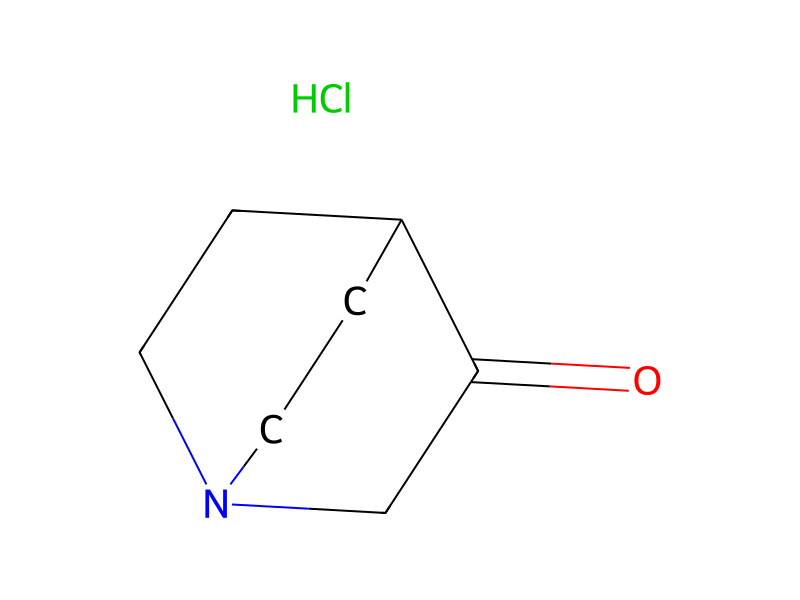
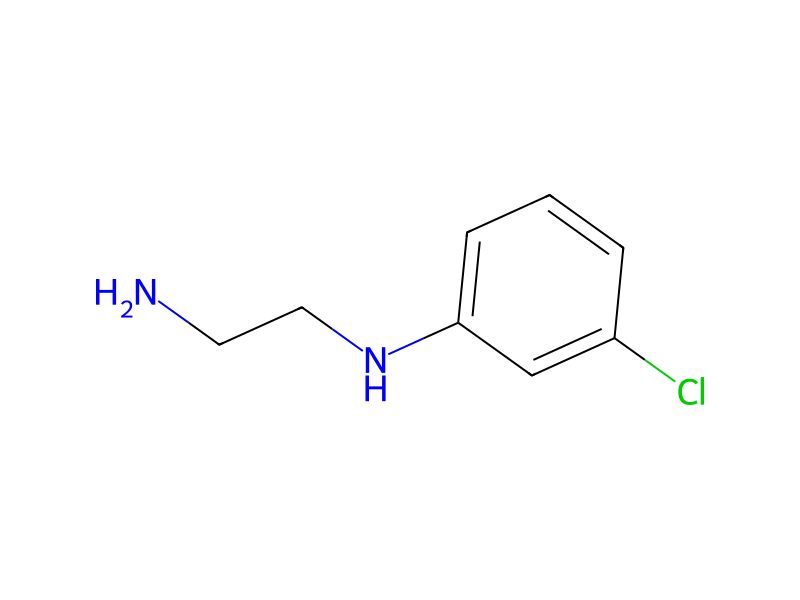
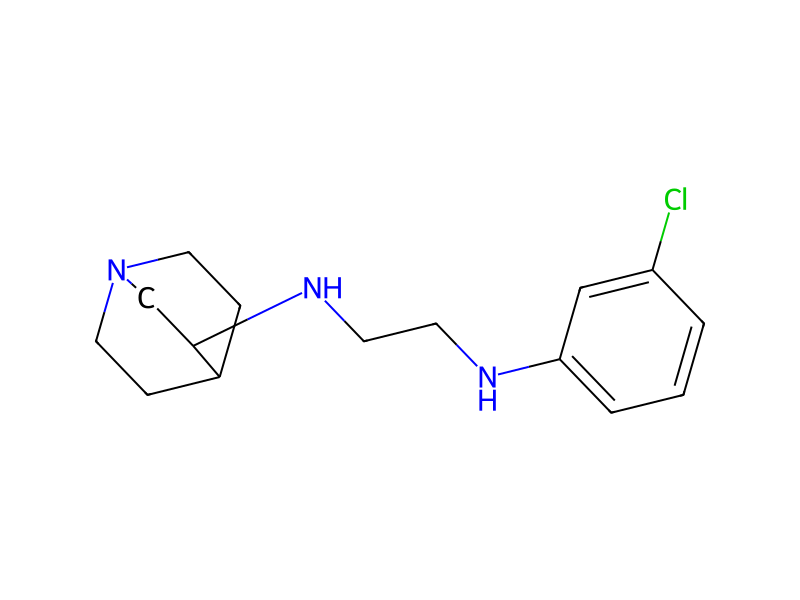
[Cl:1][C:2]1[CH:3]=[C:4]([NH:8][CH2:9][CH2:10][NH2:11])[CH:5]=[CH:6][CH:7]=1.Cl.[N:13]12[CH2:20][CH2:19][CH:16]([CH2:17][CH2:18]1)[C:15](=O)[CH2:14]2.C(O)(=O)C.C([BH3-])#N.[Na+]>CO>[N:13]12[CH2:20][CH2:19][CH:16]([CH2:17][CH2:18]1)[CH:15]([NH:11][CH2:10][CH2:9][NH:8][C:4]1[CH:5]=[CH:6][CH:7]=[C:2]([Cl:1])[CH:3]=1)[CH2:14]2Participants



Procedure
To a stirred solution of N-(3-chlorophenyl)-1,2-diaminoethane (1 g; 0,00586 moles) in 25 ml of anhydrous methanol kept under nitrogen atmosphere, 3-quinuclidinone hydrochloride (1.01 g, 0.0062? moles) is added. The pH is adjusted to pH 6 by addition of glacial acetic acid. Sodium cyanoborohydride (0.74 g; 0.0117 moles) is added in two portions. The reaction mixture is refluxed for 10 hours, cooled and then filtered. After evaporation to dryness the residue is taken up with water, basified with 20% sodium hydroxide solution and extracted three times with ethyl acetate. The organic layer is washed with brine, dried over anhydrous sodium sulfate and, after filtration, evaporated to dryness. The residue is purified by silica gel flash-chromatography (methylene chloride--methanol--30% ammonium hydroxide, 150:50:5 as eluant) to give the desired product as a clear oil (0.06 g).
Workup
- temperatureThe reaction mixture is refluxed for 10 hours
- temperaturecooled
- filtrationfiltered
- customAfter evaporation to dryness the residue
- extractionextracted three times with ethyl acetate
- washThe organic layer is washed with brine
- dry with materialdried over anhydrous sodium sulfate
- filtrationafter filtration
- customevaporated to dryness
- customThe residue is purified by silica gel flash-chromatography (methylene chloride--methanol--30% ammonium hydroxide, 150:50:5 as eluant)
Sources & evidence
- ORD record
- ord-6155d4e4a76d41d69a88452893850b2d
- Source dataset
- uspto-grants-1993_09
- Patent number
- US05242929
Linked notes
Loading…