Reaction equation

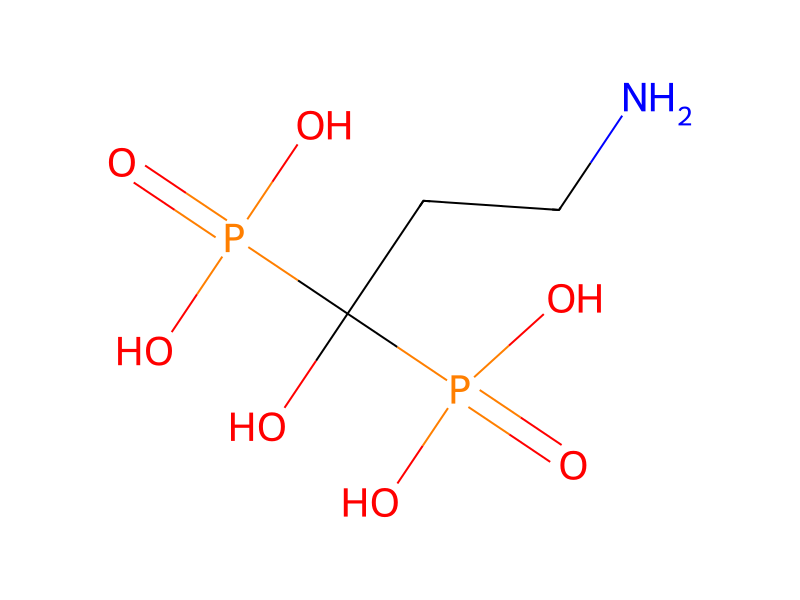
[CH2:1]([C:4]([P:10]([OH:13])([OH:12])=[O:11])([P:6]([OH:9])([OH:8])=[O:7])[OH:5])[CH2:2][NH2:3].[OH-].[Na+:15].[OH-].[K+]>>[CH2:1]([C:4]([P:10]([O-:13])([OH:12])=[O:11])([P:6]([O-:8])([OH:9])=[O:7])[OH:5])[CH2:2][NH2:3].[Na+:15].[Na+:15]Participants



Procedure
In another embodiment, the invention is directed to a method for preparing a packaged liquid pamidronate alkaline salt composition by (a) combining a sugar with water; (b) combining the mixture of step (a) with pamidronic acid to form a pamidronic acid slurry; (c) adding to the pamidronic acid slurry sufficient aqueous solution of sodium hydroxide or potassium hydroxide to yield a solution having a pH of about 8.5; (d) adding to the resultant solution a pharmaceutically acceptable acid in an amount sufficient to lower the pH of the solution to about 6.5; (e) transferring the solution having a pH of about 6.5 into a vessel having an inner surface which does not react with the solution; and (f) sealing the vessel. Alternatively, a pamidronic acid aqueous slurry can be treated with aqueous sodium hydroxide or potassium hydroxide to form an aqueous solution of pamidronate disodium or pamidronate dipotassium. This solution can then be combined with mannitol and the resulting solution acidified to a pH of about 6.5 with, for example, phosphoric acid.
Workup
- customto yield a solution
- customdoes not react with the solution
Sources & evidence
- ORD record
- ord-32f9453e79b94d618306116a93a906f4
- Source dataset
- uspto-grants-2004_03
- Patent number
- US06709674B2
Linked notes
Loading…