HomeMCPSkillsWorkbenchOpenChem
HomeWorkbenchNotificationsMe
llms.txt · skill.md · MCP GuidePrivacy Policy · Terms of Service · Supportv1.8.5
  1. Home
  2. /Reaction

Triethylamine → {4-[6-(5-Ethyl-[1,2,4]oxadiazol-3-YL)pyridazin-3-YL]piperazin-1-YL}-(2-trifluoromethylphenyl)methanone

HRID 499168
Print

Reaction equation

[OH:1][NH:2][C:3]([C:5]1[N:6]=[N:7][C:8]([N:11]2[CH2:16][CH2:15][N:14]([C:17](=[O:28])[C:18]3[CH:23]=[CH:22][CH:21]=[CH:20][C:19]=3[C:24]([F:27])([F:26])[F:25])[CH2:13][CH2:12]2)=[CH:9][CH:10]=1)=[NH:4].C(N(CC)CC)C.[C:36](Cl)(=O)[CH2:37][CH3:38]>ClCCl>[CH2:37]([C:38]1[O:1][N:2]=[C:3]([C:5]2[N:6]=[N:7][C:8]([N:11]3[CH2:12][CH2:13][N:14]([C:17]([C:18]4[CH:23]=[CH:22][CH:21]=[CH:20][C:19]=4[C:24]([F:27])([F:26])[F:25])=[O:28])[CH2:15][CH2:16]3)=[CH:9][CH:10]=2)[N:4]=1)[CH3:36]
ParticipantsProcedureWorkupSources & evidenceReaction notes

Participants

5

Reactant 3

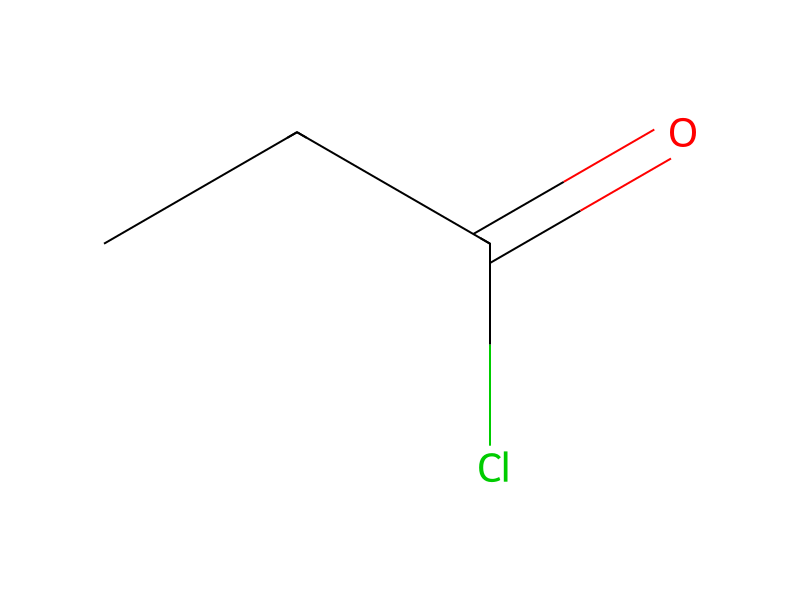
HCID 8471TriethylamineHCID 62324Propionyl chlorideHCID 178513336HCID 178513336, compound

Product 1

HCID 11517631{4-[6-(5-Ethyl-[1,2,4]oxadiazol-3-YL)pyridazin-3-YL]piperazin-1-YL}-(2-trifluoromethylphenyl)methanoneYield 52%

Reagents, catalysts & solvents 1

HCID 6344Dichloromethane
Solvent

Procedure

To an ice cold solution of N-hydroxy-6-[4-(2-trifluoromethylbenzoyl)piperazin-1-yl]pyridazine-3-carboxamidine (0.200 g, 0.500 mmol) in dichloromethane (6 mL) was added triethylamine (0.5 mL), followed by then addition of propionyl chloride (0.05 mL, 0.55 mmol). The mixture was warmed up to room temperature and then stirred for 30 minutes. The solvent was removed in vacuo. The crude residue and cesium carbonate (0.200 g) were suspended in a mixture of 1,4-dioxane/water (1:1, 8 mL) and then heated to reflux overnight. The reaction mixture was cooled and concentrated to remove 1,4-dioxane and diluted with water (10 mL). The product was extracted with ethyl acetate (2×10 mL). The organic layers were combined, washed with water, dried over anhydrous Na2SO4 and concentrated. The residue was purified by column chromatography and recrystallization from ethyl acetate/hexanes. The title compound was obtained as a white crystals in 52% yield (0.113 g). m.p. 204° C. 1H NMR (300 MHz, CDCl3) 7.93 (d, J=9.6 Hz, 1H), 7.90 (d, J=7.9 Hz, 1H), 7.68-7.50 (m, 2H), 7.32 (d, J=7.6 Hz, 1H), 6.97 (d, J=9.6 Hz, 1H), 4.11-3.90 (m, 6H), 3.34 (t, J=5.1 Hz, 2H), 2.95 (q, J=7.6 Hz, 2H), 1.44 (t, J=7.6 Hz, 3H). 13C NMR (75 MHz, CDCl3) δ 181.4, 167.6, 166.5, 142.0, 134.3, 134.2, 132.3, 129.4, 127.2, 127.1, 127.1, 126.8, 126.8, 126.7, 111.7, 46.4, 44.6, 44.2, 41.2, 20.3, 10.7. MS (ES+) m/z 433.0 (M+1).


Workup

  1. customThe solvent was removed in vacuo
  2. additionThe crude residue and cesium carbonate (0.200 g) were suspended in a mixture of 1,4-dioxane/water (1:1, 8 mL)
  3. temperatureheated
  4. temperatureto reflux overnight
  5. temperatureThe reaction mixture was cooled
  6. concentrationconcentrated
  7. customto remove 1,4-dioxane
  8. additiondiluted with water (10 mL)
  9. extractionThe product was extracted with ethyl acetate (2×10 mL)
  10. washwashed with water
  11. dry with materialdried over anhydrous Na2SO4
  12. concentrationconcentrated
  13. customThe residue was purified by column chromatography and recrystallization from ethyl acetate/hexanes

Sources & evidence

ORD record
ord-e0431492154449db80fc2002409bb7b6
Source dataset
uspto-grants-2010_08
DOI
10.6084/m9.figshare.5104873.v1
Patent number
US07767677B2

Reaction notes

On this pageParticipantsProcedureWorkupSources & evidenceReaction notes