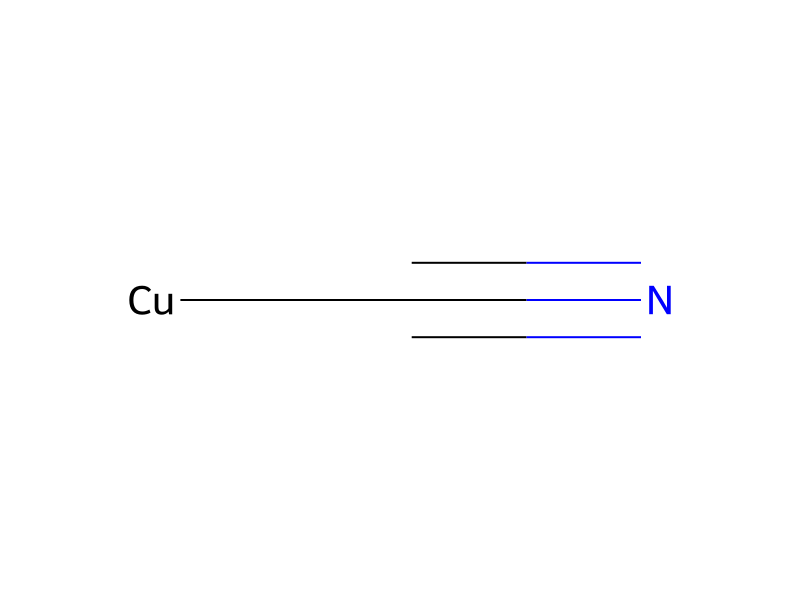
Br[C:2]1[C:11]2[C:6](=[CH:7][CH:8]=[CH:9][CH:10]=2)[C:5]([C:12]2[CH:17]=[CH:16][C:15]([Cl:18])=[CH:14][CH:13]=2)=[C:4]([CH:19]([O:24][C:25]([CH3:28])([CH3:27])[CH3:26])[C:20]([O:22]C)=[O:21])[C:3]=1[CH3:29].[C:30]([Cu])#[N:31].CN1C(=O)CCC1>CCO>[C:25]([O:24][CH:19]([C:4]1[C:3]([CH3:29])=[C:2]([C:30]#[N:31])[C:11]2[C:6](=[CH:7][CH:8]=[CH:9][CH:10]=2)[C:5]=1[C:12]1[CH:17]=[CH:16][C:15]([Cl:18])=[CH:14][CH:13]=1)[C:20]([OH:22])=[O:21])([CH3:26])([CH3:28])[CH3:27]A suspension of methyl 2-(4-bromo-1-(4-chlorophenyl)-3-methylnaphthalen-2-yl)-2-tert-butoxyacetate (10.5 mg, 22.1 μmol), CuCN (9.8 mg, 0.11 mmol), and NMP (500 μL) was heated to 200° C. in a microwave. The reaction was cooled to 23° C., treated with EtOH (2.5 mL), filtered through a 0.45 micron filter, and directly purified by reverse phase HPLC (Gemini, 5 to 100% ACN/H2O+0.1% TFA). The product-containing fractions were combined and treated with LiOH monohydrate until the pH was distinctly basic. The mixture was concentrated with warming to remove most of the water and all of the CH3CN. The solution was treated with EtOH (absolute, 500 μL) and THF (1.0 mL). The suspension was stirred at 23° C. for 1 h. It was filtered through a 0.45 micron filter, and directly purified by reverse phase HPLC (Gemini, 5 to 100% ACN/H2O+0.1% TFA). The product-containing fractions were combined and lyophilized, giving the title compound (parent form) (5.2 mg, 55% over 2 steps).