Reaction equation
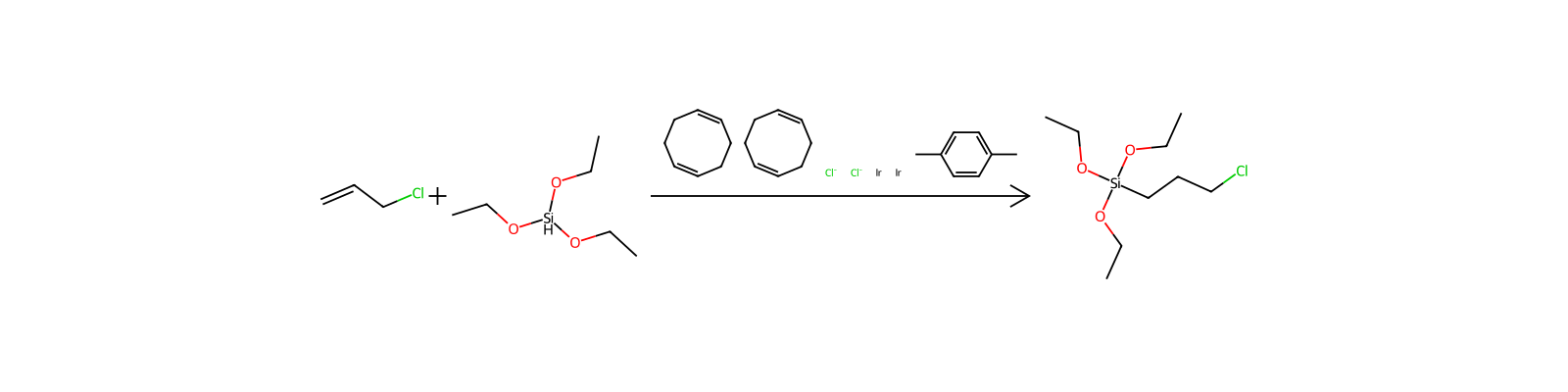
[CH2:1]([Cl:4])[CH:2]=[CH2:3].[CH2:5]([O:7][SiH:8]([O:12][CH2:13][CH3:14])[O:9][CH2:10][CH3:11])[CH3:6]>C1CC=CCCC=C1.C1CC=CCCC=C1.[Cl-].[Cl-].[Ir].[Ir].CC1C=CC(C)=CC=1>[Cl:4][CH2:1][CH2:2][CH2:3][Si:8]([O:12][CH2:13][CH3:14])([O:9][CH2:10][CH3:11])[O:7][CH2:5][CH3:6]Participants
5
Reactant 2
Product 1
Reagents, catalysts & solvents 2


Procedure
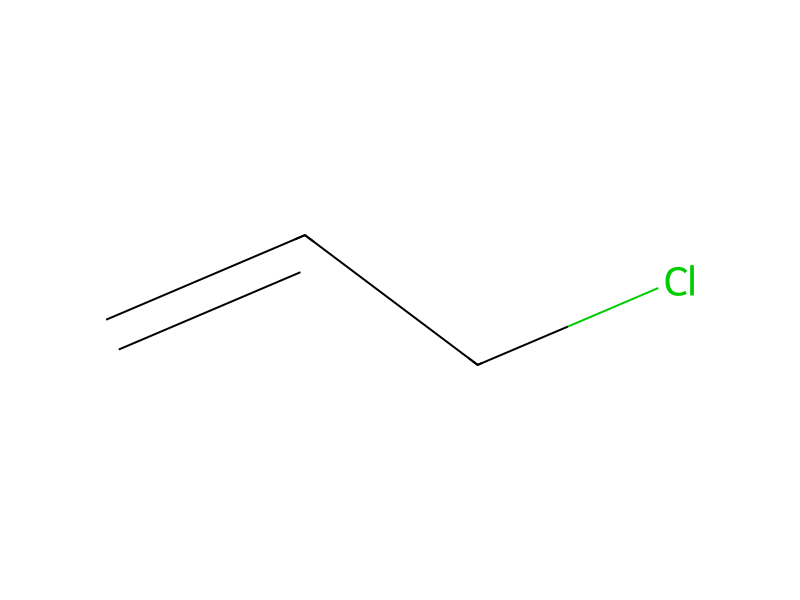
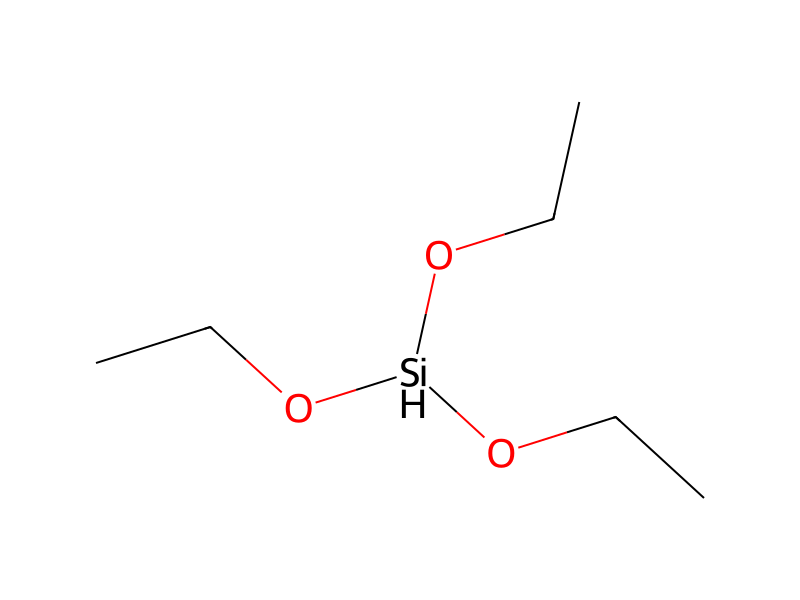
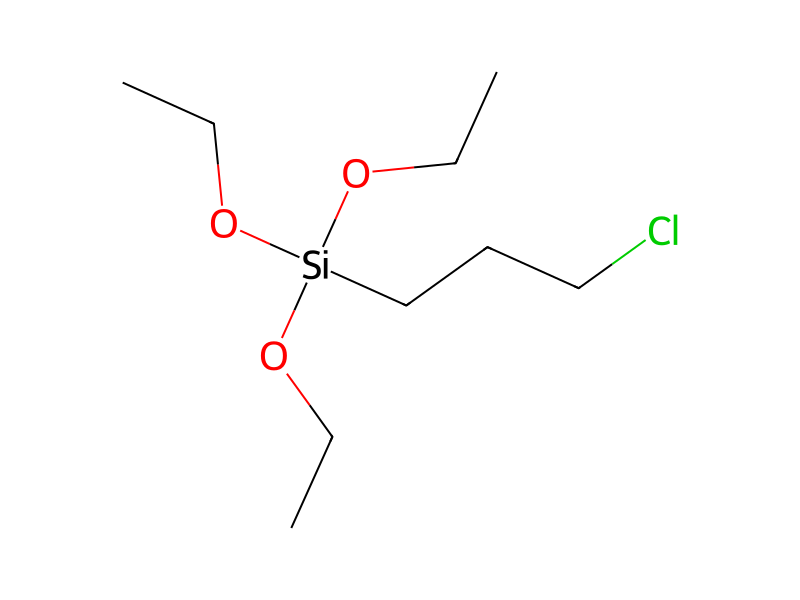
In analogy to Example 3, a homogeneous reaction solution of 4 g of p-xylene, 3.8 g (0.05 mol) of allyl chloride (instead of 4.2 g corresponding to 0.055 mol), 8.2 g (0.05 mol) of triethoxysilane and 0.16 mg (10-3 mol %) of chloro-(1,5-cyclooctadiene)iridium(I) dimer were reacted without a relatively long mixing or storage time. Analysis by gas chromatography gave a product yield of only 61% of 3-chloropropyltriethoxysilane.
Workup
- additiona relatively long mixing
Sources & evidence
- ORD record
- ord-1046655f81d5414dad9edc05ddc70660
- Source dataset
- uspto-grants-1997_04
- Patent number
- US05616762
Linked notes
Loading…