HomeMCPWorkbenchSkills
HomeWorkbenchNotificationsMe
llms.txt · MCP GuidePrivacy Policy · Terms of Service · Supportv1.8.3
  1. Home
  2. /Reaction

Cesium carbonate → Pyrazolo[1,5-a]pyrimidine-3-carboxylic acid [2-bromo-4-(5-chloro-2-difluoromethoxy-phenyl)-thiazol-5-yl]-amide

HRID 529752
Print

Reaction equation

HRID 529752 reaction equation
[Br:1][C:2]1[S:3][C:4]([NH:15][C:16]([C:18]2[CH:19]=[N:20][N:21]3[CH:26]=[CH:25][CH:24]=[N:23][C:22]=23)=[O:17])=[C:5]([C:7]2[CH:12]=[C:11]([Cl:13])[CH:10]=[CH:9][C:8]=2[OH:14])[N:6]=1.C(=O)([O-])[O-].[Cs+].[Cs+].Cl[C:34]([F:39])([F:38])C([O-])=O.[Na+]>CN(C=O)C.O>[Br:1][C:2]1[S:3][C:4]([NH:15][C:16]([C:18]2[CH:19]=[N:20][N:21]3[CH:26]=[CH:25][CH:24]=[N:23][C:22]=23)=[O:17])=[C:5]([C:7]2[CH:12]=[C:11]([Cl:13])[CH:10]=[CH:9][C:8]=2[O:14][CH:34]([F:39])[F:38])[N:6]=1
ParticipantsProcedureWorkupSources & evidenceReaction notes

Participants

6

Reactant 3

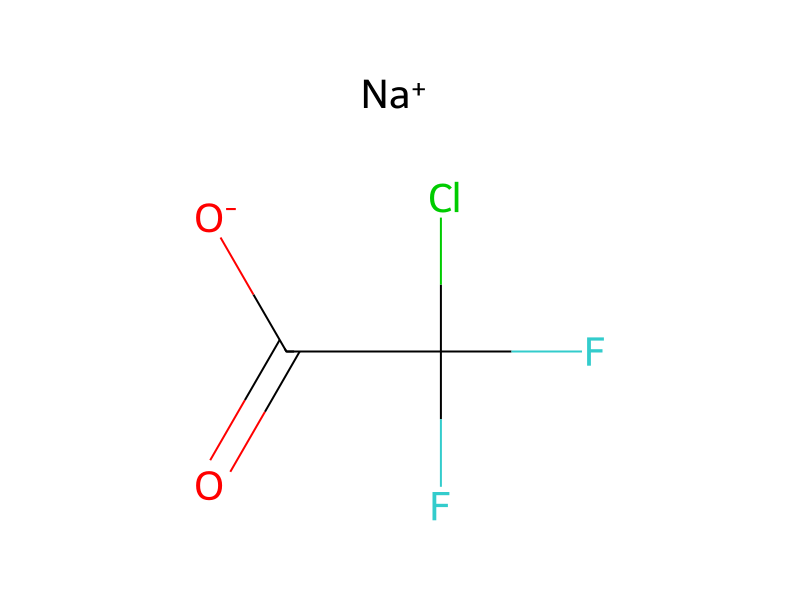
HCID 10796Cesium carbonate2×HCID 2734985Sodium chlorodifluoroacetate2×HCID 131735619Schembl29488777

Product 1

HCID 118531712Pyrazolo[1,5-a]pyrimidine-3-carboxylic acid [2-bromo-4-(5-chloro-2-difluoromethoxy-phenyl)-thiazol-5-yl]-amideYield 59.1%

Reagents, catalysts & solvents 2

HCID 962
Water
Solvent
HCID 6228DimethylformamideSolvent

Procedure

To a solution of pyrazolo[1,5-a]pyrimidine-3-carboxylic acid [2-bromo-4-(5-chloro-2-hydroxy-phenyl)-thiazol-5-yl]-amide (1.1 g, 2.4 mmol) in DMF (20 mL) and water (2 mL) was added cesium carbonate (1.1 g, 3.4 mmol) and then sodium chlorodifluoroacetate (839 mg, 5.5 mmol). The mixture was stirred at 100° C. for 16 hours before further cesium carbonate (2.2 g, 6.8 mmol) and sodium chlorodifluoroacetate (1.7 g, 11 mmol) was added and stirring continued at 100° C. for 6 hours. The mixture was allowed to cool to room temperature and partitioned between ethyl acetate and water and the phases separated. The organic layer was washed with brine. The combined aqueous layer was extracted with ethyl acetate once and the combined organic layer dried (Na2SO4), filtered and evaporated. The resultant residue was purified by flash chromatography on silica eluting with 50% ethyl acetate in cyclohexane to give the title compound as a yellow solid (710 mg, 59%). LCMS (Method 3) [M+H]+=500.1, RT=3.97 min. 1H NMR (400 MHz, DMSO-d6) δ: 10.84 (s, 1H), 9.42 (dd, 1H, J=1.6, 6.9 Hz), 8.79 (s, 1H), 8.66 (dd, 1H, J=1.6, 4.3 Hz), 7.76 (d, 1H, J=2.8 Hz), 7.51 (d, 1H, J=8.8 Hz), 7.36 (dd, 1H, J=4.2, 7.0 Hz), 7.22 (t, 1H, J=73.1 Hz).

Workup

  1. additionwas added
  2. custompartitioned between ethyl acetate and water
  3. customthe phases separated
  4. washThe organic layer was washed with brine
  5. extractionThe combined aqueous layer was extracted with ethyl acetate once
  6. dry with materialthe combined organic layer dried (Na2SO4)
  7. filtrationfiltered
  8. customevaporated
  9. customThe resultant residue was purified by flash chromatography on silica eluting with 50% ethyl acetate in cyclohexane

Sources & evidence

ORD record
ord-d9dfaaf885d3462091fc92313b557feb
Source dataset
uspto-grants-2016_05
DOI
10.6084/m9.figshare.5104873.v1
Patent number
US09346815B2

Reaction notes

On this pageParticipantsProcedureWorkupSources & evidenceReaction notes