Reaction equation

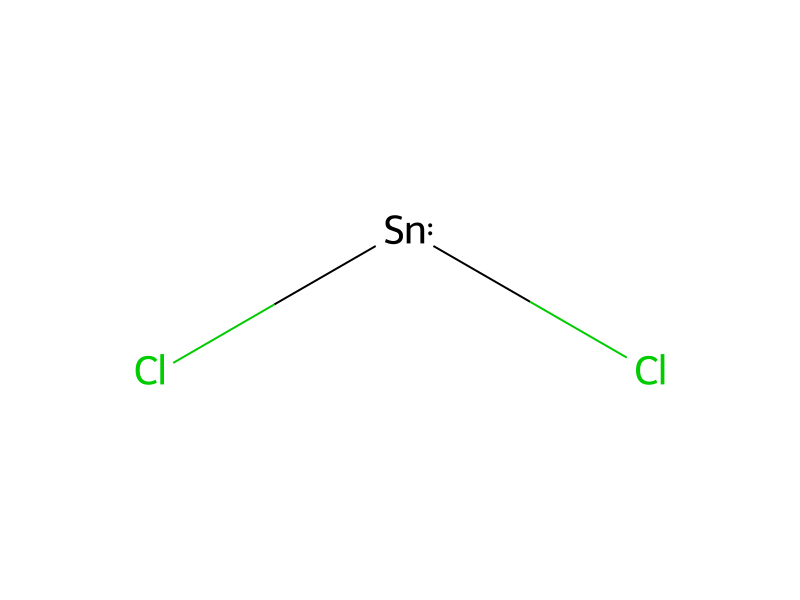
[NH2:1][C:2]1[C:7]([N+:8]([O-])=O)=[CH:6][C:5]([Cl:11])=[CH:4][N:3]=1.[Cl:12][Sn]Cl>Cl>[NH2:1][C:2]1[C:7]([NH2:8])=[CH:6][C:5]([Cl:11])=[C:4]([Cl:12])[N:3]=1Participants
Reactant 2

Product 1

Reagents, catalysts & solvents 1

Procedure
The compounds of the present invention may be prepared as follows. It has been reported that reduction of 2-amino-5-chloro-3-nitropyridine (2) by SnCl2 in concentrated HCl resulted in both reduction of the nitro group to an amino group as well as chlorination of the pyridine ring to give 2,3-diamino-5,6-dichloropyridine (4) as the only isolated product (Israel & Day, J. Org. Chem. 24:1455-1460 (1959)). We found that reduction of 2 under identical conditions as reported gave a mixture of 2,3-diamino-5-chloropyridine (3) and 2,3-diamino-5,6-dichloropyridine (4) in a ratio of 4:1. The mixture could not be separated by crystallization in water. It could be separated by preparative TLC and chromatography. Cyclization of 3 with oxalic acid gave 8-NQX 5 and cyclization of 4 with oxalic acid gave 8-NQX 6. 6,7-dichloro-8-NQX 6 was found to have a Ki of about 200 nM, which is similar to the corresponding 6,7-dichloro-QX. 6-Chloro-8-NQX 5 also was found to be about as active as the corresponding 6-chloro-QX. 6-Bromo-7-methyl-8-NQX (8) was found to have a Ki of about 200 nM. 6-NQX 11 and 6,8-diN-QX 13 also were found to be about as active as QX. ##STR8##
Workup
- customThe compounds of the present invention may be prepared
- customresulted in both reduction of the nitro group to an amino group as well as chlorination of the pyridine ring
Sources & evidence
- ORD record
- ord-db7b7438ec9b4d138b262aa4587c1145
- Source dataset
- uspto-grants-1997_04
- Patent number
- US05620978
Linked notes
Loading…