HomeMCPWorkbenchSkills
HomeWorkbenchNotificationsMe
llms.txt · MCP GuidePrivacy Policy · Terms of Service · Supportv1.8.3
  1. Home
  2. /Reaction

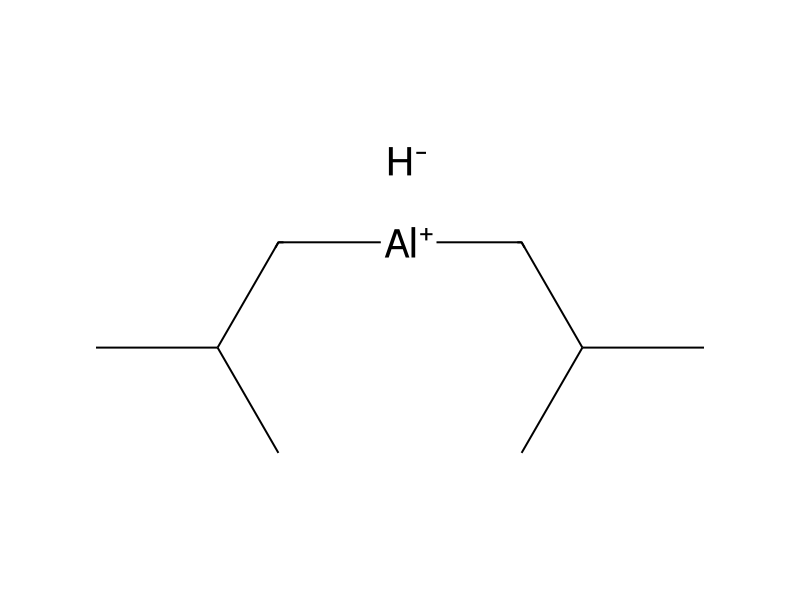
Diisobutylaluminumhydride → (7-Bromo-2-methyl-benzo[d]oxazol-4-yl)methanol

HRID 536439
Print

Reaction equation

HRID 536439 reaction equation
C[O:2][C:3]([C:5]1[CH:6]=[CH:7][C:8]([Br:15])=[C:9]2[O:13][C:12]([CH3:14])=[N:11][C:10]=12)=O.[H-].C([Al+]CC(C)C)C(C)C>O1CCCC1>[Br:15][C:8]1[C:9]2[O:13][C:12]([CH3:14])=[N:11][C:10]=2[C:5]([CH2:3][OH:2])=[CH:6][CH:7]=1
ParticipantsConditionsProcedureWorkupSources & evidenceReaction notes

Participants

4

Reactant 2

HCID 21225700DiisobutylaluminumhydrideHCID 58497951Methyl 7-bromo-2-methylbenzo[d]oxazole-4-carboxylate

Product 1

HCID 58497963(7-Bromo-2-methyl-benzo[d]oxazol-4-yl)methanolYield 57.5%

Reagents, catalysts & solvents 1

HCID 8028TetrahydrofuranSolvent

Conditions

Temperature
0 °C

Procedure

To a solution of 7-bromo-2 methyl-benzo[d]oxazole-4-carboxylic acid methyl ester (8.64 g) in tetrahydrofuran (250 ml) was added dropwise a solution of diisobutylaluminium hydride (“DIBAL-H”) (1M in hexane) (80 ml) under a nitrogen atmosphere at 0° C. The reaction mixture was stirred at 0° C. for 20 minutes. Then the ice-bath was removed and the reaction mixture was allowed to warm to ambient temperature. After 40 minutes the mixture was cooled with an ice-bath and the reaction was quenched by the slow addition of water (5.0 ml). The mixture was poured onto aqueous sodium hydrogen carbonate (saturated) (300 ml) and extracted with diethyl ether (400 ml). The aqueous phase was further extracted with diethyl ether (2×300 ml). The combined organic extracts were washed with brine, dried over sodium sulfate and concentrated. The residue was triturated in a mixture of diisopropyl ether and heptane (3:1) to give (7-bromo-2-methyl-benzo[d]oxazol-4-yl)-methanol (4.45 g). 1H-NMR (400 MHz, CDCl3): 7.41 (d, 1H), 7.17 (d, 1H), 4.98 (s, 3H), 3.06 (s, 1H), 2.67 (s, 3H) ppm.

Workup

  1. customThen the ice-bath was removed
  2. temperatureto warm to ambient temperature
  3. temperatureAfter 40 minutes the mixture was cooled with an ice-bath
  4. customthe reaction was quenched by the slow addition of water (5.0 ml)
  5. additionThe mixture was poured onto aqueous sodium hydrogen carbonate (saturated) (300 ml)
  6. extractionextracted with diethyl ether (400 ml)
  7. extractionThe aqueous phase was further extracted with diethyl ether (2×300 ml)
  8. washThe combined organic extracts were washed with brine
  9. dry with materialdried over sodium sulfate
  10. concentrationconcentrated
  11. customThe residue was triturated in a mixture of diisopropyl ether and heptane (3:1)

Sources & evidence

ORD record
ord-7afb55b197cc4b8da6e29b2821fdfae6
Source dataset
uspto-grants-2014_10
DOI
10.6084/m9.figshare.5104873.v1
Patent number
US08859592B2

Reaction notes

On this pageParticipantsConditionsProcedureWorkupSources & evidenceReaction notes
