HomeMCPWorkbenchSkills
HomeWorkbenchNotificationsMe
llms.txt · MCP GuidePrivacy Policy · Terms of Service · Supportv1.8.3
  1. Home
  2. /Reaction

Potassium Carbonate → 3-(3-Bromophenyl)pyridine

HRID 538913
Print

Reaction equation

HRID 538913 reaction equation
[Br:1][C:2]1[CH:7]=[CH:6][CH:5]=[C:4](I)[CH:3]=1.[N:9]1[CH:14]=[CH:13][CH:12]=[C:11](B(O)O)[CH:10]=1.C([O-])([O-])=O.[K+].[K+]>C1C=CC([P]([Pd]([P](C2C=CC=CC=2)(C2C=CC=CC=2)C2C=CC=CC=2)([P](C2C=CC=CC=2)(C2C=CC=CC=2)C2C=CC=CC=2)[P](C2C=CC=CC=2)(C2C=CC=CC=2)C2C=CC=CC=2)(C2C=CC=CC=2)C2C=CC=CC=2)=CC=1.O1CCOCC1>[Br:1][C:2]1[CH:3]=[C:4]([C:11]2[CH:10]=[N:9][CH:14]=[CH:13][CH:12]=2)[CH:5]=[CH:6][CH:7]=1
ParticipantsConditionsProcedureWorkupSources & evidenceReaction notes

Participants

6

Reactant 3

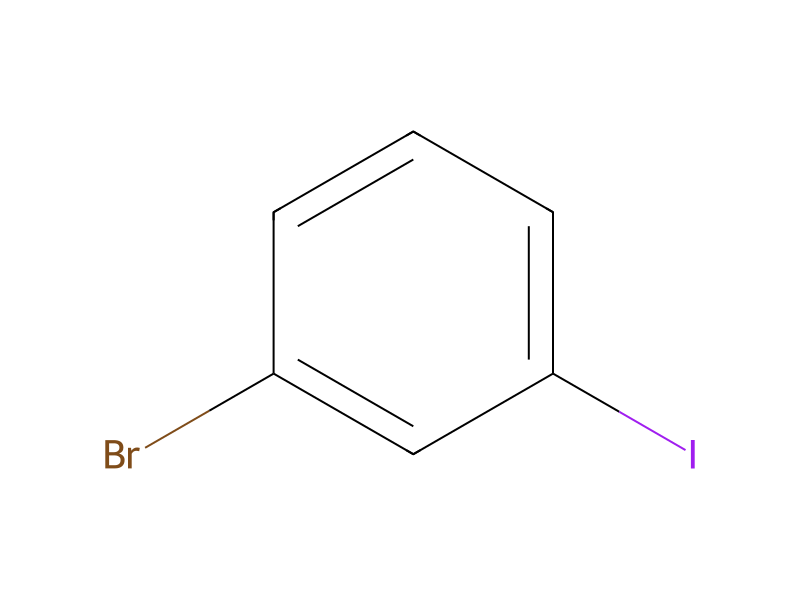
HCID 11430Potassium CarbonateHCID 11561Benzene, 1-bromo-3-iodo-HCID 27343783-Pyridinylboronic acid

Product 1

HCID 131504013-(3-Bromophenyl)pyridineYield 100%

Reagents, catalysts & solvents 2

HCID 178418397HCID 178418397, compoundCatalyst
HCID 31275
1,4-Dioxane
Solvent

Conditions

Temperature
100 °C

Procedure

1-bromo-3-iodobenzene (1.118 g, 3.95 mol) and 3-pyridine boronic acid (0.559 g, 4.54 mol) were added to a 100 mL three neck round bottom flask. To this flask, dioxane (20 mL) and aqueous K2CO3 (2 N, 20 mL) were added. The mixture was stirred and degassed with a steam of argon for 30 minutes. Then under argon atmosphere, 50 mg (0.04 mmol) of Pd(PPh3)4 (1%) was added. The mixture was heated to 100° C. and stirred overnight. The next day, the solvent was removed by roto-evaporation and the residue was suspended into an equal amount of water (50 mL) and CH2Cl2 (50 mL). The organic layer was separated from aqueous layer and washed with brine (50 mL×3). After drying over Na2SO4, and removal of the drying agent, about 0.92 g of 3-(3-bromophenyl)pyridine product (100%) was afforded. 1H NMR (400 MHz, CDCl3) 8.85 (s, 1H), 8.65 (d, 1H), 7.87 (d, 1H), 7.75 (s, 1H), 7.57-7.52 (m, 2H), 7.41-7.35 (m, 2H).

Workup

  1. customdegassed with a steam of argon for 30 minutes
  2. stirringstirred overnight
  3. customThe next day, the solvent was removed by roto-evaporation
  4. customThe organic layer was separated from aqueous layer
  5. washwashed with brine (50 mL×3)
  6. dry with materialAfter drying over Na2SO4, and removal of the drying agent

Sources & evidence

ORD record
ord-e89a2ea55392477c9cea45bea11590fd
Source dataset
uspto-grants-2014_10
DOI
10.6084/m9.figshare.5104873.v1
Patent number
US08865905B2

Reaction notes

On this pageParticipantsConditionsProcedureWorkupSources & evidenceReaction notes