Reaction equation
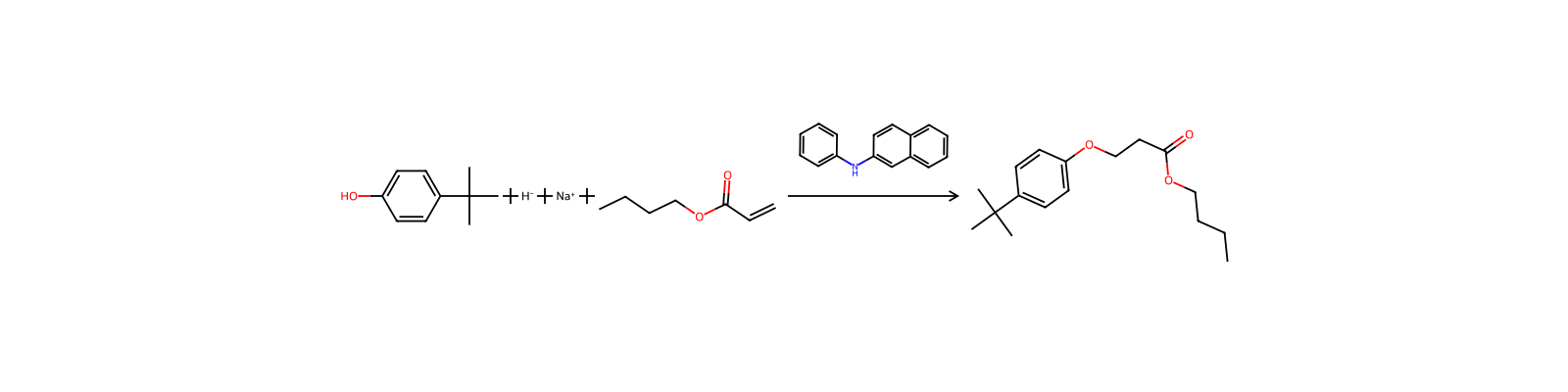
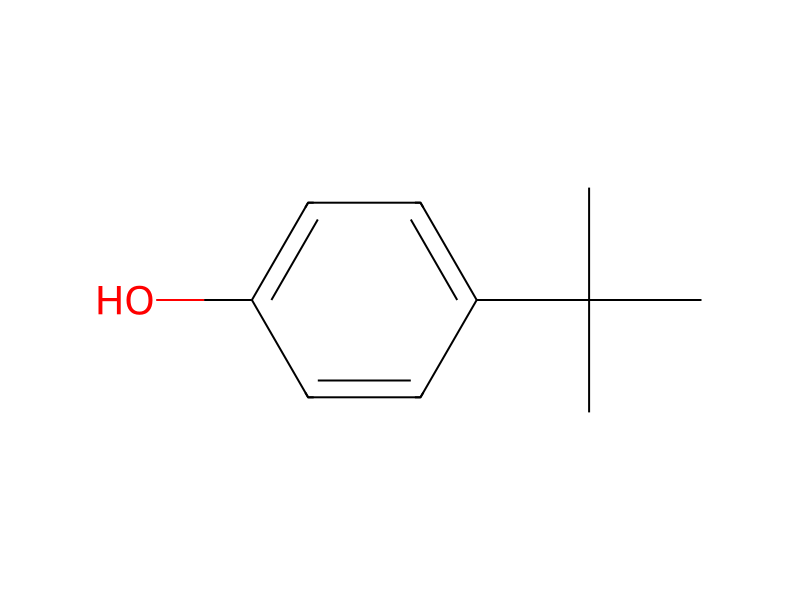
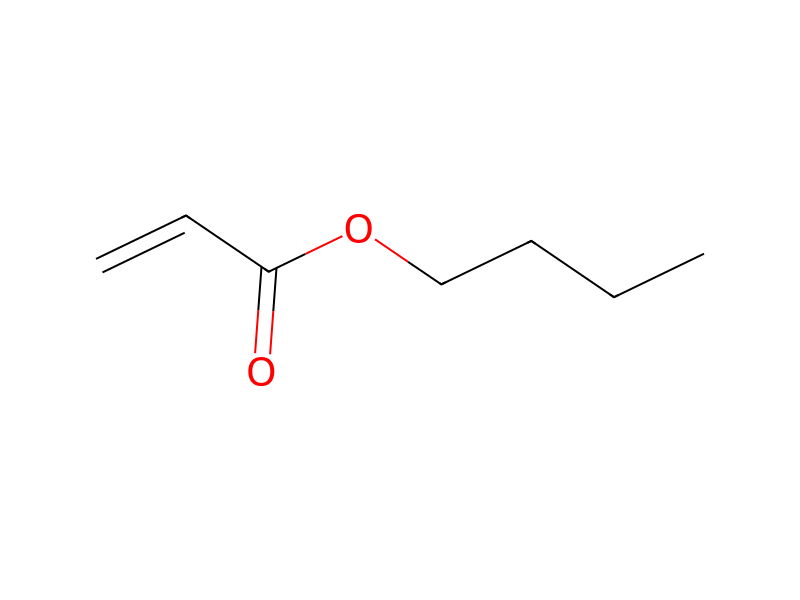
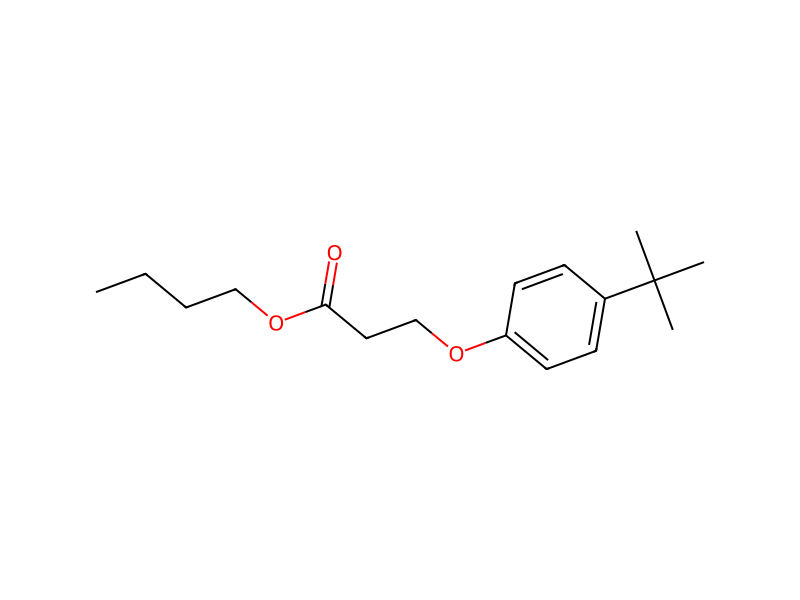
[C:1]([C:5]1[CH:10]=[CH:9][C:8]([OH:11])=[CH:7][CH:6]=1)([CH3:4])([CH3:3])[CH3:2].[H-].[Na+].[C:14]([O:18][CH2:19][CH2:20][CH2:21][CH3:22])(=[O:17])[CH:15]=[CH2:16]>C1(NC2C=CC3C(=CC=CC=3)C=2)C=CC=CC=1>[C:1]([C:5]1[CH:6]=[CH:7][C:8]([O:11][CH2:16][CH2:15][C:14]([O:18][CH2:19][CH2:20][CH2:21][CH3:22])=[O:17])=[CH:9][CH:10]=1)([CH3:4])([CH3:2])[CH3:3]Participants
5
Reactant 3

Product 1
Reagents, catalysts & solvents 1
Procedure
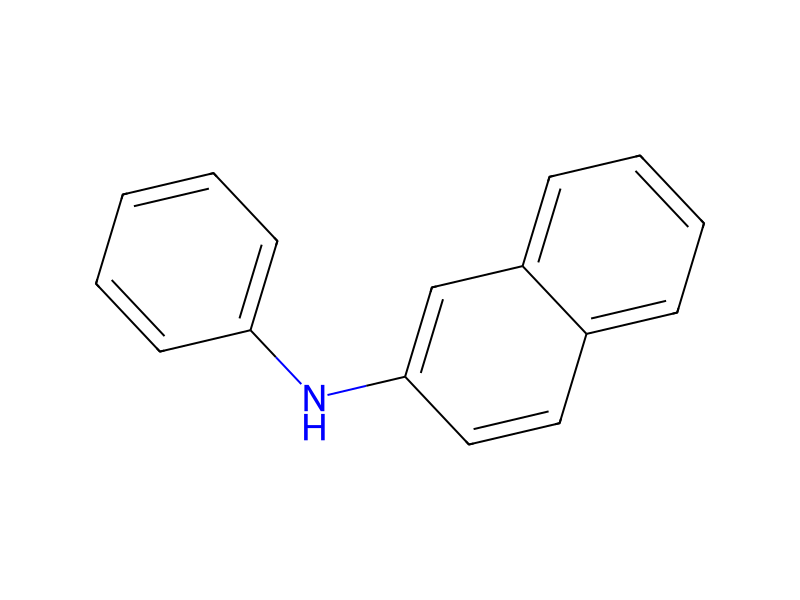
A solution of 25 g (0.167 mole) p-tert-butylphenol, 0.2 g sodium hydride (as 50% dispersion in oil), 0.2 g N-phenyl-2-naphthylamine (as basic polymerization inhibitor) in 75.0 g (0.586 mole) butyl acrylate was heated at 125° C. for four hours. The temperature was then reduced to 100° C. and the excess acrylate distilled under gentle vacuum. The resulting oil was filtered through 900 g silica gel (90 to 200 mesh) using chloroform as eluant to yield 21.0 g pure butyl 3-(p-tert-butyl-phenoxy)-propionate (45%).
Workup
- customwas then reduced to 100° C.
- distillationthe excess acrylate distilled under gentle vacuum
- filtrationThe resulting oil was filtered through 900 g silica gel (90 to 200 mesh)
Sources & evidence
- ORD record
- ord-35bc94f231fd4189a8a1d4929278d303
- Source dataset
- uspto-grants-1984_05
- Patent number
- US04451474
Linked notes
Loading…