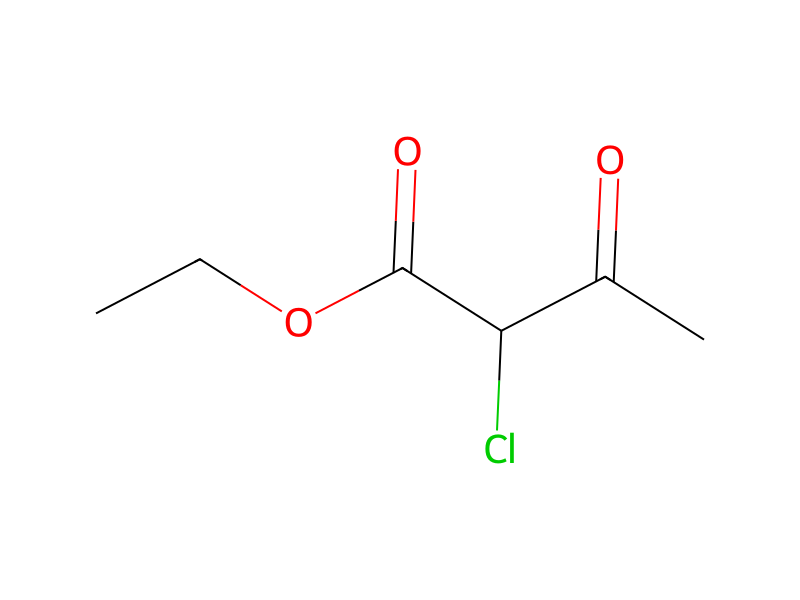
Ethyl 2-chloroacetoacetate → 2H-pyrido[4,3-b][1,4]oxazine
HRID 544738
Reaction equation

[NH2:1][C:2]1[CH:3]=[N:4][CH:5]=[CH:6][C:7]=1[OH:8].Cl[CH:10](C(C)=O)[C:11](OCC)=O>C(O)C.N1C=CC=CC=1>[O:8]1[CH2:11][CH:10]=[N:1][C:2]2[CH:3]=[N:4][CH:5]=[CH:6][C:7]1=2Participants
5
Reactant 2

Product 1

Reagents, catalysts & solvents 2


Procedure
The reaction of 3-amino-4-hydroxypyridine with ethyl 2-chloroacetoacetate in a mixture of ethanol and pyridine to give a pyrido[4,3-b][1,4]oxazine is the only example reported for the formation of this ring system [Takahashi, T. and Yoneda, F., Chem. Pharm. Bull (Japan), 1955, 3, 331]. In contrast, several groups have investigated the preparation and evaluation of pyrimido[4,5-b][1,4]oxazines as potential antifolates [Elion, G. B. and Hitchings, G. H., J. Amer. Chem. Soc., 1952, 74, 3877; Dunn, D. L. and Skinner, C. G., J. Org. Chem., 1975, 40, 3713; Lin, S.-C., Holmes, G. P., Dunn, D. L. and Skinner, C. G., J. Med. Chem., 1979, 22, 741; Winchester, M. J., J. Heterocycl. Chem., 1979, 16, 1455; Winchester, M. J., Zappone, L. J., and Skinner, C. G., J. Heterocycl. Chem., 1981, 18, 455]. The formation of pyrimido[4,5-b][1,4]oxazines from polyfunctional pyrimidines (e.g., 2,4,5-triamino-6-hydroxypyrimidine) and alpha-halo carbonyl compounds in a mixture of water and ethanol has been studied in detail by Wood and coworkers [Mirza, J., Pfleiderer, W., Brewer, A. D., Stuart, A., Wood, H. C. S., J. Chem. Soc., C., 1970, 437]. Although these reactants might possibly generate a number of bicyclic ring systems, only dihydropteridines were observed either as a minor or major by-product. Apparently pyrimido[4,5-b][1,4]oxazines are only formed from pyrimidines in which the hydroxy group is conjugated with an electron donating group containing a lone pair of electrons [Mirza, J., Pfleiderer, W., Brewer, A. D., Stuart, A., Wood, H. C. S., J. Chem. Soc., C., 1970, 437; Russell, P. B., Elion, G. B., and Hitchings, G. H., J. Amer. Chem. Soc., 1949, 71, 474].