HomeMCPWorkbenchSkills
HomeWorkbenchNotificationsMe
llms.txt · MCP GuidePrivacy Policy · Terms of Service · Supportv1.8.0
  1. Home
  2. /Reaction

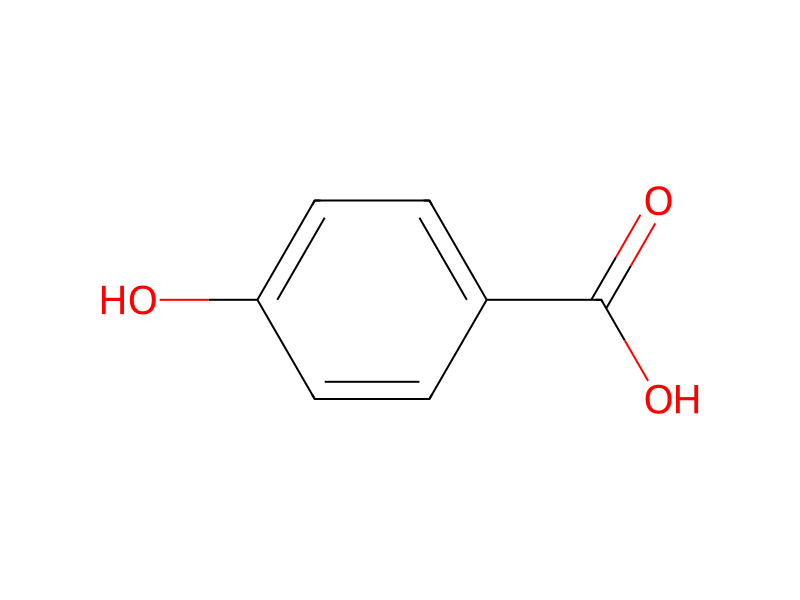
4-Hydroxybenzoic Acid → 4-(Pivaloyloxy)benzoic acid

HRID 544923
Notes
Print preview

Reaction equation

HRID 544923 reaction equation
[OH:1][C:2]1[CH:10]=[CH:9][C:5]([C:6]([OH:8])=[O:7])=[CH:4][CH:3]=1.N1C=CC=CC=1.[C:17](Cl)(=[O:22])[C:18]([CH3:21])([CH3:20])[CH3:19].Cl>ClCCl>[C:17]([O:1][C:2]1[CH:10]=[CH:9][C:5]([C:6]([OH:8])=[O:7])=[CH:4][CH:3]=1)(=[O:22])[C:18]([CH3:21])([CH3:20])[CH3:19]
ParticipantsProcedureWorkupSources & evidenceReaction notes

Participants

6

Reactant 4

HCID 1354-Hydroxybenzoic AcidHCID 313Hydrochloric AcidHCID 1049PyridineHCID 62493Pivaloyl chloride

Product 1

HCID 336990284-(Pivaloyloxy)benzoic acidYield 63.9%

Reagents, catalysts & solvents 1

HCID 6344Dichloromethane
Solvent

Procedure

A solution of 4-hydroxybenzoic acid (6.91 g) and pyridine (12.1 ml) in dichloromethane (100 ml) was cooled to an ice-water temperature, and hereto was added dropwise pivaloyl chloride (13.26 g). The mixture was stirred at same temperature for 1.5 hours, and thereto was added a 10% aqueous hydrochloric acid solution (50 ml). The organic layer was washed with H2O (100 ml) and brine, and dried over magnesium sulfate. The insoluble materials were filtered off, and the filtrate was evaporated under reduced pressure. The residue was dissolved in tetrahydrofuran (100 ml)-H2O (15 ml), and the mixture was stirred at 50° C. for 17.5 hours. After being cooled to an ice-water temperature, the mixture was basified with a saturated aqueous sodium hydrogen carbonate solution (about 100 ml). After being stirred at room temperature for 4 hours, the mixture was acidified with a 36% aqueous hydrochloric acid solution at an ice-water temperature. The resultant mixture was extracted with ethyl acetate (100 ml), and the organic layer was dried over magnesium sulfate. The insoluble materials were filtered off, and the filtrate was evaporated under reduced pressure. The residue was purified by silica gel column chromatography (chloroform:methanol=50:1-9:1) and triturated with diisopropyl ether to give 4-pivaloyloxybenzoic acid (7.10 g) as a colorless solid. ESI-Mass m/Z 221 (M−H). 1H-NMR (DMSO-d6) δ 1.31 (s, 9H), 7.23 (d, J=8.5 Hz, 2H), 7.99 (d, J=8.7 Hz, 2H), 10.03 (brs, 1H).

Workup

  1. washThe organic layer was washed with H2O (100 ml) and brine
  2. dry with materialdried over magnesium sulfate
  3. filtrationThe insoluble materials were filtered off
  4. customthe filtrate was evaporated under reduced pressure
  5. dissolutionThe residue was dissolved in tetrahydrofuran (100 ml)-H2O (15 ml)
  6. stirringthe mixture was stirred at 50° C. for 17.5 hours
  7. temperatureAfter being cooled to an ice-water temperature
  8. stirringAfter being stirred at room temperature for 4 hours
  9. extractionThe resultant mixture was extracted with ethyl acetate (100 ml)
  10. dry with materialthe organic layer was dried over magnesium sulfate
  11. filtrationThe insoluble materials were filtered off
  12. customthe filtrate was evaporated under reduced pressure
  13. customThe residue was purified by silica gel column chromatography (chloroform:methanol=50:1-9:1)
  14. customtriturated with diisopropyl ether

Sources & evidence

ORD record
ord-2569a4e5f9c345babc48d30759410321
Source dataset
uspto-grants-2011_05
DOI
10.6084/m9.figshare.5104873.v1
Patent number
US07935674B2

Reaction notes

Loading…

On this pageParticipantsProcedureWorkupSources & evidenceReaction notes



