HomeMCPWorkbenchSkills
HomeWorkbenchNotificationsMe
llms.txt · MCP GuidePrivacy Policy · Terms of Service · Supportv1.8.0
  1. Home
  2. /Reaction

Picolyl chloride hydrochloride → N-(6-methoxy-9-pyridin-2-ylmethyl-2,3,4,9-tetrahydro-1H-carbazol-3-yl)-isobutyramide

HRID 545536
Notes
Print preview

Reaction equation

HRID 545536 reaction equation
[CH3:1][O:2][C:3]1[CH:4]=[C:5]2[C:13](=[CH:14][CH:15]=1)[NH:12][C:11]1[CH2:10][CH2:9][CH:8]([NH:16][C:17](=[O:21])[CH:18]([CH3:20])[CH3:19])[CH2:7][C:6]2=1.C[Si]([N-][Si](C)(C)C)(C)C.[K+].Cl.Cl[CH2:34][C:35]1[CH:40]=[CH:39][CH:38]=[CH:37][N:36]=1>O1CCCC1.C1COCC1.CN(C=O)C>[CH3:1][O:2][C:3]1[CH:4]=[C:5]2[C:13](=[CH:14][CH:15]=1)[N:12]([CH2:34][C:35]1[CH:40]=[CH:39][CH:38]=[CH:37][N:36]=1)[C:11]1[CH2:10][CH2:9][CH:8]([NH:16][C:17](=[O:21])[CH:18]([CH3:19])[CH3:20])[CH2:7][C:6]2=1
ParticipantsProcedureWorkupSources & evidenceReaction notes

Participants

6

Reactant 3

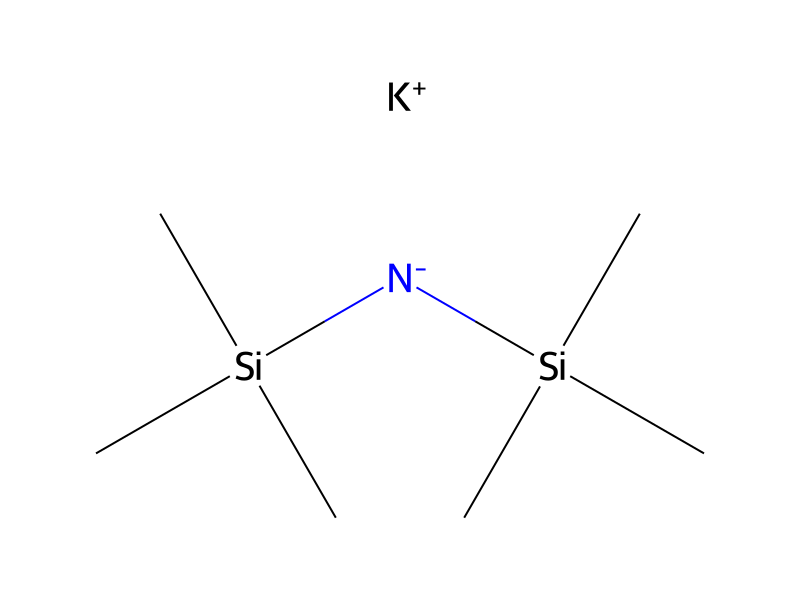
HCID 23392Picolyl chloride hydrochlorideHCID 3251421Potassium bis(trimethylsilyl)amideHCID 59161196HCID 59161196, compound

Product 1

HCID 57431660N-(6-methoxy-9-pyridin-2-ylmethyl-2,3,4,9-tetrahydro-1H-carbazol-3-yl)-isobutyramideYield 75.3%

Reagents, catalysts & solvents 2

HCID 8028Tetrahydrofuran
Solvent
HCID 21974620tetrahydrofuran N,N-dimethylformamideSolvent

Procedure

Dissolve N-(6-methoxy-2,3,4,9-tetrahydro-1H-carbazol-3-yl)-isobutyramide (200 mg, 0.70 mmol) in anhydrous tetrahydrofuran (6 mL) under nitrogen. Add dropwise potassium bis(trimethylsilyl)amide (3.2 mL, 1.6 mmol, 0.5M in toluene) and stir 30 min. Add slowly 2-(chloromethyl)pyridine hydrochloride (131 mg, 0.80 mmol) in THF/DMF (0.4 mL/1.3 mL) and stir at ambient temperature for 18 h. Quench with saturated ammonium chloride solution (0.5 mL) and partition between ethyl acetate and water. Separate the two phases and wash the aqueous phase with ethyl acetate (2×). Dry the combined organic portions (MgSO4), filter, and concentrate in vacuo to obtain a residue. Purify the material by silica gel chromatography, eluting with 50% ethyl acetate/dichloromethane with a gradient up to 80% ethyl acetate/dichloromethane to obtain 199 mg (75%) of a light yellow solid. MS (ES): m/z 378 (M+1); 1H NMR(DMSO-d6): δ 8.50 (dd, 1H, J=4.8, 0.9 Hz), 7.82 (d, 1H, J=7.5 Hz), 7.65 (dt, 1H, J=7.6, 1.6 Hz), 7.22 (m, 2H), 6.89 (d, 1H, J=2.2 Hz), 6.77 (d, 1H, J=7.9 Hz), 6.63 (dd, 1H, J=8.6, 2.4 Hz), 5.32 (s, 2H), 3.97 (m, 1H), 3.72 (s, 3H), 2.91 (dd, 1H, J=15.0, 5.3 Hz), 2.85-2.76 (m, 1H), 2.74-2.64 (m, 1H), 2.45 (m, 1H), 2.37 (m, 1H), 1.94 (m, 1H), 1.77 (m, 1H), 0.99 (m, 6H).

Workup

  1. stirringstir at ambient temperature for 18 h
  2. customQuench with saturated ammonium chloride solution (0.5 mL)
  3. custompartition between ethyl acetate and water
  4. customSeparate the two phases
  5. washwash the aqueous phase with ethyl acetate (2×)
  6. dry with materialDry the combined organic portions (MgSO4)
  7. filtrationfilter
  8. concentrationconcentrate in vacuo
  9. customto obtain a residue
  10. customPurify the material by silica gel chromatography
  11. washeluting with 50% ethyl acetate/dichloromethane with a gradient up to 80% ethyl acetate/dichloromethane

Sources & evidence

ORD record
ord-ead741b450e24c388121a2164576609b
Source dataset
uspto-grants-2011_05
DOI
10.6084/m9.figshare.5104873.v1
Patent number
US07935722B2

Reaction notes

Loading…

On this pageParticipantsProcedureWorkupSources & evidenceReaction notes