Reaction equation

Cl[C:2]1[CH:7]=[C:6]([CH2:8][N:9]2[C:13]([CH3:15])([CH3:14])[C:12](=[O:16])[N:11]([C:17]3[CH:25]=[C:24]4[C:20]([C:21]([CH3:43])([CH3:42])[CH2:22][N:23]4[C:26](=[O:41])[CH2:27][N:28]([CH:36]4[CH2:40][CH2:39][CH2:38][CH2:37]4)C(=O)OC(C)(C)C)=[CH:19][CH:18]=3)[C:10]2=[O:44])[CH:5]=[CH:4][N:3]=1.[CH3:45][N:46]([CH3:50])[C:47]([NH2:49])=[O:48].CC1(C)C2C=CC(P(C3C=CC=CC=3)C3C=CC=CC=3)=CC=2OC2C1=CC=C(P(C1C=CC=CC=1)C1C=CC=CC=1)C=2.C(=O)([O-])[O-].[Cs+].[Cs+]>O1CCOCC1.C([O-])(=O)C.[Pd+2].C([O-])(=O)C>[CH:36]1([NH:28][CH2:27][C:26]([N:23]2[C:24]3[C:20](=[CH:19][CH:18]=[C:17]([N:11]4[C:12](=[O:16])[C:13]([CH3:15])([CH3:14])[N:9]([CH2:8][C:6]5[CH:5]=[CH:4][N:3]=[C:2]([NH:49][C:47](=[O:48])[N:46]([CH3:50])[CH3:45])[CH:7]=5)[C:10]4=[O:44])[CH:25]=3)[C:21]([CH3:42])([CH3:43])[CH2:22]2)=[O:41])[CH2:37][CH2:38][CH2:39][CH2:40]1Participants
Reactant 4



Product 1

Reagents, catalysts & solvents 2


Procedure
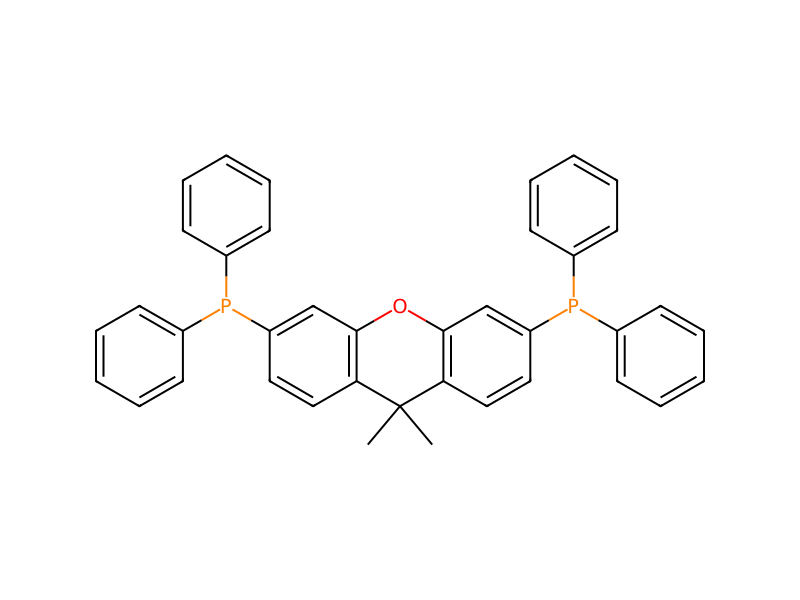
To a solution of 0.312 g of tert-butyl [2-(6-{3-[(2-chloropyridin-4-yl)methyl]-4,4-dimethyl-2,5-dioxoimidazolidin-1-yl}-3,3-dimethyl-2,3-dihydro-1H-indol-1-yl)-2-oxoethyl]cyclopentylcarbamate obtained in stage l) below in 12 mL of dioxane are successively added, under argon, 0.066 g of N,N-dimethylurea, 0.028 g of (9,9-dimethyl-9H-xanthene-3,6-diyl)bis(diphenylphosphine) (Xantphos), 0.022 g of palladium acetate and 0.65 g of caesium carbonate. The reaction mixture is refluxed for 4 hours and then filtered and concentrated under reduced pressure. The residue is taken up in 10 mL of dioxane and then 12 mL of a 4N solution of hydrogen chloride in dioxane are added and the reaction mixture is stirred at room temperature for 15 hours. After concentrating under reduced pressure, the residue is taken up in 40 mL of water, neutralized by addition of sodium hydrogen carbonate and extracted with three times 20 mL of dichloromethane. The combined organic phases are then washed with water, dried over magnesium sulphate, filtered and concentrated under reduced pressure. The residue is purified by chromatography on a column of silica, eluting with a mixture of dichloromethane and methanol (90/10 by volume) to give 0.08 g of 3-[4-({3-[1-(N-cyclopentylglycyl)-3,3-dimethyl-2,3-dihydro-1H-indol-6-yl]-5,5-dimethyl-2,4-dioxoimidazolidin-1-yl}methyl)pyridin-2-yl]-1,1-dimethylurea, the characteristics of which are as follows:
Workup
- temperatureThe reaction mixture is refluxed for 4 hours
- filtrationfiltered
- concentrationconcentrated under reduced pressure
- addition12 mL of a 4N solution of hydrogen chloride in dioxane are added
- concentrationAfter concentrating under reduced pressure
- additionneutralized by addition of sodium hydrogen carbonate
- extractionextracted with three times 20 mL of dichloromethane
- washThe combined organic phases are then washed with water
- dry with materialdried over magnesium sulphate
- filtrationfiltered
- concentrationconcentrated under reduced pressure
- customThe residue is purified by chromatography on a column of silica
- washeluting with a mixture of dichloromethane and methanol (90/10 by volume)
Sources & evidence
- ORD record
- ord-b4835569d3b5453d92f1e0cb06aaadb5
- Source dataset
- uspto-grants-2011_05
- Patent number
- US07935819B2
Linked notes
Loading…