HomeMCPWorkbenchSkills
HomeWorkbenchNotificationsMe
llms.txt · MCP GuidePrivacy Policy · Terms of Service · Supportv1.8.3
  1. Home
  2. /Reaction

Cesium carbonate → spiro[cyclopent-3-ene-1,3'-pyrrolo[2,3-b]pyridin]-2'(1'H)-one

HRID 550395
Print

Reaction equation

HRID 550395 reaction equation
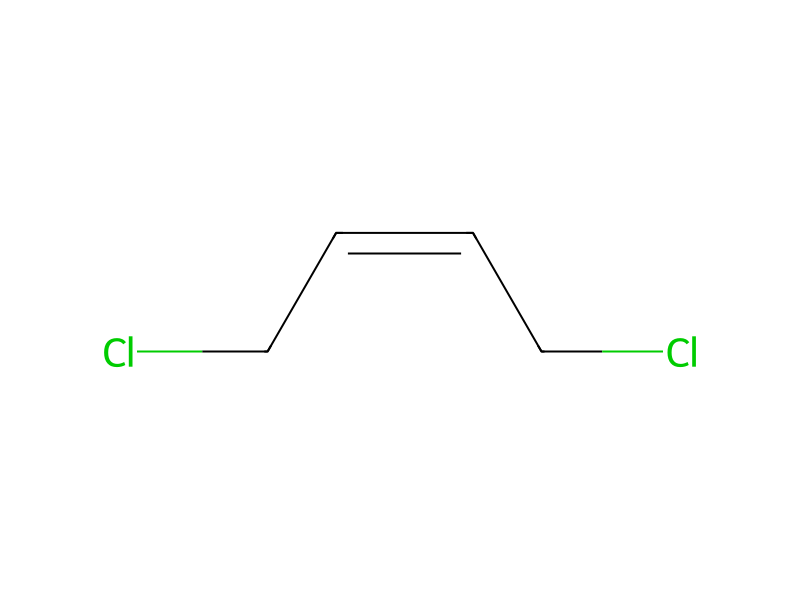
Cl[CH2:2]/[CH:3]=[CH:4]\[CH2:5]Cl.C[Si](C)(C)CCOC[N:13]1[C:17]2=[N:18][CH:19]=[CH:20][CH:21]=[C:16]2[CH2:15][C:14]1=[O:22].C(=O)([O-])[O-].[Cs+].[Cs+]>CN(C=O)C>[NH:13]1[C:17]2=[N:18][CH:19]=[CH:20][CH:21]=[C:16]2[C:15]2([CH2:5][CH:4]=[CH:3][CH2:2]2)[C:14]1=[O:22]
ParticipantsConditionsProcedureWorkupSources & evidenceReaction notes

Participants

5

Reactant 3

HCID 10796Cesium carbonateHCID 64321151,4-Dichloro-cis-2-buteneHCID 574588861-((2-(Trimethylsilyl)ethoxy)methyl)-1,3-dihydro-2H-pyrrolo(2,3-b)pyridin-2-one

Product 1

HCID 59165783spiro[cyclopent-3-ene-1,3'-pyrrolo[2,3-b]pyridin]-2'(1'H)-oneYield 25.2%

Reagents, catalysts & solvents 1

HCID 6228
Dimethylformamide
Solvent

Conditions

Temperature
45 °C

Procedure

To a solution of cis-1,4-dichloro-2-butene (1.98 g, 15.8 mmol) and 1-{[2-(trimethylsilyl)ethoxy]methyl}-1,3-dihydro-2H-pyrrolo[2,3-b]pyridin-2-one (3.49 g, 13.2 mmol) in DMF (175 mL) was added cesium carbonate (10.7 g, 32.9 mmol). After 24 h the reaction mixture was partitioned between Et2O (200 mL) and H2O (200 mL). The aqueous layer was extracted further with Et2O (2×200 mL). The combined organic layers were washed with H2O (2×100 mL), then brine (100 mL), dried over MgSO4, filtered, and concentrated under reduced pressure. To a solution of this material in dichloromethane (150 mL) was added trifluoroacetic acid (150 mL). After 1 h, the reaction was concentrated, dissolved in EtOH (150 mL) and 2N HCl (150 mL) was added. This mixture was heated at 45° C. for 48 h. The mixture was concentrated, diluted with saturated aqueous NaHCO3, and extracted with dichloromethane (2×). The combined organic layers were dried and concentrated. The crude product was purified by silica gel chromatography, eluting with a gradient of 0 to 5% methanol:dichloromethane to give the title compound (0.62 g). MS: m/z=187.1 (M+1).


Workup

  1. customAfter 24 h the reaction mixture was partitioned between Et2O (200 mL) and H2O (200 mL)
  2. extractionThe aqueous layer was extracted further with Et2O (2×200 mL)
  3. washThe combined organic layers were washed with H2O (2×100 mL)
  4. dry with materialbrine (100 mL), dried over MgSO4
  5. filtrationfiltered
  6. concentrationconcentrated under reduced pressure
  7. additionTo a solution of this material in dichloromethane (150 mL) was added trifluoroacetic acid (150 mL)
  8. concentrationthe reaction was concentrated
  9. dissolutiondissolved in EtOH (150 mL)
  10. addition2N HCl (150 mL) was added
  11. concentrationThe mixture was concentrated
  12. additiondiluted with saturated aqueous NaHCO3
  13. extractionextracted with dichloromethane (2×)
  14. customThe combined organic layers were dried
  15. concentrationconcentrated
  16. customThe crude product was purified by silica gel chromatography
  17. washeluting with a gradient of 0 to 5% methanol

Sources & evidence

ORD record
ord-62fe628688c84fc5a1aeb2ec2b7ff896
Source dataset
uspto-grants-2011_05
DOI
10.6084/m9.figshare.5104873.v1
Patent number
US07947678B2

Reaction notes

On this pageParticipantsConditionsProcedureWorkupSources & evidenceReaction notes