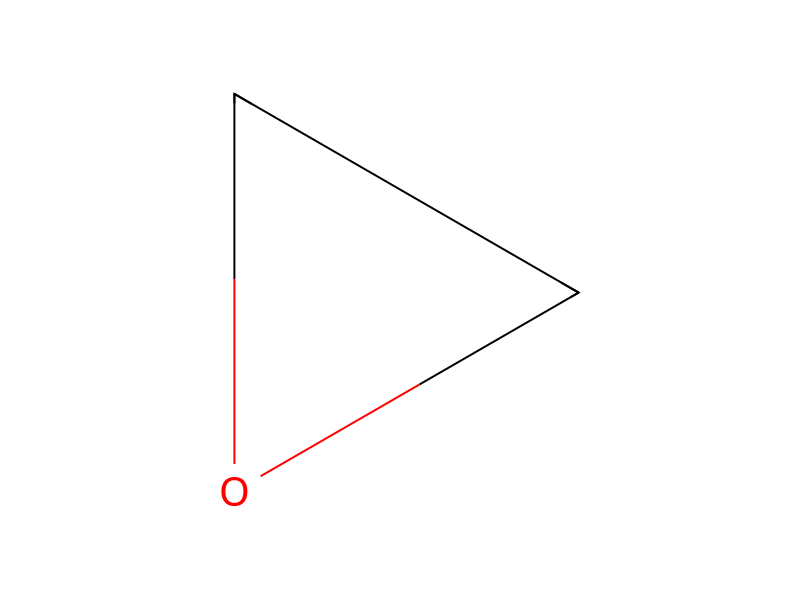
Ethylene Oxide → 4-[7-(2-Hydroxyethyl)-3-isoquinolinyl]benzonitrile
Reaction equation

Br[C:2]1[CH:11]=[C:10]2[C:5]([CH:6]=[C:7]([C:12]3[CH:19]=[CH:18][C:15]([C:16]#[N:17])=[CH:14][CH:13]=3)[N:8]=[CH:9]2)=[CH:4][CH:3]=1.[Li]CCCC.[CH2:25]1[O:27][CH2:26]1>C1COCC1>[OH:27][CH2:26][CH2:25][C:2]1[CH:11]=[C:10]2[C:5]([CH:6]=[C:7]([C:12]3[CH:19]=[CH:18][C:15]([C:16]#[N:17])=[CH:14][CH:13]=3)[N:8]=[CH:9]2)=[CH:4][CH:3]=1Participants
5
Reactant 3


Product 1

Reagents, catalysts & solvents 1

Conditions
- Temperature
- -60 °C
Procedure
The product from Example 74A (4 mmol) is dissolved in 20 mL THF and is cooled to −60° C. under nitrogen. n-BuLi (4.4 mmol) is added dropwise, and the mixture is stirred at −60° C. for additional 30 minutes. A solution of ethylene oxide (20 mmol) in 10 ml THF is added and the mixture is allowed to warm to 10° C. and is stirred to complete the reaction. The mixture is cooled back down to 0° C. and is slowly quenched with 2N HCl to pH=3. The solvent is removed under vacuum and the residue is dissolved in 20 mL methylene chloride, is washed with water, and is concentrated under reduced pressure. The residue is chromatographed on silica gel (5:95 MeOH:CHCl3) to provide the title compound.
Workup
- temperatureto warm to 10° C.
- stirringis stirred
- customthe reaction
- temperatureThe mixture is cooled back down to 0° C.
- customis slowly quenched with 2N HCl to pH=3
- customThe solvent is removed under vacuum
- dissolutionthe residue is dissolved in 20 mL methylene chloride
- washis washed with water
- concentrationis concentrated under reduced pressure
- customThe residue is chromatographed on silica gel (5:95 MeOH:CHCl3)
Sources & evidence
- ORD record
- ord-3a74632a98224bdb876392fdd186aec3
- Source dataset
- uspto-grants-2011_05
- Patent number
- US07947711B2
Reaction notes
Loading…