HomeMCPWorkbenchSkills
HomeWorkbenchNotificationsMe
llms.txt · MCP GuidePrivacy Policy · Terms of Service · Supportv1.8.3
  1. Home
  2. /Reaction

2,4-Dimethoxybenzylamine → 2-(4-Chloro-phenyl)-4-(2-hydroxy-ethyl)-thiazole-5-carboxylic acid 2,4-dimethoxy-benzylamide

HRID 554864
Print

Reaction equation

HRID 554864 reaction equation
[CH3:1][O:2][C:3]1[CH:10]=[C:9]([O:11][CH3:12])[CH:8]=[CH:7][C:4]=1[CH2:5][NH2:6].C[Al](C)C.[Cl:17][C:18]1[CH:23]=[CH:22][C:21]([C:24]2[S:25][C:26]3[C:32](=[O:33])[O:31][CH2:30][CH2:29][C:27]=3[N:28]=2)=[CH:20][CH:19]=1>C(Cl)Cl>[CH3:1][O:2][C:3]1[CH:10]=[C:9]([O:11][CH3:12])[CH:8]=[CH:7][C:4]=1[CH2:5][NH:6][C:32]([C:26]1[S:25][C:24]([C:21]2[CH:22]=[CH:23][C:18]([Cl:17])=[CH:19][CH:20]=2)=[N:28][C:27]=1[CH2:29][CH2:30][OH:31])=[O:33]
ParticipantsConditionsProcedureWorkupSources & evidenceReaction notes

Participants

5

Reactant 3

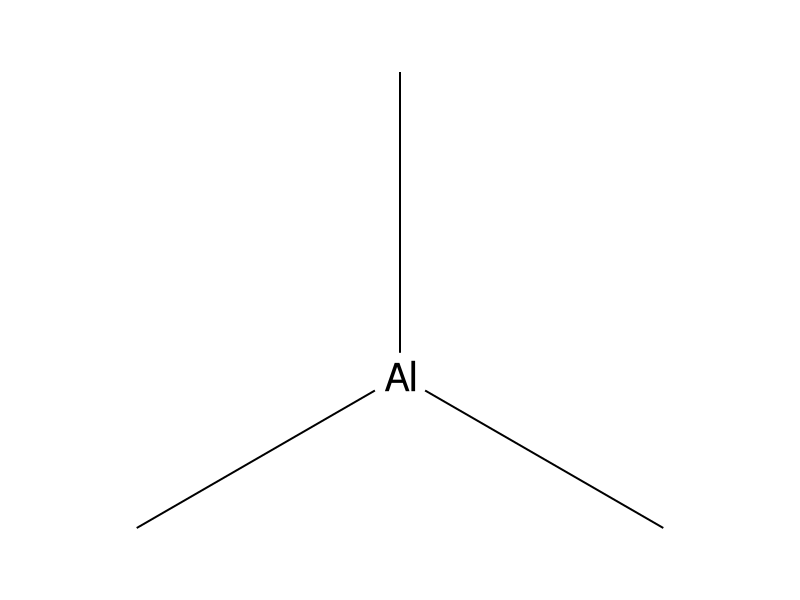
HCID 5972502,4-DimethoxybenzylamineHCID 16682925TrimethylaluminumHCID 574214852-(4-Chloro-phenyl)-6,7-dihydro-pyrano[4,3-d]thiazol-4-one

Product 1

HCID 674592502-(4-Chloro-phenyl)-4-(2-hydroxy-ethyl)-thiazole-5-carboxylic acid 2,4-dimethoxy-benzylamideYield 61.7%

Reagents, catalysts & solvents 1

HCID 6344
Dichloromethane
Solvent

Conditions

Temperature
0 °C

Procedure

Dissolve 2,4-dimethoxybenzylamine (22.4 g, 134.0 mmol) in CH2Cl2 (300 mL) and cool to 0° C. To the above solution, slowly add a solution of trimethylaluminum (110 mL, 220 mmol; 2 M in toluene) over 35 min while keeping the temperature below 10° C. Stir the resulting solution at room temperature for 45 min and then re-cool to 0° C. Add 2-(4-chloro-phenyl)-6,7-dihydro-pyrano[4,3-d]thiazol-4-one (52.2 g, 120.6 mmol), then allow the resulting slurry to warm to room temperature and stir overnight. Cool the reaction and carefully quench with saturated Rochelle's salt solution (300 mL) over 30 min. Add CH2Cl2 (750 mL), water (400 mL) and diatomaceous earth (100 g) and stir the mixture at room temperature for 30 min, then filter. Collect the solids and triturate with CH2Cl2 (1 L) at 35° C. for 3 h, then filter. Concentrate the filtrate to obtain the title compound (32.2 g). Repeat the trituration step with the second solid cake and obtain an additional 20 g of title compound (90% total yield). 1H NMR (400 MHz, DMSO-d6) δ9.01 (br s, 1H), 7.96 (d, 2H, J=8.5), 7.57 (d, 2H, J=8.5), 7.15 (d, 1H, J=7.9), 6.57 (d, 1H, J=2.6), 6.48 (dd, 1H, J=2.6, 8.5), 5.34 (t, 1H, J=4.3), 4.34 (d, 2H, J=6.6), 3.81 (s, 3H), 3.79 (m, 2H), 3.75 (s, 3H), 3.11 (t, 3H, J=6.6).

Workup

  1. customthe temperature below 10° C
  2. temperaturere-cool to 0° C
  3. temperatureto warm to room temperature
  4. stirringstir overnight
  5. temperatureCool
  6. customthe reaction
  7. customcarefully quench with saturated Rochelle's salt solution (300 mL) over 30 min
  8. stirringAdd CH2Cl2 (750 mL), water (400 mL) and diatomaceous earth (100 g) and stir the mixture at room temperature for 30 min
  9. filtrationfilter
  10. customCollect the solids
  11. customtriturate with CH2Cl2 (1 L) at 35° C. for 3 h
  12. filtrationfilter
  13. concentrationConcentrate the filtrate

Sources & evidence

ORD record
ord-4d827b5e223a4e2cb3d5c8a8a20237cb
Source dataset
uspto-grants-2011_11
DOI
10.6084/m9.figshare.5104873.v1
Patent number
US08049013B2

Reaction notes

On this pageParticipantsConditionsProcedureWorkupSources & evidenceReaction notes