2,6-Lutidine → 3,5-Dibromosalicyl 3-butenoate
Reaction equation

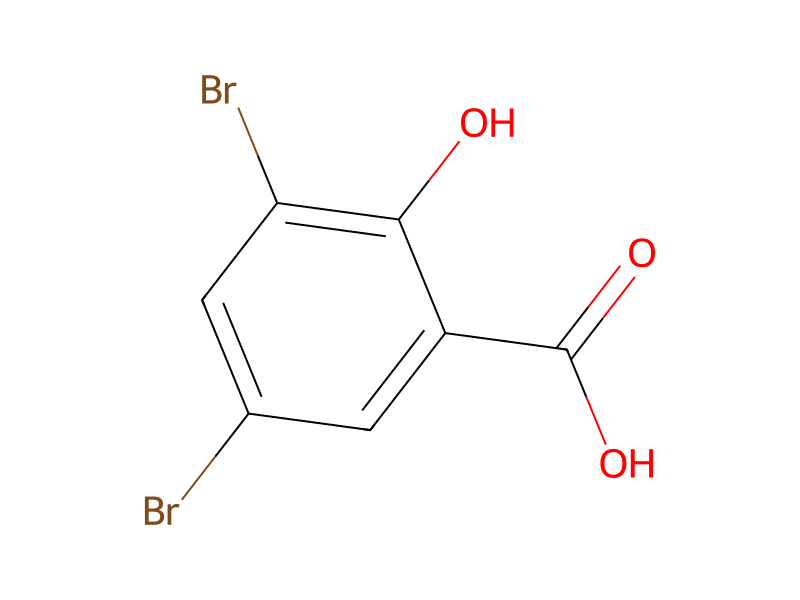
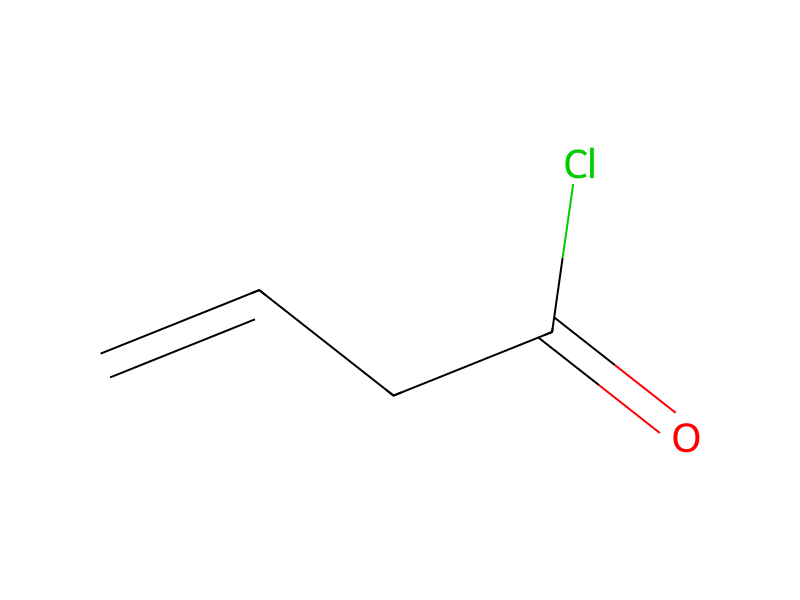
[C:1](Cl)(=[O:5])[CH2:2][CH:3]=[CH2:4].[Br:7][C:8]1[CH:16]=[C:15]([Br:17])[CH:14]=[C:10]([C:11]([OH:13])=O)[C:9]=1[OH:18].N1C(C)=CC=CC=1C>CC(C)=O>[C:1]([O:13][CH2:11][C:10]1[C:9](=[C:8]([Br:7])[CH:16]=[C:15]([Br:17])[CH:14]=1)[OH:18])(=[O:5])[CH2:2][CH:3]=[CH2:4]Participants
5
Reactant 3

Product 1

Reagents, catalysts & solvents 1

Procedure
3,5-Dibromosalicyl 3-butenoate is prepared by reaction of an acetone solution of 3-butenoyl chloride and 3,5-dibromosalicylic acid in the presence of 2,6-lutidine. The 3-butenoate ester is isolated and purified. In a second step, the desired oxirane, 3,5-dibromosalicyl 3,4-oxabutanoate, is prepared by reaction of 3,5-dibromosalicyl 3-butenoate and 3-chloroperbenzoic acid in chloroform solution. The desired oxirane is isolated and purified.